The defining constraint of a Christmas table is that it seats more people than it was designed for. Everything else follows from that: the centrepiece competes for space with the serving dishes, the crackers take up a place setting each, and somebody at the corner has a table leg where their knees should be. Planning around the constraint produces a better table than ignoring it and hoping.
How much space does each person need?
Around 60cm of table edge per person is comfortable and 50cm is the practical minimum before elbows start competing. Measure the table and divide, and if the number that comes out is smaller than the number of guests, deal with it now rather than on the day. Adding a second table at right angles, or extending with a board and one long cloth, both read as one table.
Why must the centrepiece be low?
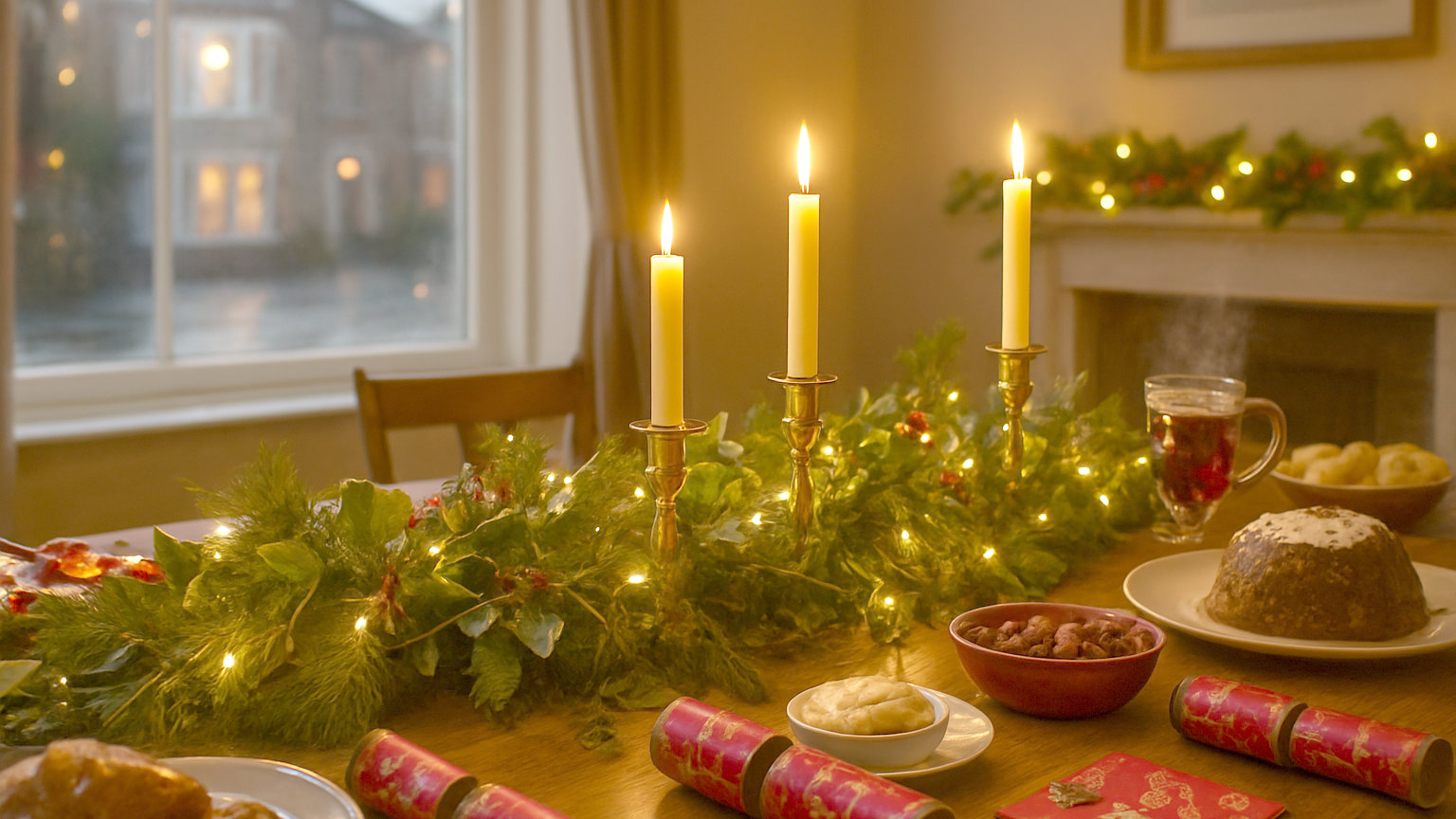
Because people have to talk across it. Anything taller than about 30cm blocks sightlines and forces guests to lean around it all afternoon, which is why the elaborate arrangements in photographs rarely survive contact with a real meal. Either keep it low and long, or use tall thin candlesticks, which are narrow enough to see past. A run of foliage down the centre is the easiest solution and costs nothing if you have a garden.
What does a place setting actually need?
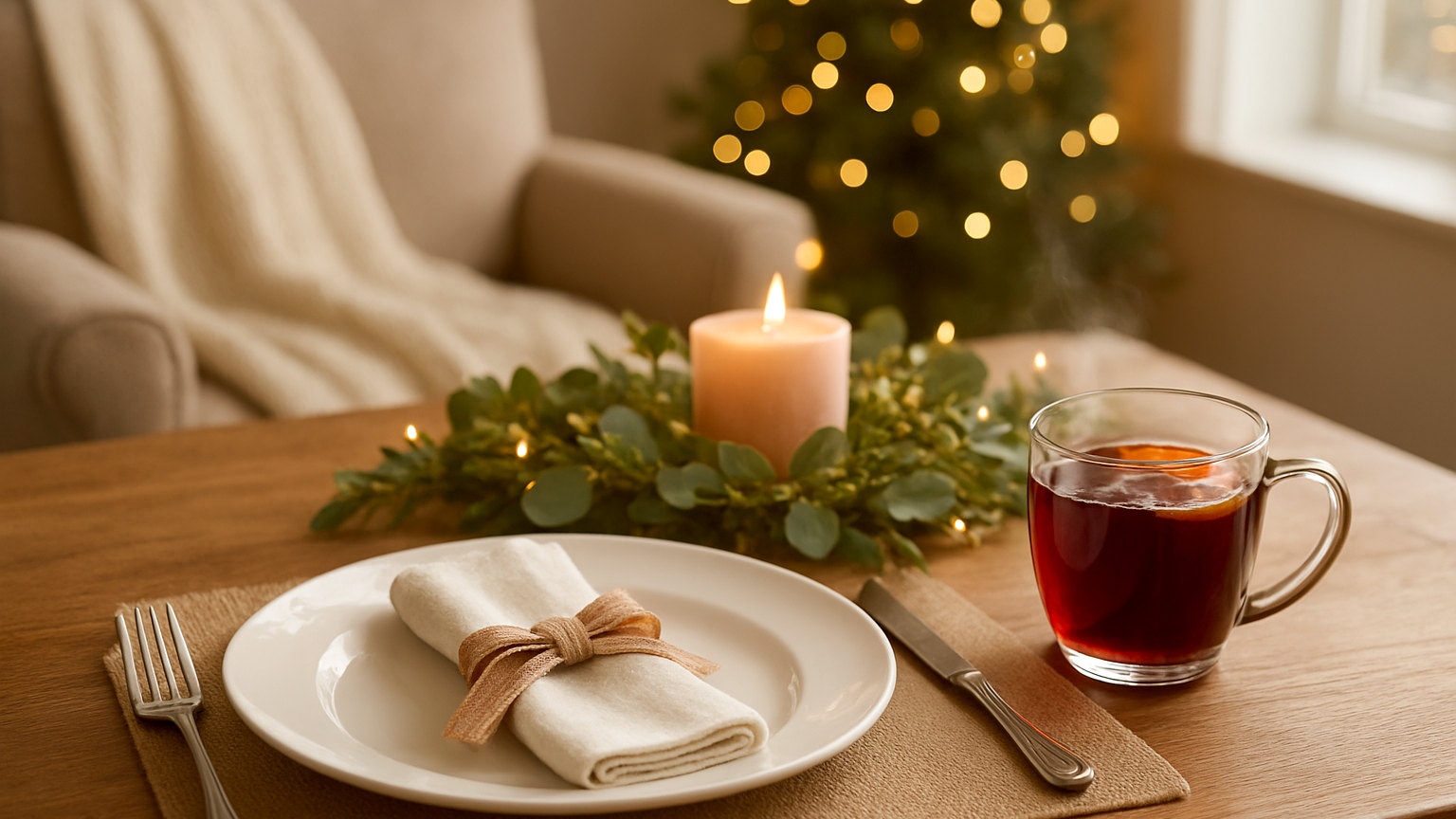
Cutlery working from the outside in, a plate, a glass for water and a glass for wine, and a napkin. That is it. Charger plates, side plates, dessert cutlery laid at the top and multiple glasses are all optional and all take space you do not have. Bringing dessert cutlery out with the dessert is entirely normal and frees up a considerable amount of room.
Lay the table the night before. It takes twenty minutes on Christmas Eve and half an hour of stress on the morning, and it lets you see the space problem while there is still time to solve it.
Where do the crackers go?
Laid across the plate or to the left of it, and taken off the table before the food arrives, since a cracker on a crowded table is one more thing in the way. Some households lay them along the centre instead. Whichever you choose, have somewhere for the debris to go, because within ten minutes there will be paper hats, jokes and small plastic objects on every surface.
Are place cards worth it?
For more than about eight people, yes, and not for reasons of formality. They stop the shuffling and negotiating that otherwise happens in a doorway, they let you separate anybody who should be separated, and they mean somebody who might otherwise hover has a defined seat. Written by hand, or by a child, they are also the cheapest decoration on the table.
How should napkins be folded?
Simply, and in under a minute each. A loose fold with a sprig of rosemary and a length of twine looks considerably better than an elaborate construction and takes a fraction of the time. Fabric napkins are worth using if you have them, since paper ones tear during a long meal. What is not worth doing is any fold that requires ironing twelve of anything on the morning.
What should you leave off entirely?
Confetti and table scatter, which end up in the food and on the floor for weeks. Anything tall. Individual favours, which duplicate the crackers. A tablecloth on a table where drinks will be spilled, unless you are relaxed about it. And any decoration that has to be moved before the serving dishes arrive, which is the definition of something that was in the way.
What about children at the table?
Give them a proper place setting rather than a plastic one at a separate table if you can, since being included is most of what makes the day feel like an occasion at that age. A cracker and a place card each cost nothing and matter a great deal.
Keep the glasses small and the candles well away from small hands, and accept that anything breakable within reach of a four year old has been placed rather than protected.