
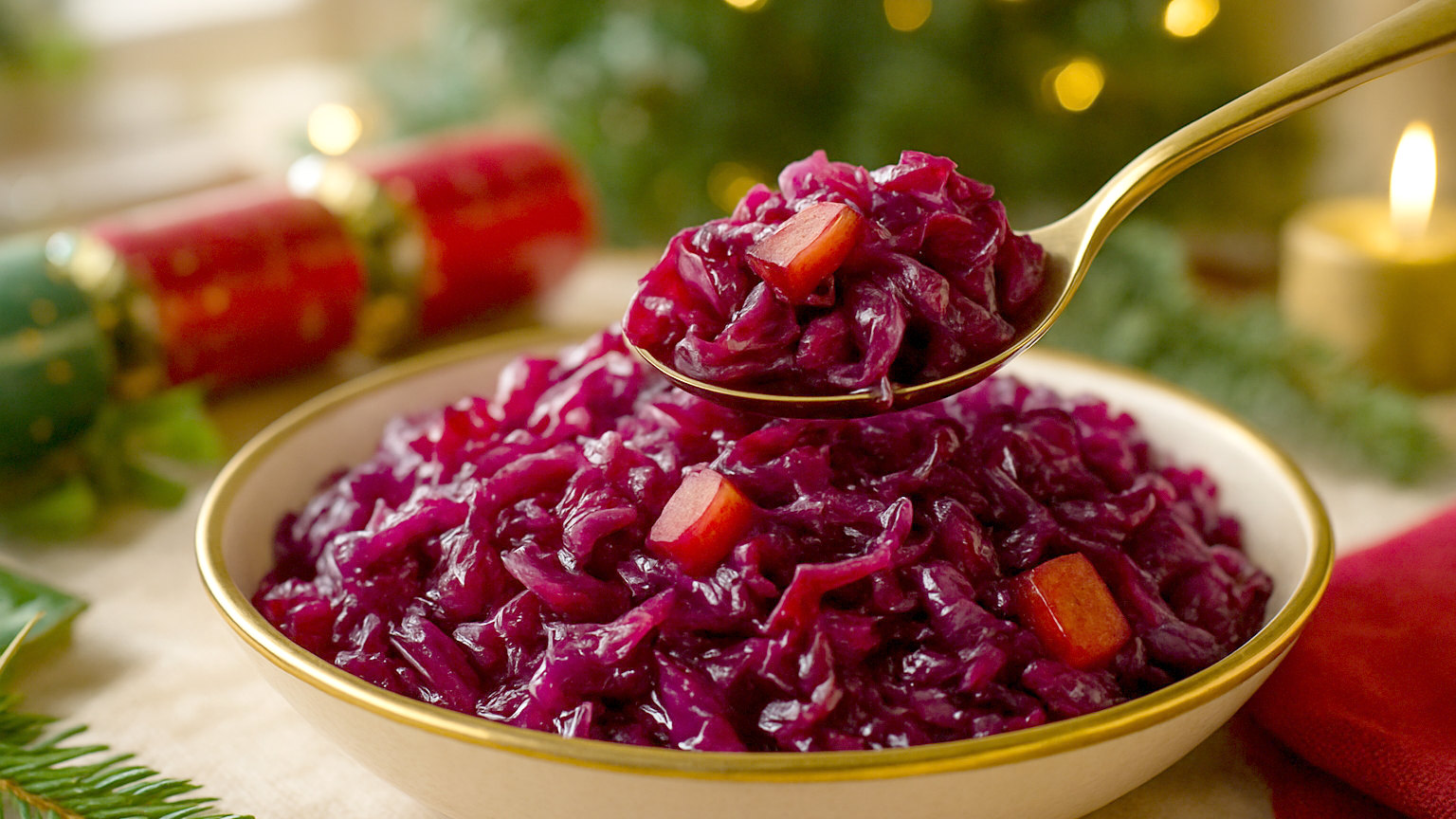
Braised red cabbage is the most useful vegetable of the Christmas season, and the reason is entirely practical: it is better made two weeks early than made on the day. It freezes without any loss, it reheats perfectly, it cuts through the richness of everything else on the plate, and it removes one job from a crowded morning. If you make one thing in November, make this.
What goes into it?
Shredded red cabbage, sliced onion, chopped apple, vinegar, sugar, butter or fat, and warm spices. Cider vinegar or red wine vinegar both work. Brown sugar rather than white. Cinnamon, cloves, star anise, juniper or a bay leaf. Some recipes add red wine, orange zest, redcurrant jelly or a handful of dried fruit. The balance to aim for is sweet and sharp in roughly equal measure.
Why does the vinegar matter?
Because the pigment in red cabbage changes colour with acidity. In an acidic environment it stays a deep red or purple; in an alkaline one it turns an unappealing blue grey. Adding vinegar at the start is what keeps a braised red cabbage looking like red cabbage after two hours in a pot. It also balances the sugar, so it is doing two jobs at once.
How long should it braise?
Between an hour and a half and two hours, on a very low heat with a lid on, or in a low oven at around 150C. It should be completely tender and glossy, with almost no liquid left. Undercooked red cabbage is squeaky and sharp; properly braised it collapses into something silky. This is not a dish that can be rushed, which is precisely why it should not be attempted on Christmas morning.
Make it two weeks ahead and freeze it. It genuinely improves, and reheating a container takes five minutes on a day when five minutes matters.
Can you make it in a slow cooker?
Very well, and it is one of the best things a slow cooker does. Everything goes in at once and it needs four to six hours on low with no attention at all. On Christmas Day itself, a slow cooker holding the cabbage frees a hob ring and an oven shelf, which is worth more than the dish itself on a crowded morning.
How well does it freeze?
Completely. Cool it, portion it into bags or containers, and freeze for up to three months. Defrost overnight in the fridge or reheat gently from frozen in a pan with a splash of water. The texture is unaffected because the cabbage is already fully collapsed, which is why this works where it would not for a crisp vegetable.
How do you adjust the balance?
Taste it at the end and correct it, since cabbages and apples vary in sweetness. If it is too sharp, add sugar or redcurrant jelly. If it is too sweet, add vinegar. If it tastes flat, it needs salt. Do this while it is hot and let it sit for a few minutes before tasting again, because the flavours continue to settle after the pan comes off the heat.
What do you do with the leftovers?
It keeps for a week in the fridge and improves for several days of it. Cold in a turkey sandwich it is excellent. Stirred into bubble and squeak. Alongside pork, sausages, duck or a cheese board through the rest of the week. Unlike most Christmas vegetables, nobody has ever had to be persuaded to eat leftover red cabbage.
How much should you make?
A whole red cabbage is more than most households think, feeding around eight to ten people generously as one of several vegetables. Since it freezes perfectly, making a double batch costs nothing in extra effort.
One session in November producing enough for Christmas Day, Boxing Day and a January roast is about as efficient as festive cooking gets.
It is also one of the few Christmas vegetables that works as a leftover in its own right rather than as an ingredient, which is why the extra batch never goes to waste.


