
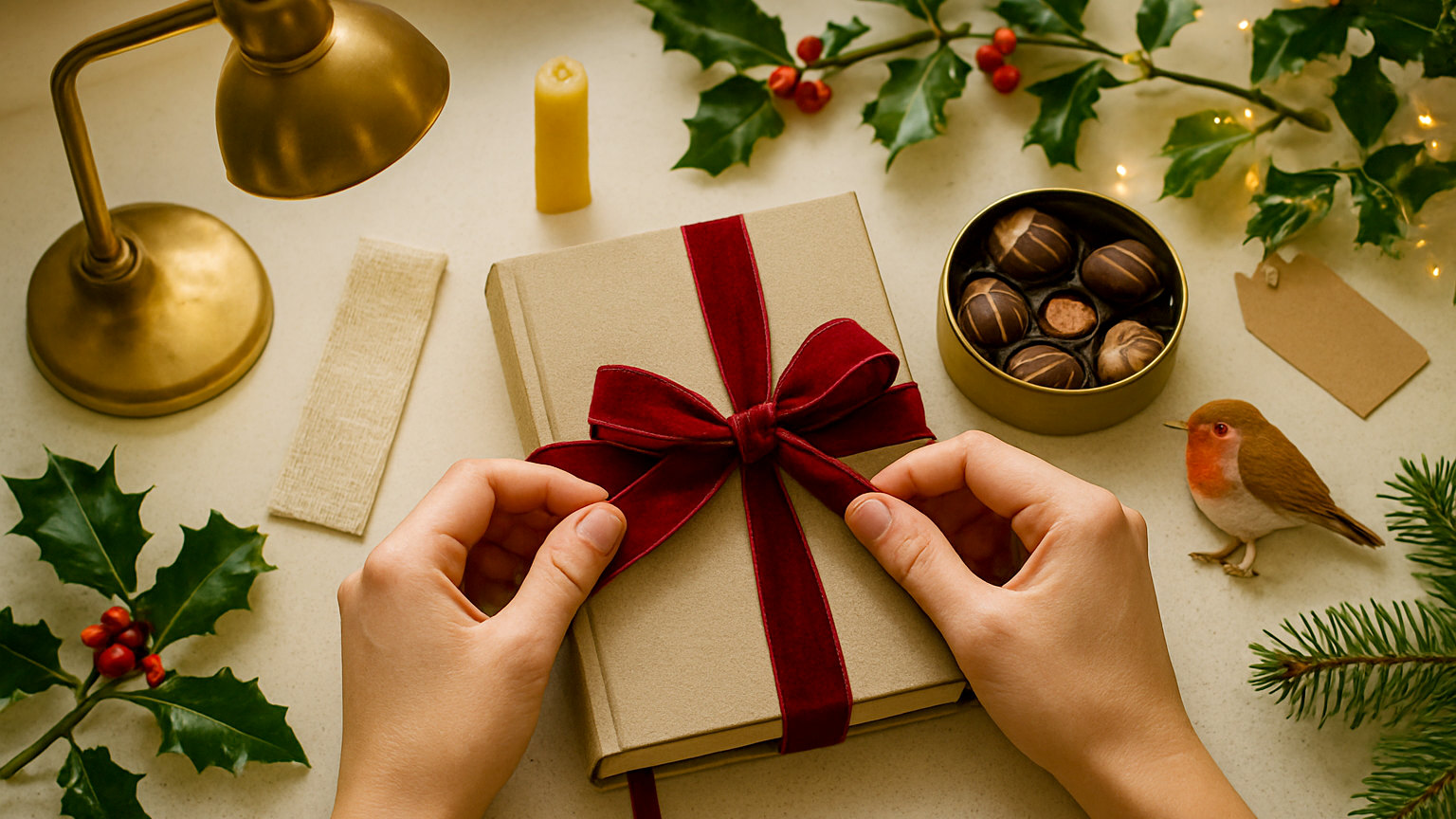
Buying a book for a serious reader is riskier than buying one for somebody who reads occasionally, which is the opposite of what most people assume. A dedicated reader has already read the obvious recommendations, has firm views about which editions are worth owning, and gets through several books a month without help. The good news is that this makes the category easier to shop for once you accept that the object is to find a gap rather than to make a recommendation.
How do you find the gap on the shelf?
Photograph her bookcase. It contains the whole answer: which authors she owns several of, which series has a volume missing, which subjects appear repeatedly, and whether she buys hardbacks or paperbacks. A reader who owns four books by the same writer and none of the fifth is telling you exactly what to buy. A reader whose shelf is entirely history and none of it about one particular period is telling you where to look next.
What if she has read everything?
Then buy the reading rather than the book. A subscription to a book club that posts a title each month, a membership to a library or literary society, tickets to an author event, or a voucher for an independent bookshop she likes all work. Any of these hands the choosing back to her, which for somebody with strong taste is a feature rather than an admission of defeat. A voucher for a specific shop is considerably more personal than one for a chain.
Which editions are worth the extra money?
Signed copies, which independent bookshops arrange regularly and which cost only a little more than the standard hardback. Proper cloth bound editions of books she already loves, since replacing a battered paperback of a favourite with something well made is a present rather than a duplicate. Illustrated or annotated editions of classics. What is rarely worth it is a boxed set of an author she has only read once, which is a bet on taste rather than a response to it.
Ask her local independent bookshop for a recommendation and tell them what she already reads. Booksellers are very good at this and the service costs nothing.
What should you buy when a book is the wrong answer?
Everything around the reading. A good reading light that clips to a chair. A proper bookmark rather than a receipt. A bookstand for reading at a table. Shelving, which every reader needs more of and nobody buys at Christmas. An e-reader if she travels, or a cover for the one she has. Comfortable things for reading in, from a blanket to a decent armchair cushion, all of which are used daily and never bought as treats.
Are audiobooks a good present?
They are, for anyone who commutes, walks or works with their hands, and they suit readers whose eyes tire in the evening. A credit based subscription paid for a fixed term works better than an open ended one that renews on her card without notice. Buy the fixed length gift version, tell her when it ends, and let her decide whether to carry on rather than leaving her to cancel something she did not sign up for.
How do you avoid buying a duplicate?
Ask a friend or a family member who has been in the house recently, or check whether she keeps a list on a reading app, which many committed readers do and which is usually visible to people she has connected with. Failing that, buy from a shop with a straightforward exchange policy and include the receipt. Nobody minds exchanging a duplicate book, and nobody enjoys owning two copies of the same novel out of politeness.
When should you buy?
Late November for signed editions, which are printed in small numbers and sell out. Any time for everything else, since books do not run short in the way toys do. If you are ordering from an independent rather than a large retailer, allow a few extra days in December, because small shops are working through a considerable queue and the delivery estimate is usually honest rather than optimistic.


