
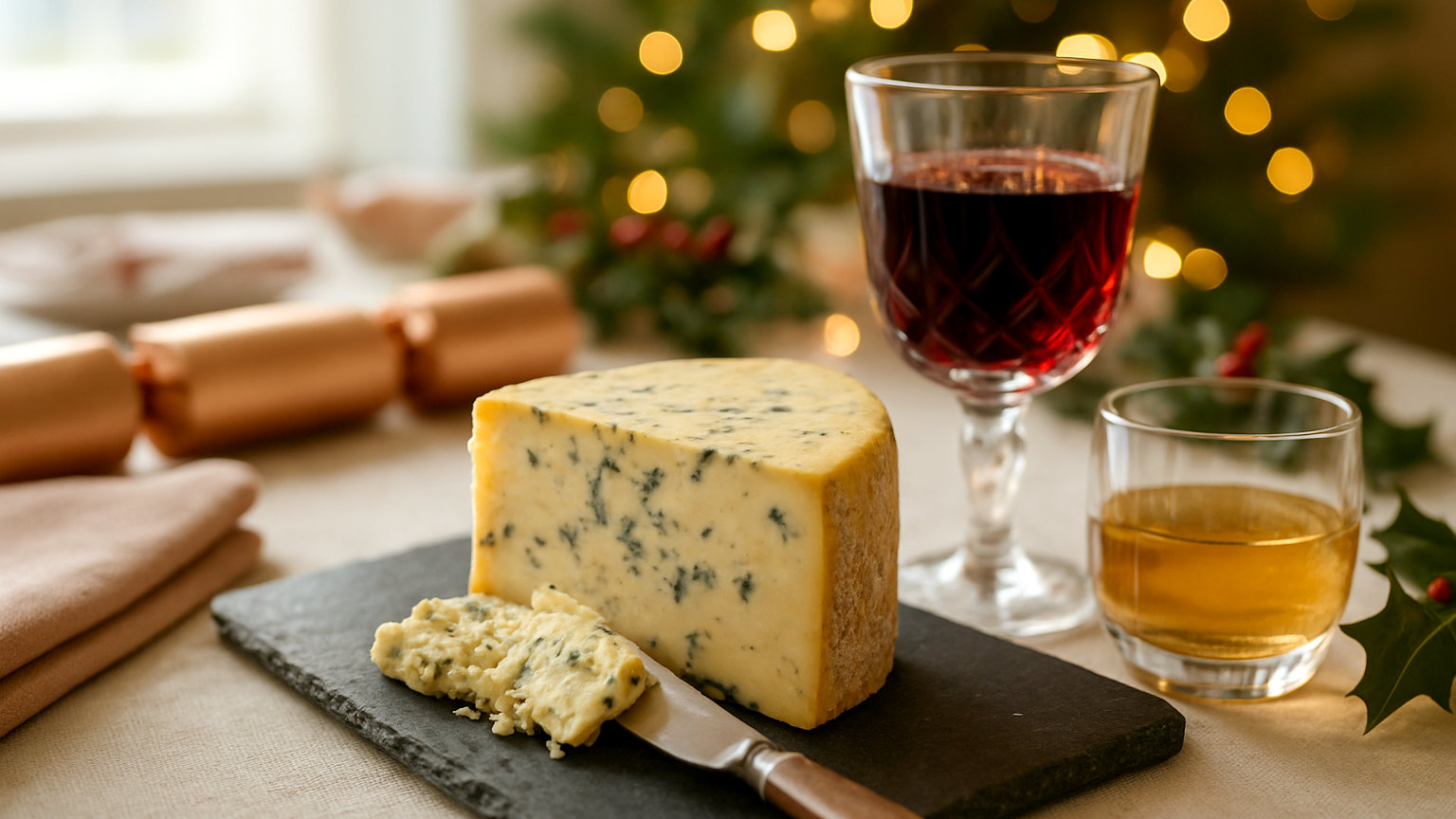
Port with stilton is the traditional British pairing and it works, which is why it has lasted. It is not the only answer, and it is a poor one for several of the cheeses that end up on a Christmas board. The useful principle is that cheese is salty and fatty, so it wants something either sweet or sharp beside it, and dry tannic red wine is neither.
Why does port work with blue cheese?
Because blue cheese is intensely salty and the sweetness of the port balances it directly, in the same way that a sweet chutney does. The alcoholic strength also cuts through the fat. It is a genuine chemical match rather than merely a tradition, which is why the same principle works with any sweet fortified wine and why Sauternes with Roquefort is the French version of the same idea.
What goes with hard cheese?
A mature cheddar or a hard sheep cheese wants something with a bit of grip. A medium bodied red works here where it fails elsewhere. So does a good cider, which is the traditional West Country pairing and is considerably better with cheddar than most wine. Sherry, particularly an amontillado, is excellent. So is a strong dark beer, and a barley wine with an aged cheddar is one of the better matches on this list.
What about soft and creamy cheese?
Something with acidity and bubbles, which cuts through the fat and cleans the palate. Champagne or any dry sparkling wine works very well with brie or camembert, and the pairing is far better than the dry red most people default to. A crisp white, a dry cider or a wheat beer all do the same job. Heavy red wine with a soft ripe cheese is one of the few genuinely poor matches.
Take the cheese out of the fridge an hour before serving. Cold cheese tastes of almost nothing, and this improves a board more than any drink you put next to it.
Why does dry red wine so often disappoint?
Because tannin and salt amplify each other, which makes both the wine and the cheese taste harsher. A big cabernet with a strong cheese is a clash rather than a match, despite being the pairing most often assumed. If red is what you have open, choose a softer, fruitier one and pair it with a firm nutty cheese rather than a blue or a ripe soft one.
What if people are not drinking?
Cheese is one of the easier things to pair without alcohol. Good apple juice, particularly a sharp single variety one, does much of what cider does. Strong black tea works with hard cheese in the same way that tannin in wine would. Alcohol free beer has improved enormously and suits cheddar well. Sparkling water with lemon between cheeses cleans the palate as effectively as anything else.
When should the cheese come out?
Later than most people put it out, and after a proper gap. Most tables are full when the plates from the main course are cleared, and a board produced immediately goes largely untouched. An hour of clearing up, presents and conversation transforms how much gets eaten. In the British order cheese follows the pudding; in the French order it comes before. Either is fine, but a gap before it is not optional.
How much should you buy?
Around 100g per person if the board is a course in its own right, and rather less at the end of a large meal. Three or four cheeses chosen to contrast beat six that are all semi hard and mild. Cheese is the item most consistently overbought at Christmas, and unlike most of the rest of it, the leftovers keep for a week and have a dozen uses.
Which cheeses should be on the board?
Three to five, chosen to contrast rather than to cover every possibility. One hard and aged, one soft and creamy, one blue, and one unusual is a reliable set that gives every drink on this page something to sit against.
Buying five mild semi hard cheeses produces a board that looks varied and tastes the same throughout, and it also removes the point of thinking about what to pour with it.


