The best Christmas centrepiece is low, long and mostly free, which is the opposite of what appears in most photographs. A tall arrangement blocks conversation across the table and competes for space with the serving dishes, both of which matter more than how it looks in a picture taken before anybody sat down.
What should the shape be?
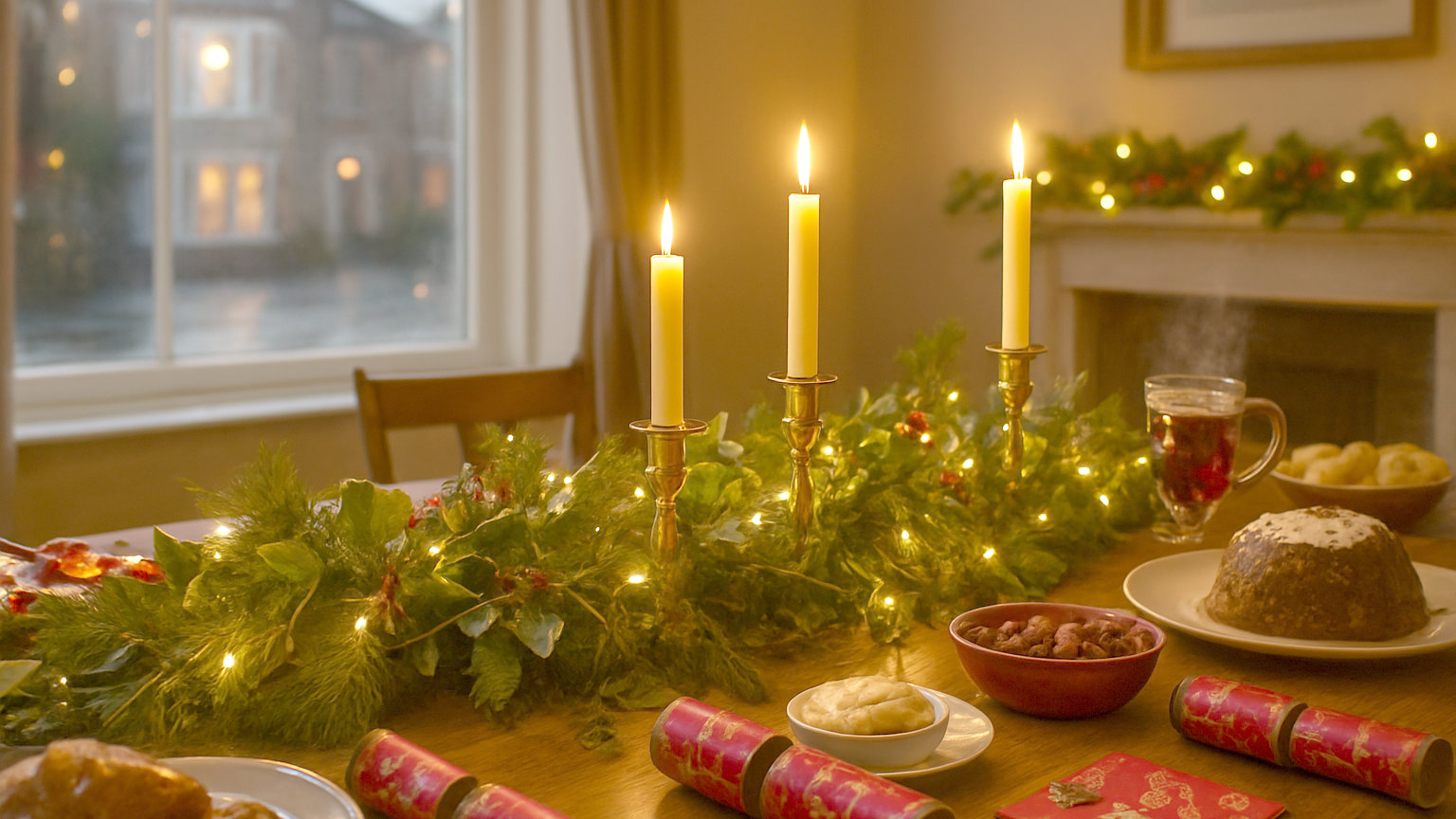
Long and low rather than tall and central. A runner of foliage down the middle of the table takes up the strip that is hardest to reach anyway, leaves the outer thirds clear for plates and dishes, and never blocks a sightline. Nothing should be taller than about 30cm, with the exception of thin candlesticks, which are narrow enough to see past.
How do you build a foliage runner?
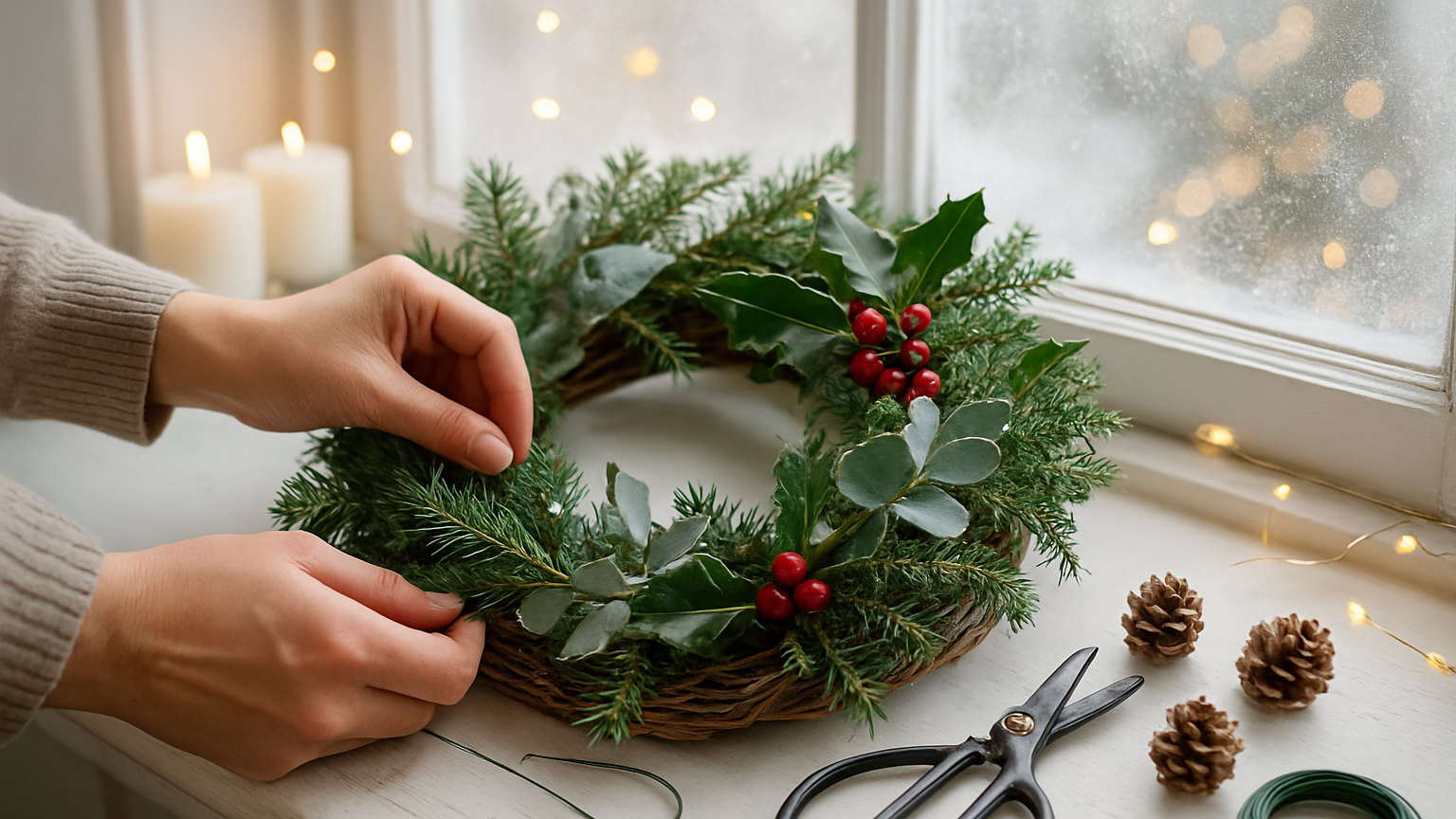
Lay a length of ivy, spruce, eucalyptus or bay straight down the centre of the table, overlapping the stems so no bare ends show. Tuck in additional sprigs to fill gaps. Add pine cones, dried orange slices, cinnamon sticks, berries or baubles along its length. It takes ten minutes, needs no wire or base, and can be lifted off in one piece when the food comes out.
Where are candles safe?
In stable holders, on a non flammable base, well clear of any foliage, paper, crackers and overhanging sleeves. Dry foliage is genuinely flammable and it dries out considerably over a warm afternoon on a table. Never leave a lit candle unattended, and never leave one within reach of a child or an animal. If candles are going into the arrangement rather than beside it, use LED ones.
Never leave a real candle burning unattended or within reach of foliage. A table arrangement warms and dries through the afternoon, and dried greenery catches quickly.
What can you use from the garden?
Ivy, which is the most useful thing available and grows almost everywhere. Holly, if you have it, though the berries are toxic if eaten. Bay, rosemary, laurel, box and conifer clippings. Dogwood stems for colour. Rose hips. Seed heads. Bare twigs. Take small amounts, never from private land without permission, and never strip a plant bare in a season when birds are feeding on it.
What can be made in advance?
Dried orange slices, which take three or four hours in a very low oven and keep for years. Cinnamon bundles tied with twine. Anything with pine cones. Foliage itself is better cut a day or two ahead and stood in water overnight, which makes it last considerably longer once it is out of water on a table.
How do you leave room for the food?
Lay the table with the centrepiece in place, then physically put the serving dishes where they will go, empty, and see what happens. This takes two minutes on Christmas Eve and reveals immediately whether the arrangement has to be shorter, narrower, or liftable. Anything that has to be moved when the food arrives is a decoration that was in the way.
What are the easiest options of all?
A line of small jars with tealights and a sprig of something in each, which costs almost nothing and looks considered. A shallow bowl of baubles left over from the tree. A few branches in a low vase. A row of small potted plants. Any of these takes five minutes, none require any arranging skill, and all of them leave the table usable.
How do you keep it looking good all afternoon?
Mist the foliage before guests arrive and again if the meal runs long, since a warm room dries greenery noticeably within a couple of hours. Standing the cut stems in water overnight beforehand makes far more difference than anything done on the day.
Anything that is going to wilt, particularly soft leaves and flowers, is better left out entirely in favour of conifer, ivy, bay and eucalyptus, all of which hold up for days out of water.