
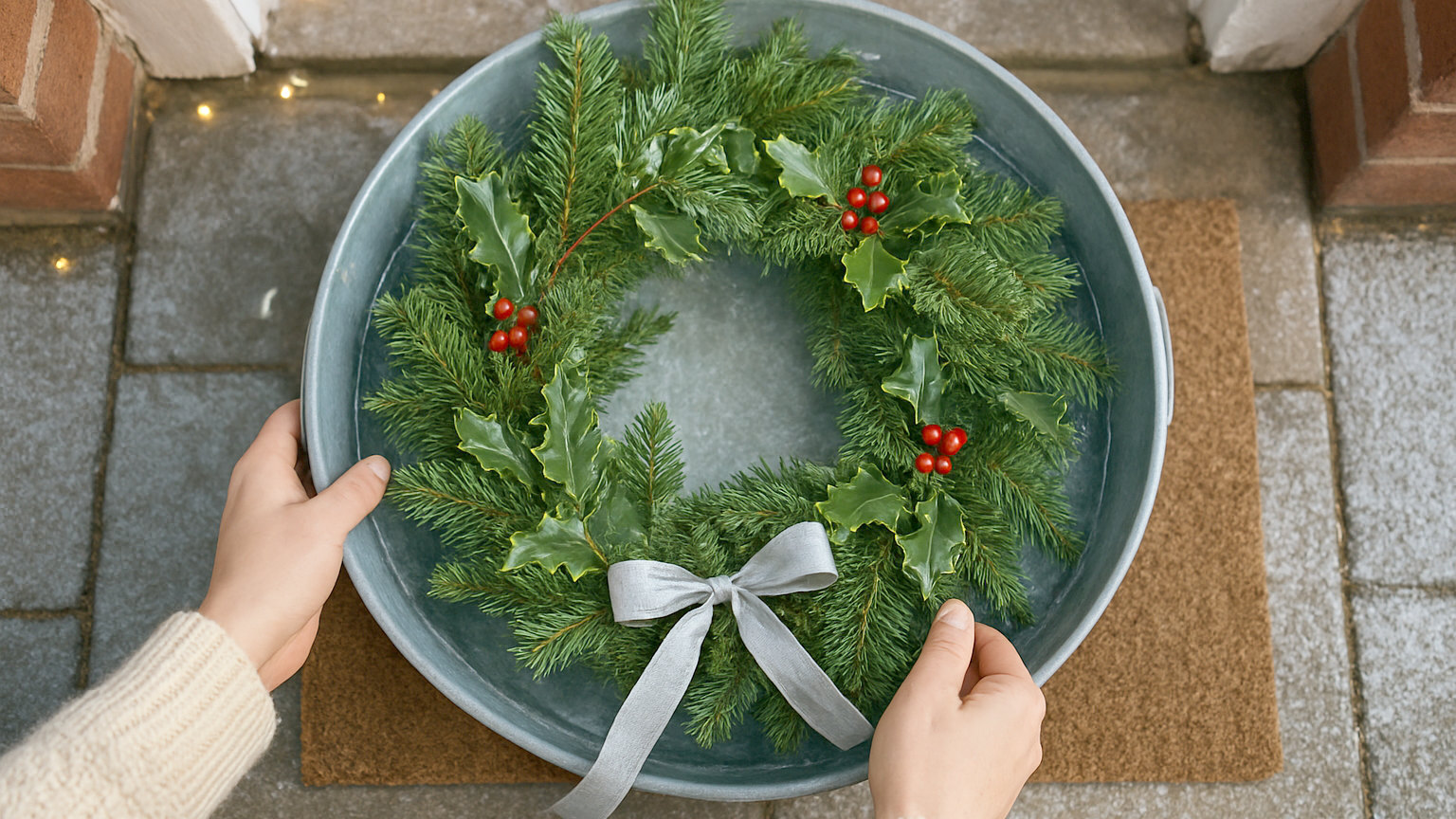
A fresh wreath will last six weeks or two, and the difference between those two outcomes is mostly where it hangs rather than how much it cost. A wreath is cut foliage, so everything that applies to a vase of flowers applies here, with the complication that it is hanging vertically on a door being opened forty times a day.
Why does the door aspect matter?
Because sun and wind are what dry foliage out, and a south or west facing door gets considerably more of both. A north or east facing door is cooler and shadier, and a wreath there will last noticeably longer with no extra effort. A porch is better still. If your door faces south, expect to work harder at keeping it alive or to accept a shorter life.
What about heat from inside?
A door with a radiator behind it, or a hallway that is heated and frequently opened, transfers a surprising amount of warmth to the wreath. That is why a wreath on an internal door or in a heated hallway dries out faster than one outdoors in a cold December. If the wreath is going inside, mist it more often and keep it away from any heat source.
How do you soak the base?
Take it down once a week and lay it face up in a bowl or a bath with a few centimetres of water, so the mossed back is submerged and the foliage stays dry. Leave it for twenty minutes, drain it, and rehang. This is the single most effective thing you can do and it is why a moss based wreath outlasts one built on a bare wire ring.
Mist it every two or three days and soak the base weekly. Between them those two habits roughly double how long a fresh wreath lasts.
How often should you mist it?
Every two or three days, using a plant sprayer, on both sides. It takes ten seconds. Do it in the morning rather than the evening in frosty weather, so the water is not sitting on the foliage overnight and freezing. Misting does more for the foliage than soaking does for some materials, particularly eucalyptus and bay, which take up water through the leaf.
Which foliage lasts longest?
Conifer, particularly blue spruce and Nordmann, which hold their needles for weeks. Bay, laurel and box, which are tough evergreens. Eucalyptus, which dries attractively rather than wilting. Ivy, which lasts well. What does not last is anything soft leaved, anything flowering, and berries, which shrivel or drop within a fortnight, so those are the elements to add late.
When should you buy or make one?
The first or second week of December, which gives it enough life to look good on the twenty-fifth and through to Twelfth Night. Bought in late November it will be tired by the time anybody visits. If you are making one, cut the foliage a day or two ahead and stand it in water overnight, which extends its life noticeably once it is out of water.
What if it dries out anyway?
Accept it and let it dry rather than replacing it, since a wreath of conifer, eucalyptus and dried orange looks entirely acceptable dried and will hang until Twelfth Night without complaint. Remove any element that has gone brown and shrivelled, particularly berries and soft leaves, and the rest will hold its shape perfectly well.
Can you revive one that has wilted?
Partly. A long soak of the mossed base, an hour rather than twenty minutes, will bring back foliage that has gone limp but not foliage that has gone brown and brittle, which is beyond recovery.
Replacing two or three of the worst bunches with fresh material and rewiring them in takes ten minutes and often makes more difference than any amount of watering.
Whatever happens to it, take it down by Twelfth Night with everything else, and compost the foliage rather than binning it, since the moss and greenery break down readily.


