
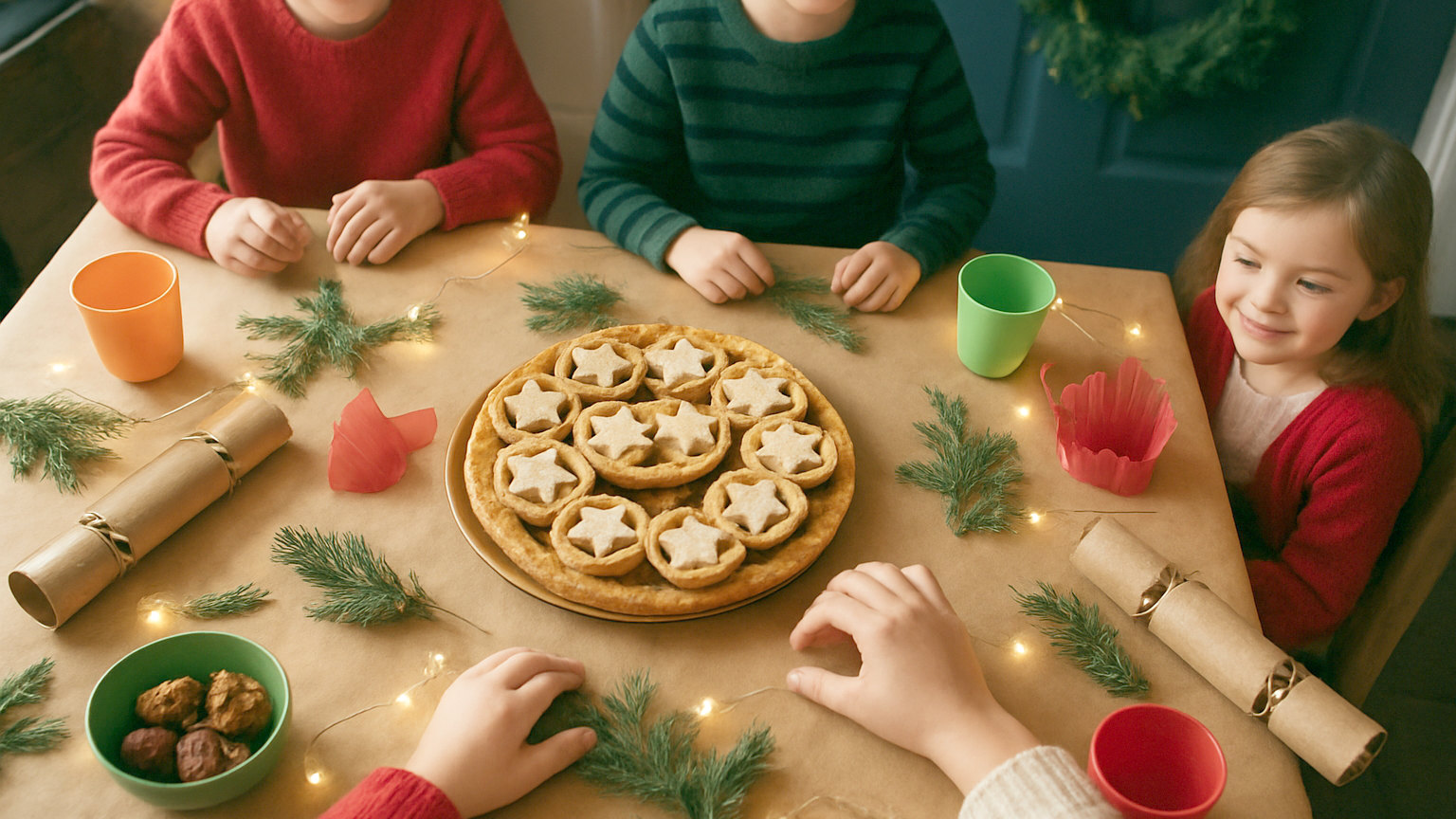
A children table at Christmas is not a smaller version of the adult one. The requirements are different: nothing breakable, nothing to knock over, something to do during the long gaps, and a place setting that makes them feel included rather than sidelined. Getting those four right does more for how the meal goes than any amount of styling.
What should be unbreakable?
Glasses first, since a knocked over glass at a crowded table is the single most common incident of the day. Melamine or plastic tumblers, or beakers with lids for the youngest. Plates can be anything, but avoid anything with sentimental value. Keep candles off a children table entirely and use battery tealights instead, which look the same from three feet away.
Why does a paper tablecloth earn its place?
Because it doubles as an activity. A roll of plain paper across the table with a pot of crayons in the middle gives children something to do during the twenty minutes between sitting down and the food arriving, and again during the stretch when the adults are still talking. It also means spills can be dealt with by rolling the whole thing up afterwards.
What keeps them at the table?
Something to do that is not a screen, which the paper handles, plus a cracker each, a small activity at the place setting, and food arriving reasonably promptly. A quiz sheet, a wordsearch or a set of questions to ask the adults all work well for school age children. The realistic target is keeping them seated for the meal rather than for the whole afternoon.
Let them decorate their own table. An hour on the twenty-third making place cards and centrepieces is an activity, a decoration and a reason to be invested in the result.
Should they have their own table?
Only if there are enough of them to make it fun rather than to make it exile, and only if it is in the same room within sight of the adults. A single child at a separate table is being excluded; four cousins at their own table are having a better time than they would among the adults. Where there is room at the main table, including them is generally the better option.
What should the place setting have?
A name card, which matters more to a child than to anybody else at the table, ideally one they made themselves. A cracker. A napkin. Cutlery they can actually use. Something small to open or find, such as a chocolate coin or a note. The point is that the setting looks as considered as the adult ones rather than obviously improvised.
What can they make in advance?
Place cards for the whole table, adults included, which is a real job and gives them a stake in it. Salt dough decorations to sit at each place. A paper chain centrepiece. Napkin rings from card and paper. Doing this on the twenty-third fills an afternoon and produces a table that is genuinely theirs rather than one they were seated at.
What should you leave off?
Real candles, glass, anything with small detachable parts near a toddler, table scatter and confetti, and anything precious. Also anything that has to stay in position, since a children table will be rearranged within ten minutes of them sitting down and that is entirely fine.
How do you handle the food?
Serve the children first and slightly earlier if you can, since a child sitting in front of an empty plate while adults are served is where most of the restlessness starts. Smaller portions on a full sized plate work better than a loaded one.
Keep something plain available for anybody who will not eat the meal, without making an issue of it. Christmas Day is not the occasion for a stand about vegetables.
Above all, keep the expectations modest. A children table that survives the main course intact has done its job, and nobody remembers a Christmas by how long the paper chains stayed up.


