
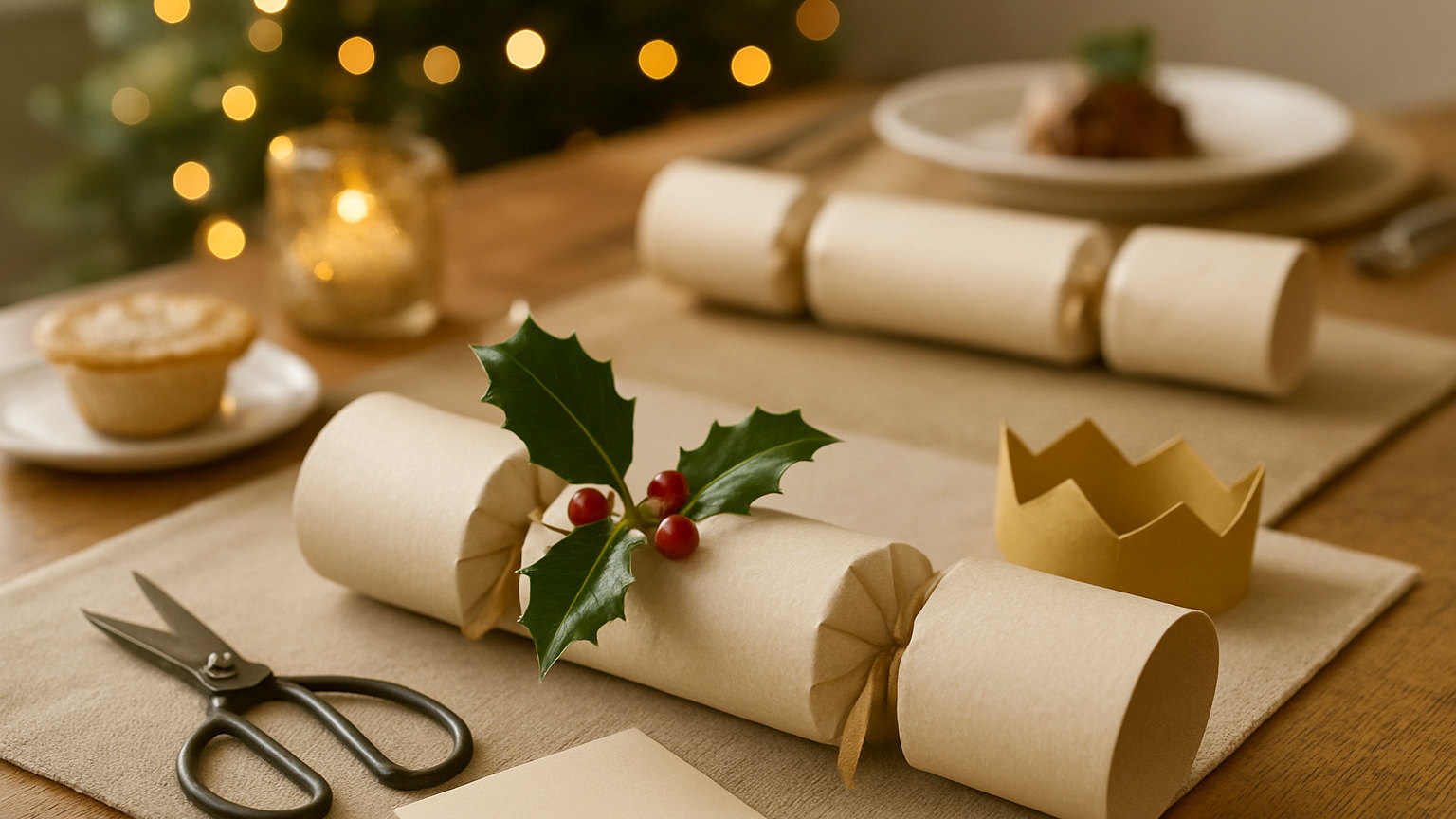
The contents of a standard cracker are a paper hat, a joke and a small plastic object, and roughly two of those three end up in a bin by Boxing Day. Everybody knows this and everybody buys them anyway, because pulling them is the tradition rather than what is inside. That does leave a reasonable case for either buying better ones or making your own.
What separates a good cracker from a poor one?
The gift, almost entirely. Cheap crackers contain a moulded plastic item worth pennies; better ones contain something small and genuinely usable, such as a keyring, a bottle opener, a pair of dice or a tape measure. The paper, the snap and the hat are much the same across the range. If you are paying more, you are paying for the contents.
Where did they come from?
A London confectioner, Tom Smith, is generally credited with inventing them in the middle of the nineteenth century, developing from a wrapped sweet into a package with a snap, and later gaining the hat and the motto. The joke is a twentieth century addition. Like most of Christmas, the tradition is Victorian and commercial in origin rather than ancient.
How do you make your own?
A cardboard tube, a rectangle of crepe or tissue paper about 30cm by 20cm, a cracker snap from a craft shop, and some ribbon or string. Lay the snap along the paper, put the tube in the middle with the filling inside it, roll the paper around, then tie at both ends of the tube. That is the whole method and it takes a couple of minutes each once you have done one.
Buy the snaps separately and everything else follows. They cost a few pounds for a pack and are the only component you cannot improvise.
What should go inside?
Something the specific person would use, which is the whole advantage of making them. A chocolate, a small tool, a photograph, a lottery ticket, a handwritten note, a seed packet, a memory of the year. Family crackers with a personal item in each are one of the best small traditions available and they cost less than a decent bought box.
Are reusable crackers worth it?
Fabric crackers with a popper mechanism or a tie closure can be refilled every year and stored, which removes the annual waste entirely. They cost more initially and pay for themselves within a few years. The compromise most households reach is fabric or refillable crackers for the family table and bought ones when there are more people than you have made.
What about the environmental side?
Standard crackers are difficult to recycle because they combine card, foil, plastic and glitter, and most go to general waste. Several manufacturers now make plastic free versions with wooden or paper gifts and recyclable card. Making your own from plain paper with a useful filling avoids the problem entirely, which is a better argument for making them than the cost.
When do you pull them?
Before the food arrives rather than during the meal, which most households have worked out by trial. A cracker pulled over a full plate scatters small objects into the gravy, and the debris then sits on the table for the rest of the meal. Pull them, put the hats on, and clear the wrappings before anything is served.
How many do you need?
One per person at the table, plus two or three spare for anybody who arrives unexpectedly or for a cracker that fails to snap, which happens in every box.
If you are making them, make a few extra and keep them unfilled, since an empty cracker with a snap in it can be filled in thirty seconds for a guest nobody was expecting.
It is also worth checking the contents before they go on the table if there are small children present, since some cheaper boxes contain items that are genuinely too small to be safe for a toddler.


