
Inflatables are the most divisive item in outdoor Christmas decorating. Children love them without reservation, which is a serious argument in their favour, and there are several practical drawbacks that nobody mentions at the point of sale. None of them are reasons not to buy one, but all of them are worth knowing before it is standing on your lawn.
What do they cost to run?
Considerably more than lights, because the fan runs continuously the whole time the figure is up rather than just illuminating. A blower is typically rated somewhere between 30 and 100 watts, against perhaps 5 watts for a string of LEDs. Over a month of evening use one large inflatable can draw more electricity than every light on the house combined, which surprises people who have only ever thought about the bulbs.
How do they behave in wind?
Badly, and December is the windy part of the year. An inflated figure is a sail, and even a well anchored one will lean, twist and eventually tear at the seams in a gale. The usual advice from manufacturers is to deflate and take them in when high winds are forecast, which is a genuine ongoing job rather than a one off installation.
How should they be anchored?
With every stake and tether supplied, all of them used, into ground rather than into a border that will turn to mud. Add extra guy lines to a fence, a railing or a heavy pot if the position is exposed. On a hard surface, sandbags or heavy planters are the usual answer. An inflatable that has come loose becomes a hazard to traffic and to neighbours as well as being ruined itself.
Take it down before a forecast gale rather than after. A torn seam is not economically repairable and the figure is finished for good.
How do they look during the day?
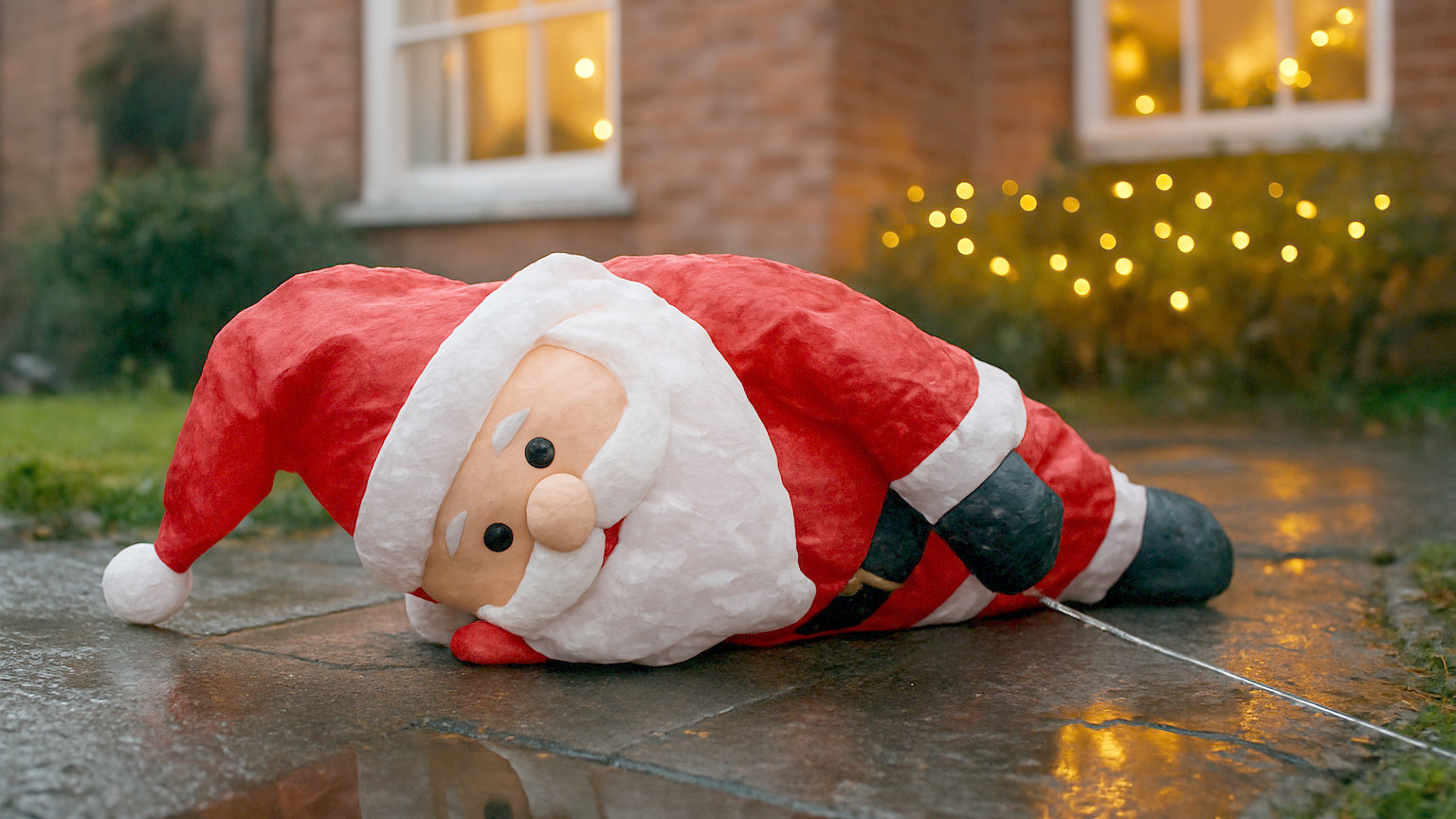
Like a heap of nylon on the grass, which is the drawback people notice in week two. If it is on a timer with the lights, it spends sixteen hours a day deflated, and a deflated inflatable in daylight is not an attractive object. Some households run the blower continuously to avoid this, which multiplies the running cost. There is no good answer to this, only a choice between two imperfect ones.
What about damp and mould?
The single biggest cause of an inflatable lasting one season rather than five. Fabric packed away damp will grow mould over eleven months in a shed, and it cannot be got out. Wait for a dry day, deflate it, let it dry completely, and only then fold it. If the season ends in wet weather, bring it inside and let it dry indoors for a day or two first.
What are the practical advantages?
They are visible from a distance, they require no ladder and no work at height, they go up in twenty minutes, and small children find them genuinely magical in a way that a tasteful light scheme does not manage. For a household with young children, that last point outweighs a good deal of what is written above, and it is a legitimate basis for the decision.
What should you check before buying?
The wattage of the blower. The stated height, since they are usually taller than the garden expects. Whether the lighting is LED and internal. What anchoring is supplied. Whether replacement blowers are available, since the fan is the part that fails first. And whether the material is rated for outdoor use for a full season rather than for occasional party hire.
What are the alternatives at the same money?
A large lit figure with a metal frame, which holds its shape day and night, survives wind, needs no fan and stores flat. These cost about the same as a good inflatable and last considerably longer.
A projector, a set of light up parcels, or a well lit tree in a pot all give a similar impact to a child without the daily deflation and the running cost of a continuous blower.


