
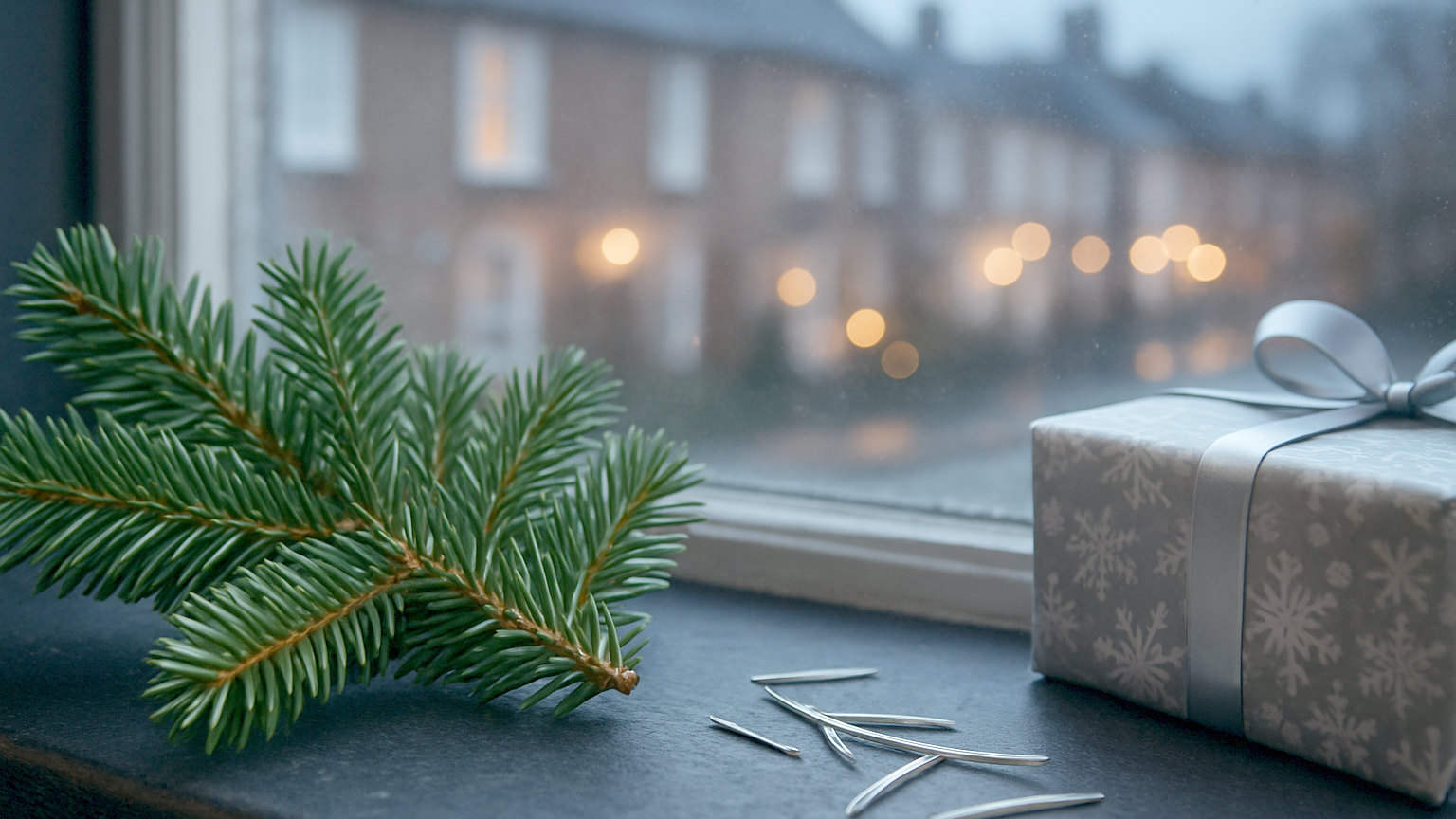
Needle drop is the main complaint about real Christmas trees and it varies enormously between species, to the point where two people can have completely different experiences of the same tradition. Choosing on species rather than on price or on whichever one is nearest the entrance solves most of it, and the differences are easy to see once you know what to look for.
Which species drops least?
The Nordmann fir, by a clear margin, which is why it has become the most popular Christmas tree in Britain. Its needles are soft, dark green, glossy and firmly attached, and a well looked after Nordmann will hold them for the whole of December. It is also the reason many households who had given up on real trees came back to them.
What is a Norway spruce like?
It is the traditional British Christmas tree, the classic conical shape, and it has the strongest scent of any of them. It is also the worst offender for needle drop by a considerable distance, particularly in a warm room, and it can shed heavily within two or three weeks. It is usually the cheapest option. If you want the smell and are prepared to hoover, it is a legitimate choice.
What about Fraser fir?
Very good needle retention, a strong pleasant scent, and a noticeably narrower profile than a Nordmann, which makes it the sensible choice for a room where floor space is tight. The branches are strong and slightly upturned, which suits heavier ornaments. It is generally a little more expensive and less widely stocked than a Nordmann.
Lift the tree a few inches and drop it on its base. A small shower of inner brown needles is normal; a fall of green needles means it was cut a long time ago.
Are there other varieties worth knowing?
Blue spruce, which has a striking silver blue colour and holds its needles reasonably, but the needles are genuinely sharp and it is a poor choice for a house with small children or where the tree has to be squeezed past. Scots pine, which has long soft needles, holds them extremely well and has an open airy shape that some people love and others find sparse. Lodgepole pine is similar.
Does the scent come at a cost?
Broadly yes, since the most fragrant trees tend to be the ones that drop most. The Norway spruce is the clearest example. Fraser fir is the best compromise, having both a good scent and good retention. A Nordmann has very little smell at all, which is the one thing people miss when they switch to it, and the usual workaround is a wreath or a garland of a more fragrant species.
What should you check before buying?
Run a hand gently along a branch: green needles coming away is a bad sign. Check the base is freshly cut and not dried out or grey. Look at the trunk for straightness, since a bent trunk will not sit in a stand. Check the shape from all sides, since one flat side is common and fine if it is going against a wall. And ask when it was cut, because a tree cut in October has been drying for weeks.
Where is the best place to buy?
A local grower or a farm where the trees are cut on site, since the shorter the time between cutting and your living room, the better the tree behaves. Garden centres are usually good. The trees stacked outside supermarkets and DIY sheds have often travelled and sat for some time, which is not always obvious from looking at them, and the price difference frequently reflects that rather than the species.
When should you buy it?
The first weekend of December for a Nordmann, which will comfortably last through to Twelfth Night if it is watered. A Norway spruce is better bought a week or two later, since it has less time in it.
Trees bought in late November have usually been cut in November, and the extra fortnight in a warm room is precisely what causes the shedding people complain about.


