
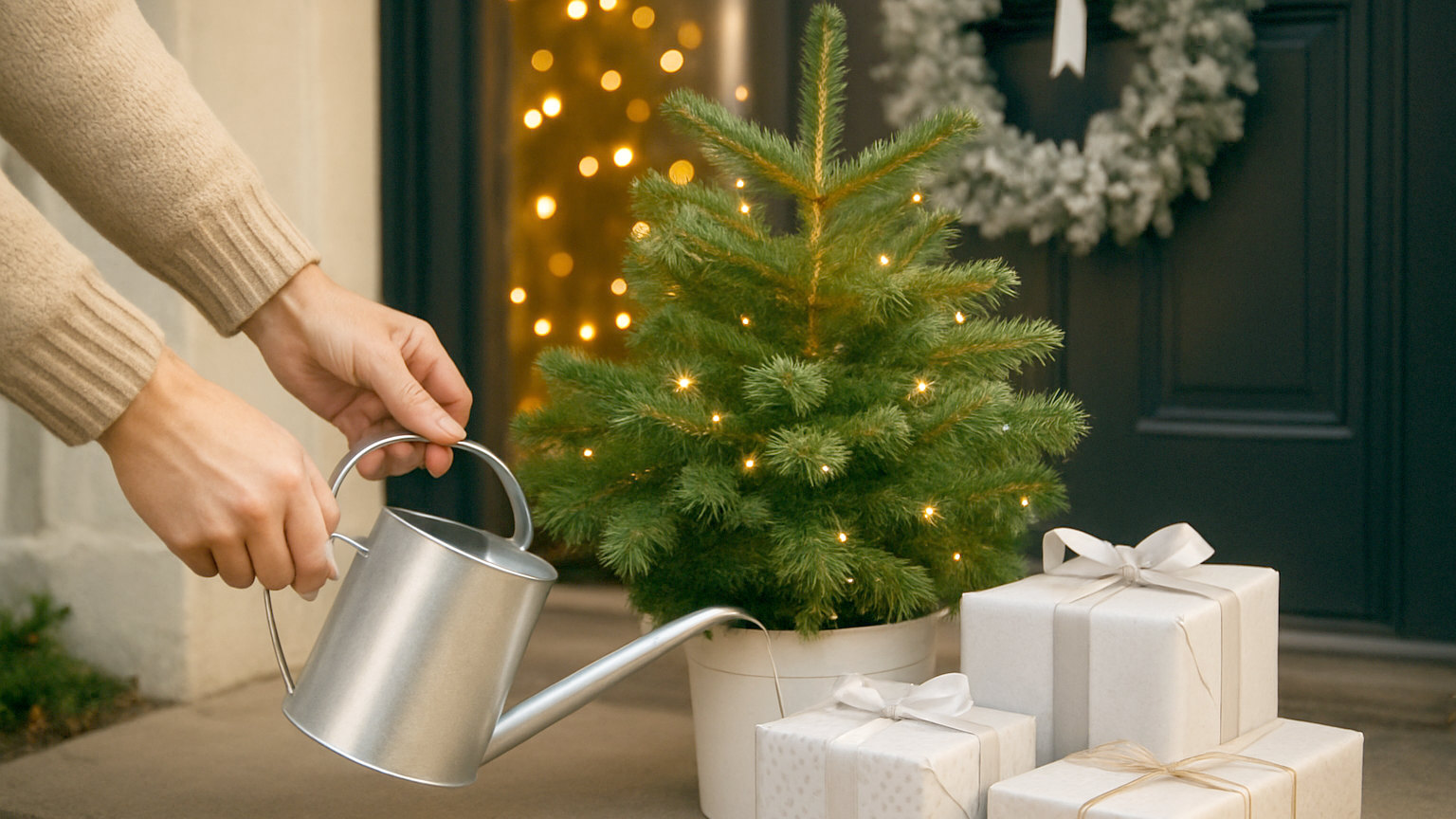
Everybody knows a real tree needs watering daily. The reason it does not happen is entirely practical: the reservoir sits under the lowest branches, behind a skirt, behind a pile of presents, and reaching it involves lying on the floor with a jug. Making it a ten second job rather than a two minute one is what turns the intention into a habit.
What is the simplest improvement?
A watering can with a long narrow spout, which reaches under the branches from a standing position without needing to be tipped far. An indoor houseplant can with a slim spout costs a few pounds and is the single most useful thing you can buy for a real tree. A jug with a pouring lip works badly, because the angle needed to pour spills water on the carpet.
What is the funnel and tube trick?
Push a length of narrow tube down into the reservoir at the back of the tree, with a small funnel taped to the top end, positioned where you can reach it standing up. Water goes straight down the tube into the stand without anybody bending down. It costs almost nothing from a hardware shop, and it is the answer for anybody who cannot easily get down to floor level.
What else works?
A turkey baster or a large syringe for topping up a low reservoir precisely, which is useful in the final week when the tree is drinking less and the water level is hard to judge. A small bottle with a sports cap, squeezed rather than poured. Any of these avoid the tipping angle that causes spills.
Check the level every day, even when the tree seems to have stopped drinking. If it drops below the cut end just once, the trunk seals and the tree is finished.
How much does it actually need?
Considerably more in the first few days than later. A six or seven foot tree can take a litre or two a day initially, slowing to much less after a fortnight. The rate is not the point, though. The point is that the water never drops below the cut surface of the trunk, which means checking daily regardless of how much went in yesterday.
How do you remember?
Attach it to something you already do. Watering the tree when you switch the lights on in the evening, or when you close the curtains, turns it into part of an existing routine rather than a separate task. A repeating alarm on a phone works for the first week and gets dismissed thereafter. A visible jug left beside the tree is a better prompt than any reminder.
How do you see the level?
A finger is the traditional method and works perfectly well. Some stands have a level indicator, which is worth having if you are buying one. Otherwise, dropping a short length of dowel or a chopstick into the reservoir gives you a dipstick you can lift and read in two seconds without getting down on the floor.
What should go in the water?
Plain water. The evidence for sugar, aspirin, lemonade and commercial tree feeds is weak, and several trials have found plain water performs as well as any of them. It also matters in a house with animals, since pets will drink from the reservoir and additives are an unnecessary risk. Save the money and spend the attention on checking the level instead.
What if the tree stops drinking?
A tree that suddenly takes no water has usually sealed its cut surface, which happens if the level dropped below the trunk even briefly. There is no way to reverse it without taking the tree out and recutting the base, which means undecorating it.
If it happens in the last week, it is not worth the upheaval. Keep the reservoir full anyway, move it away from any heat source, and accept that it will shed more than it would have done.


