
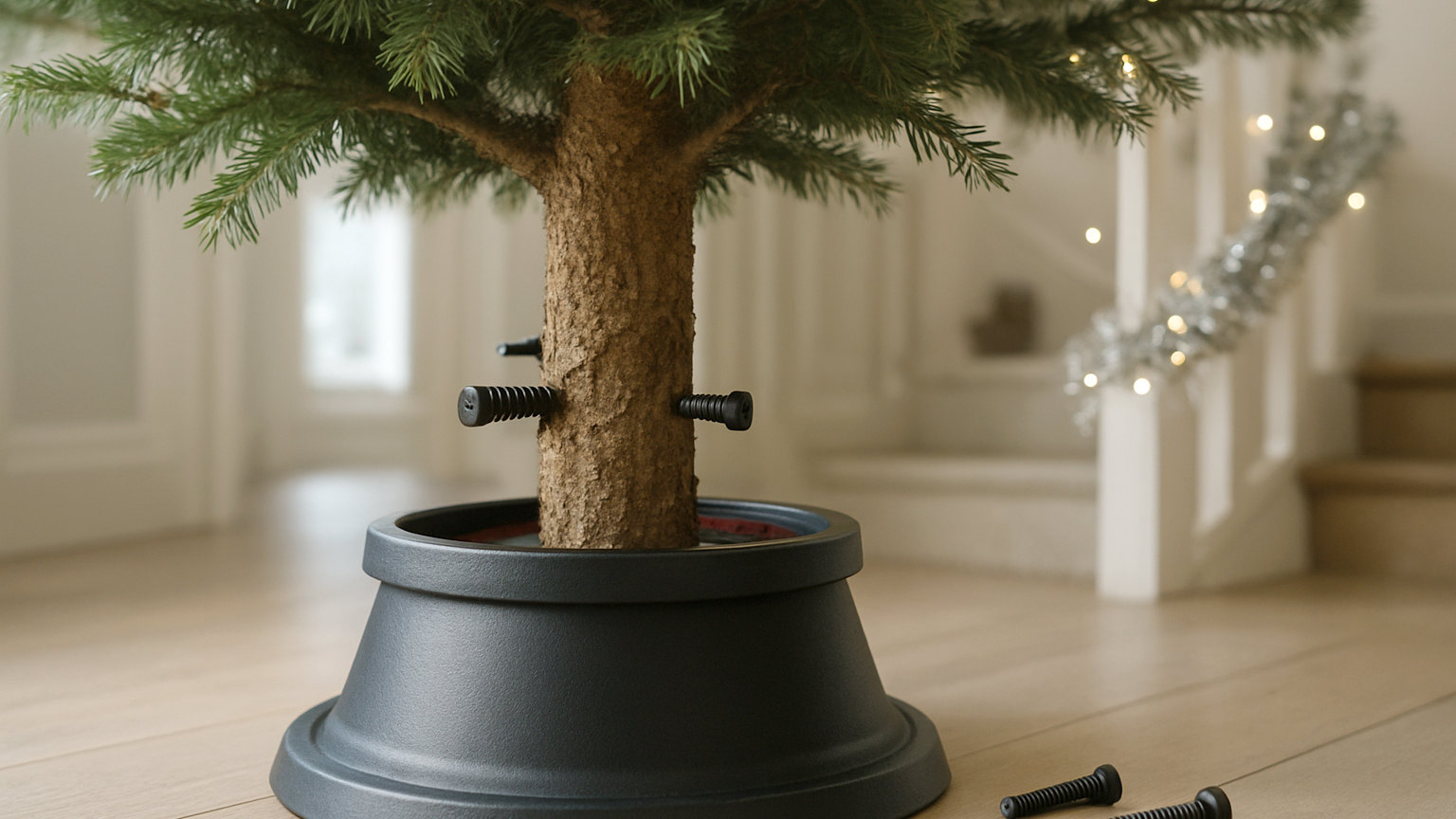
The stand is the cheapest component of a real Christmas tree and the one most likely to ruin it. A stand with a small reservoir means the tree runs dry, and a tree that runs dry once is finished regardless of what you do afterwards. It is worth about twenty minutes of thought and rather more money than most people spend.
Why does reservoir size matter most?
Because a six or seven foot tree can drink a litre or two a day in its first week, and a stand holding half a litre will be empty by the following morning. Miss it once and the cut surface seals. Look for a reservoir of at least two litres, and preferably more, which buys you a margin of error on the day you forget.
Screw fitting or spike?
Screw fitting, without much question. Four bolts tightened evenly against the trunk hold it firmly and allow adjustment for a bent trunk. A spike stand requires the tree to be driven onto a central point, which frequently blocks the cut surface and stops it drawing water at all, and it gives you no ability to correct a lean.
What about stability?
A wide base is worth more than anything else here, particularly in a house with children or animals. A stand whose base is narrower than the spread of the lower branches will topple if anybody pulls on the tree. Metal legs are considerably better than a moulded plastic bowl, and the weight of a full reservoir helps.
Check the stated trunk diameter before buying. A base too wide sits on top of the bolts rather than between them, which is the most common reason a tree will not stand up.
What size tree will it take?
Every stand states a maximum tree height and a trunk diameter range, and both matter. A stand rated for six feet will not safely hold seven. The diameter is the one people ignore: a thick trunk will not fit between the bolts, and a very thin one will be loose however tight they are. Measure the trunk if you can before buying.
Is a water level indicator worth it?
Genuinely useful, since checking the level otherwise means getting down on the floor and reaching under the lowest branches, which is why it stops happening by the second week. A stand with a visible gauge, or a wide filling point you can reach with a long spouted can, removes the main practical obstacle to keeping a tree alive.
What do the expensive ones offer?
Usually a foot pedal or lever clamp that grips the trunk in one movement, a larger reservoir, and a genuinely wide cast base. They cost several times what a basic stand does and they last for decades, which changes the arithmetic if you buy a real tree every year. They also make putting the tree up a one person job.
What should you do with it afterwards?
Empty it, dry it thoroughly and store it with the decorations rather than leaving it in a shed, since a stand left wet will corrode at the bolts and seize. A good stand outlives a great many trees, and replacing one in a hurry in December means buying whatever is left, which is how most people end up with a poor one.
What about a stand for an artificial tree?
Most artificial trees come with their own stand and it is frequently the weakest part of the whole thing, being a moulded plastic cross that flexes. Replacing it with a heavier metal one is a cheap improvement.
The stated pole diameter is the thing to check, since artificial tree poles vary and a stand designed for a real trunk will not necessarily grip one.
What if the tree still will not sit straight?
The trunk is almost certainly not straight, which is true of most real trees. Aim for the upper two thirds looking vertical rather than the base, since that is the part the eye reads.
Packing a folded piece of card under one side of the stand corrects a sloping floor, which is the other common cause and one nobody thinks to check.


