
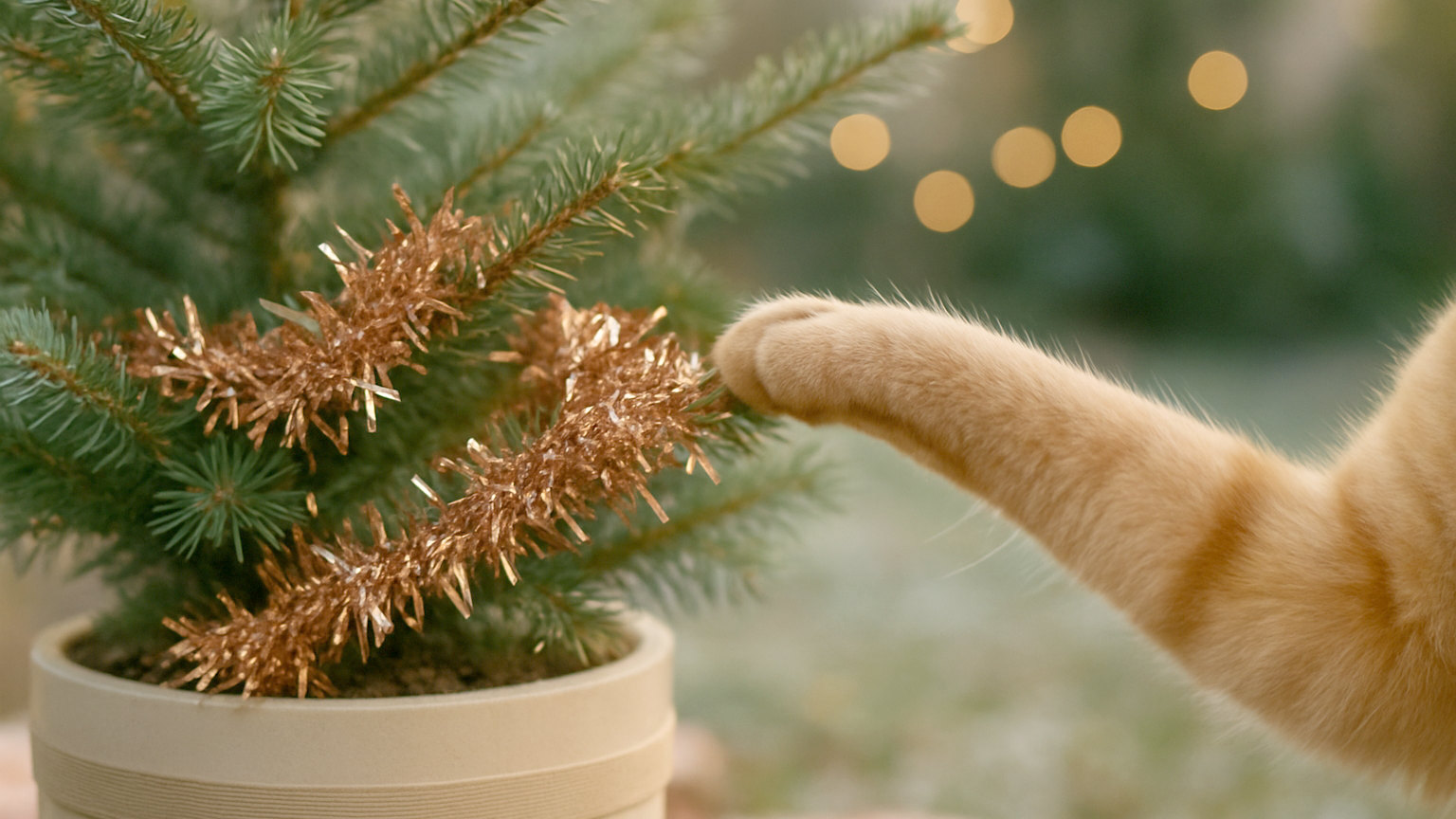
A Christmas tree is, from an animal point of view, a climbing frame hung with toys and a bowl of water at the bottom. Most of what goes wrong is mess rather than danger, but a small number of things are genuinely hazardous, and they are worth knowing precisely rather than as a general sense that Christmas is risky for pets.
Why is tinsel the worst offender?
Because a cat that swallows a strand of tinsel can develop what vets call a linear foreign body, where one end lodges and the rest bunches the intestine along it. It is a serious surgical emergency and it is one of the more common Christmas presentations at veterinary practices. The simplest answer in a house with cats is to leave tinsel out entirely, along with ribbon, string and anything long and thin.
Which decorations should come off the lower branches?
Anything glass, which shatters into fragments that get walked on and eaten. Anything small enough to swallow. Chocolate decorations, which are toxic to dogs and are hung at exactly nose height. Anything with a wire hook, which can be swallowed. The lower third of the tree in a house with animals wants fabric, felt, wood or shatterproof decorations and nothing else.
What is actually toxic?
Chocolate, seriously so for dogs, and the darker the worse. Lilies, which are severely toxic to cats and can cause kidney failure from a very small exposure including pollen. Holly berries, mistletoe and ivy, which cause stomach upset. Poinsettia, which has a far worse reputation than it deserves and is usually only a mild irritant. Pine needles, which can irritate the gut if eaten in quantity.
If you think an animal has eaten something it should not have, ring a vet rather than waiting to see. With chocolate and with lilies in particular, early treatment matters a great deal.
What about the water in the stand?
Animals will drink from it, so use plain water and no additives, feeds or aspirin, none of which have good evidence behind them anyway. Sap and resin leaching into the water can cause mild stomach upset, so covering the reservoir with a cloth, a tree skirt or a purpose made cover is worth doing. Change the water rather than topping up stagnant water.
How do you secure the tree?
A wide based stand, and a discreet line of fishing wire from the upper trunk to a small hook in the wall or window frame. This costs nothing, is invisible from a short distance and completely removes the possibility of a climbing cat bringing the whole thing down. It is the single most useful thing you can do in a household with an enthusiastic animal.
What do you do about cables?
Route them behind furniture, clip them along a skirting board, and use a cable cover on any run an animal can reach. A chewed mains cable is both a shock risk to the animal and a fire risk to the house. Battery powered lights on the lower branches remove the problem entirely, and unplugging the tree at the socket when the room is empty is a sensible habit in any case.
What deters a determined cat?
Less than you would like. Citrus peel or a citrus scented spray around the base works for some cats. Foil at the base works for others. Giving the tree a few days of being boring before the decorations go on can reduce the interest. The most reliable approach is a secured tree, nothing valuable on the lower half, and the door closed when the room is empty.
What about the presents under the tree?
Anything edible wrapped and left under a tree will be found, particularly chocolate, and a dog will go through paper to reach it. Keep food presents somewhere else until the morning rather than trusting the wrapping.
Ribbon and curling ribbon on parcels carry the same risk as tinsel for cats, so paper tape and simple string are the safer choice in a house with animals.


