
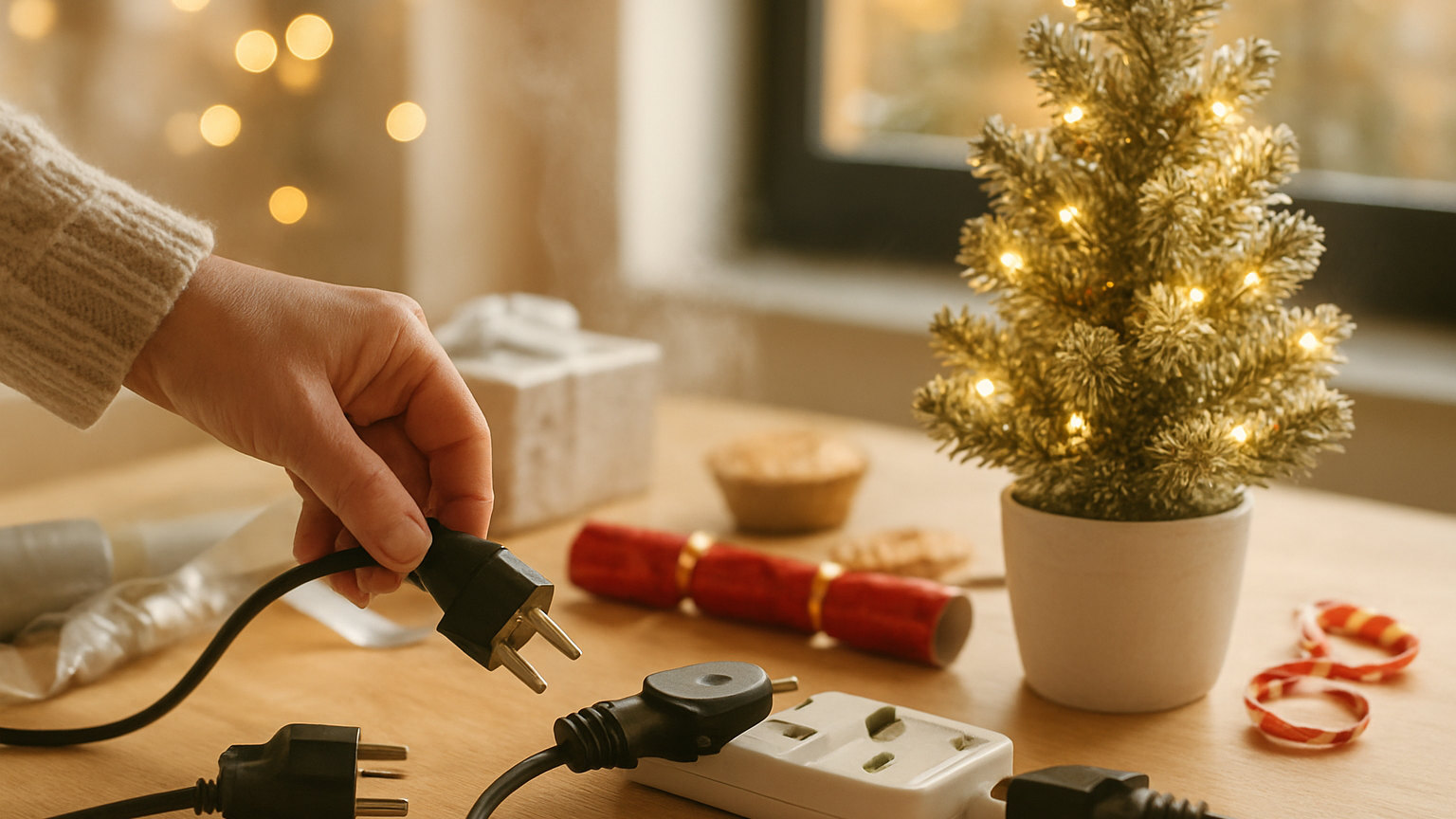
Every set of connectable Christmas lights states a maximum number that can be linked together, and it is printed somewhere on the packaging in small type that almost nobody reads. The limit is not a manufacturer being cautious. It exists because of how the current flows, and exceeding it puts the load on a part of the set that was not designed to carry it.
Why does the limit exist?
Because when sets are daisy chained, the current for every set in the chain passes through the cable and connector of the first one. The first set is carrying its own load plus everything downstream of it. The stated maximum is the point at which that first cable and its fuse are working at their design limit, and going beyond it means the cable is carrying more than it was built for.
What happens if you exceed it?
Best case, the fuse in the plug does its job and the whole run goes dark, which is the outcome the fuse exists to produce. Worse, the cable warms up, the insulation degrades over time and the failure happens later and less visibly. This is why replacing a blown fuse with a higher rated one is genuinely dangerous rather than merely against the rules.
Where is the number printed?
Usually on the box, on a swing tag attached to the cable, or moulded into the plug housing. It is typically expressed as a maximum number of sets or a maximum total wattage. Photograph it when you first open the box, because the tag will be gone by next December and the number is the only way to know.
Never fit a higher rated fuse to make a longer run work. The fuse rating is the safety limit for the cable behind it, not an obstacle to be worked around.
How do you work out what an extension lead can carry?
Add up the wattage of everything plugged into it and compare with the rating on the lead, which is usually 13 amps or 3000 watts for a domestic one. LED Christmas lights draw so little that this is rarely a problem for lights alone. It becomes a problem when the same lead is also running a heater, an inflatable blower or anything with a motor.
What should you do instead of one long chain?
Run two or three shorter chains from separate sockets, or from separate sockets on one properly rated extension lead. This keeps every set within its limit, it means one failure does not take out the whole display, and it usually results in a shorter and tidier cable run in any case. It is what any large display does as a matter of course.
Can you connect different brands together?
Only where the connectors are compatible and both sets state the same voltage, and even then it is worth avoiding. Different sets have different current draws and different fuse ratings, and the calculation of how many can be chained assumes identical sets. Mixing brands makes the stated maximum meaningless, which removes the only safety information you had.
What about extension reels?
Unwind them completely before use, always. A cable coiled on a drum under load cannot dissipate heat and can get hot enough to damage the insulation, and reels carry a lower rating when wound than when fully extended. This matters more with a heater than with a set of LEDs, but the habit is worth having regardless of what is plugged in.
How do you plan a larger display?
Count the sets, note the wattage of each, and work out which circuits and sockets they will run from before anything goes up. A display planned on paper takes half the time to install and avoids the discovery that the last run has nowhere to plug in.
For anything substantial, splitting the display across two or more sockets on different sides of the house is both safer and more practical than running everything back to one point.


