
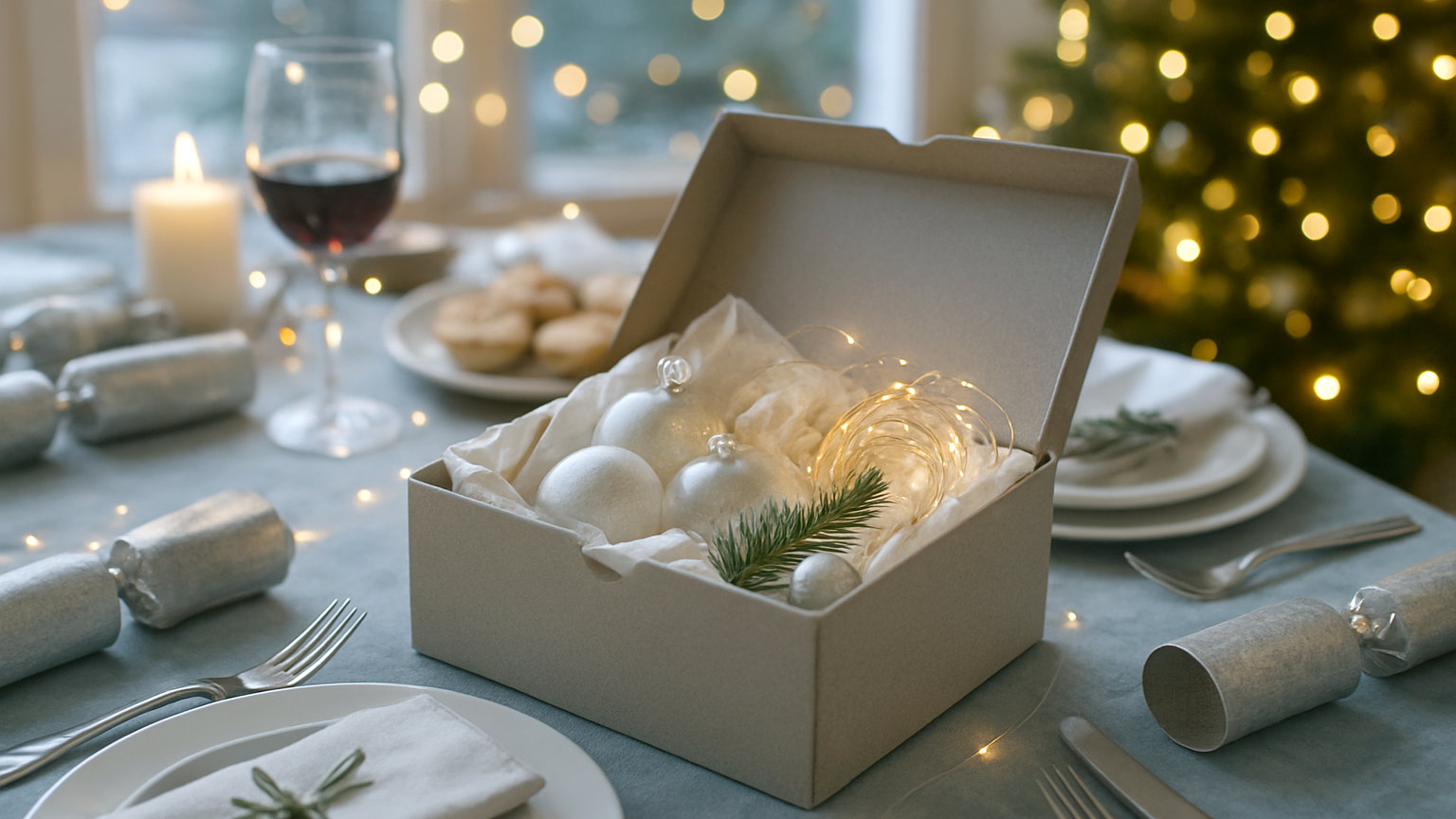
More Christmas decorations are damaged in storage than on the tree. Baubles crack in a bag under something heavy, lights develop internal breaks from being bundled, and anything wax or plastic distorts in a loft that reaches thirty degrees in August. An hour spent packing properly in January saves an irritating hour of discovery the following December.
How should glass baubles be packed?
Individually wrapped in tissue paper or kitchen roll, in a compartmented box rather than loose. Purpose made bauble boxes with dividers are inexpensive and worth it, and a cardboard box divided with strips of card does the same job for nothing. Egg boxes work for small ones. What does not work is a carrier bag, which is how most broken baubles are made.
Why do lights need a reel?
Because bundling a set into a ball puts sharp bends in the cable, and repeated bending breaks the conductor inside the insulation where you cannot see it. That is what produces the set that half works next year. Wind each set onto a plastic reel, a piece of stiff cardboard notched at each end, or an offcut of pipe, and secure the end with a twist tie.
What does a loft do to decorations?
It gets much hotter in summer and much colder in winter than the rest of the house, and it can be damp. Heat softens and distorts candles, plastic figures and anything wax. Cold makes some plastics brittle. Damp affects paper, card, fabric and anything wooden, and encourages mould. Most decorations survive a loft perfectly well, but candles and anything sentimental are better kept inside the house.
Label every box on the side rather than the top. Boxes get stacked, and the top label is the one you cannot read.
How should an artificial tree be stored?
In its original box if it survived, or in a purpose made tree bag, which costs little and is considerably easier to handle. Compress the branches upwards towards the trunk section by section rather than forcing the whole thing into a bag at once. Keep the pole sections together. If the tree is pre lit, wind any loose leads carefully rather than letting them tangle in the branches.
What should go in which box?
Sort by where things are used rather than by what they are: one box for the tree, one for the rest of the house, one for outdoors, one for the table. That means each box is opened once and unpacked in one place, rather than every box being opened to find the things for one room. Put the first things you will need, such as the lights, in the box that goes in last.
What should you throw away in January?
Anything broken that you will not repair. Any light set with damaged cable or a cracked plug. Anything you did not put up this year and did not miss. Storing decorations you no longer like costs loft space every year for something that will not go on a tree again. Deciding in January, when it is all in front of you, is far easier than deciding in December.
What is worth writing down?
A note in the box saying which light sets worked, what broke, and what needs replacing next year, which turns a December problem into a January sale purchase. Also worth noting is how many sets the tree actually took, which saves working it out again. It takes two minutes and it is the sort of thing nobody remembers eleven months later.
Where should you store it all?
Somewhere dry and reasonably stable in temperature, which in most houses means under a bed, in a wardrobe or in a garage rather than a loft, if space allows. Lofts are acceptable for robust items and poor for anything wax, delicate or sentimental.
Stack heaviest at the bottom, keep the bauble boxes off the floor in case of damp, and put everything in one place rather than three, which is the difference between one trip in December and four.


