Homemade decorations outlast bought ones for a reason that has nothing to do with quality: nobody throws them away. A salt dough star with a date on the back survives four house moves and a change of colour scheme, which is more than can be said for most things bought in a set of twelve. The trick is choosing the ones that physically last as well as sentimentally.
Which ones actually last?
Salt dough, if it is properly dried and sealed. Dried orange slices, which keep for years and improve in colour. Wooden shapes, painted or plain. Felt, which does not fray or fade. Air dry clay. Pine cones. What does not last is anything paper on a tree in a warm room, anything glued rather than tied, and anything with glitter, which sheds into the carpet until roughly April.
How do you make salt dough properly?
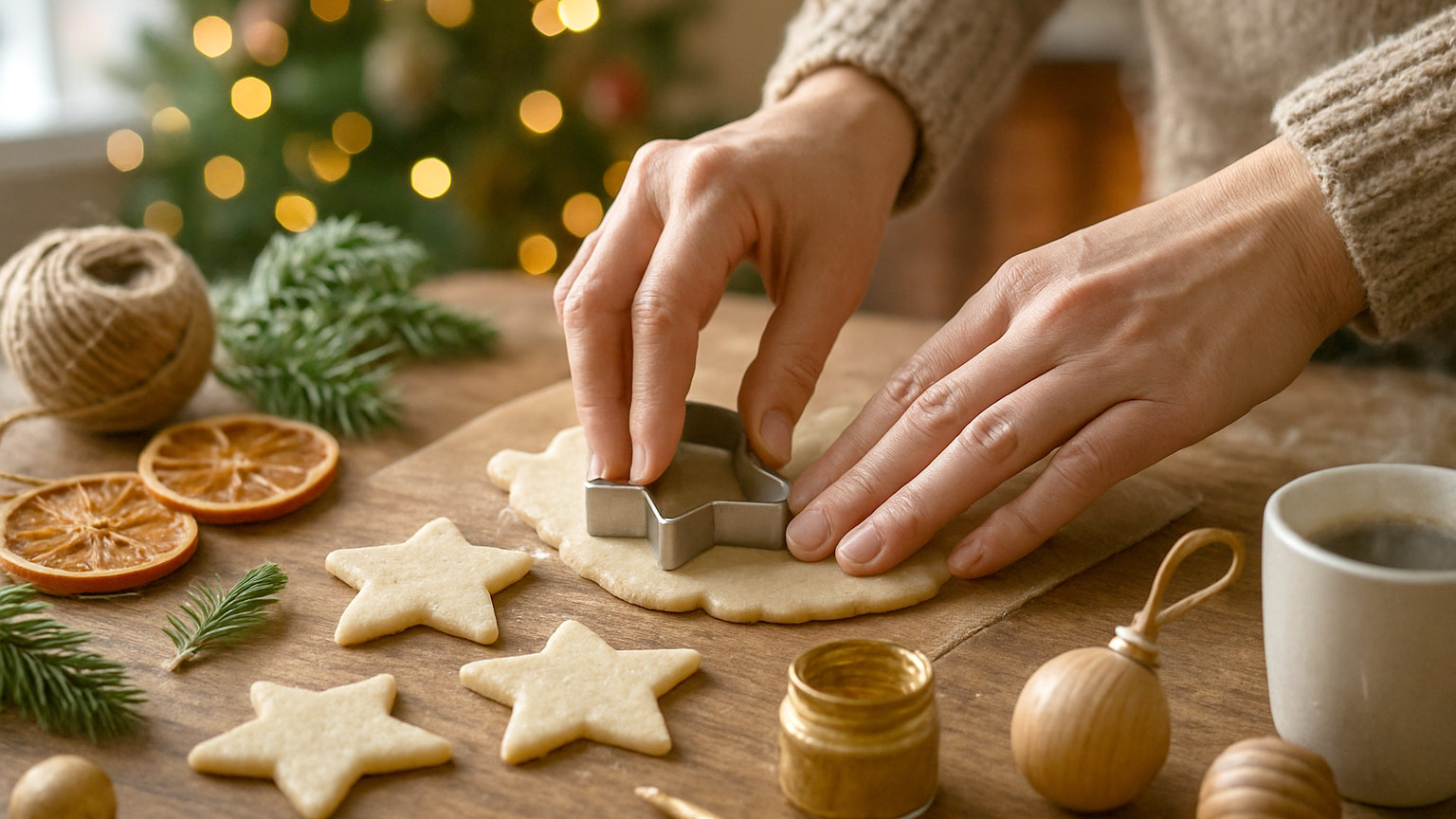
Two parts plain flour, one part fine salt, and enough water to make a firm dough. Roll it to about half a centimetre, cut shapes, and make the hanging hole with a straw before baking. Then bake at a very low temperature, around 100C, for two to three hours until completely hard, turning once. The low slow bake is what dries it rather than browning it, and rushing it produces something that puffs and cracks.
Why does it need sealing?
Because salt is hygroscopic, meaning it draws moisture from the air, and an unsealed decoration will soften, discolour and eventually crumble over a few years in a loft. A coat of PVA or clear varnish on both sides once it is completely cool and dry stops that entirely. This single step is the difference between a decoration that lasts two Christmases and one that lasts twenty.
Write the year on the back of everything before it is sealed. In fifteen years that is the detail that matters more than how neat the shape was.
How do you dry orange slices?
Slice oranges to about half a centimetre, blot them thoroughly on kitchen paper, and lay them on a rack in an oven at the lowest setting for three to four hours, turning once or twice. They should be dry and slightly translucent rather than sticky. Thread them with twine while still slightly warm, since a fully cooled slice is more brittle. They keep for years in a box.
What suits which age?
Two to four: cutting salt dough shapes with cutters, pressing things into dough, sticking. Five to eight: painting, threading, simple paper folding, decorating baked shapes. Nine and up: anything with a needle, a glue gun under supervision, or a design of their own. Give the youngest the decorating rather than the making, since the waiting between stages is what loses them.
What can you make from what is already in the house?
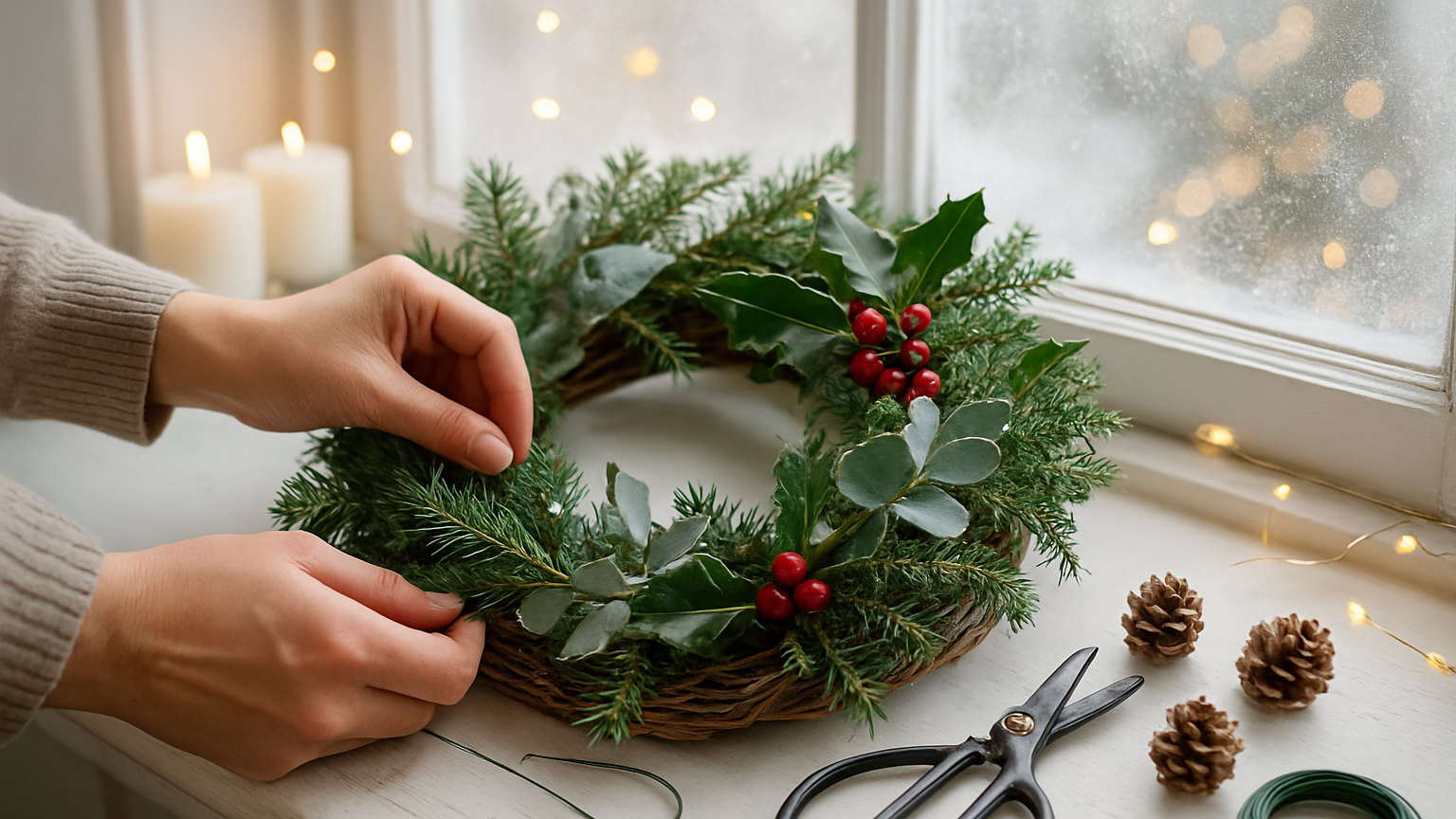
Paper chains and paper stars from wrapping paper or old book pages. Pine cones from a walk, dipped in white paint at the tips. Cinnamon sticks tied in bundles with twine. Bay leaves threaded on a string. A wreath from a coat hanger bent into a circle. None of these cost anything and several look considerably better than the equivalent bought item.
How should they be stored?
More carefully than bought decorations, since they are the irreplaceable ones. Wrapped in tissue in a rigid box rather than a bag, kept in the house rather than in a loft where damp and heat will get at them. Keep them together in one clearly labelled box, because the reason to make them is to still have them in twenty years and that depends entirely on where they spend the other eleven months.
What makes a good present?
Anything with a date and a name on it, which is why homemade decorations are the present grandparents keep longest. A single well made salt dough or clay decoration in a small box does more than a bought set of six.
Making a few extra while the oven is on costs nothing and covers the unexpected present from a neighbour, which is otherwise the most awkward gap in December.