A tree that looks deliberate rather than accumulated is not about expensive decorations. It is about the order things go on in and where they are placed, and both are easy to get right once somebody has said what they are. The difference between a professionally dressed tree and a domestic one is almost entirely depth and distribution rather than the quality of what is hanging on it.
What order should you work in?
Lights first, worked in towards the trunk and back out again. Then any garland or ribbon, wound in the same direction as the lights. Then the largest baubles, then the medium, then the small. Then anything delicate or unusual in the visible gaps. Then the topper last. Adding lights after baubles means disturbing everything already hung, which is why this order is not negotiable.
Where do the large baubles go?
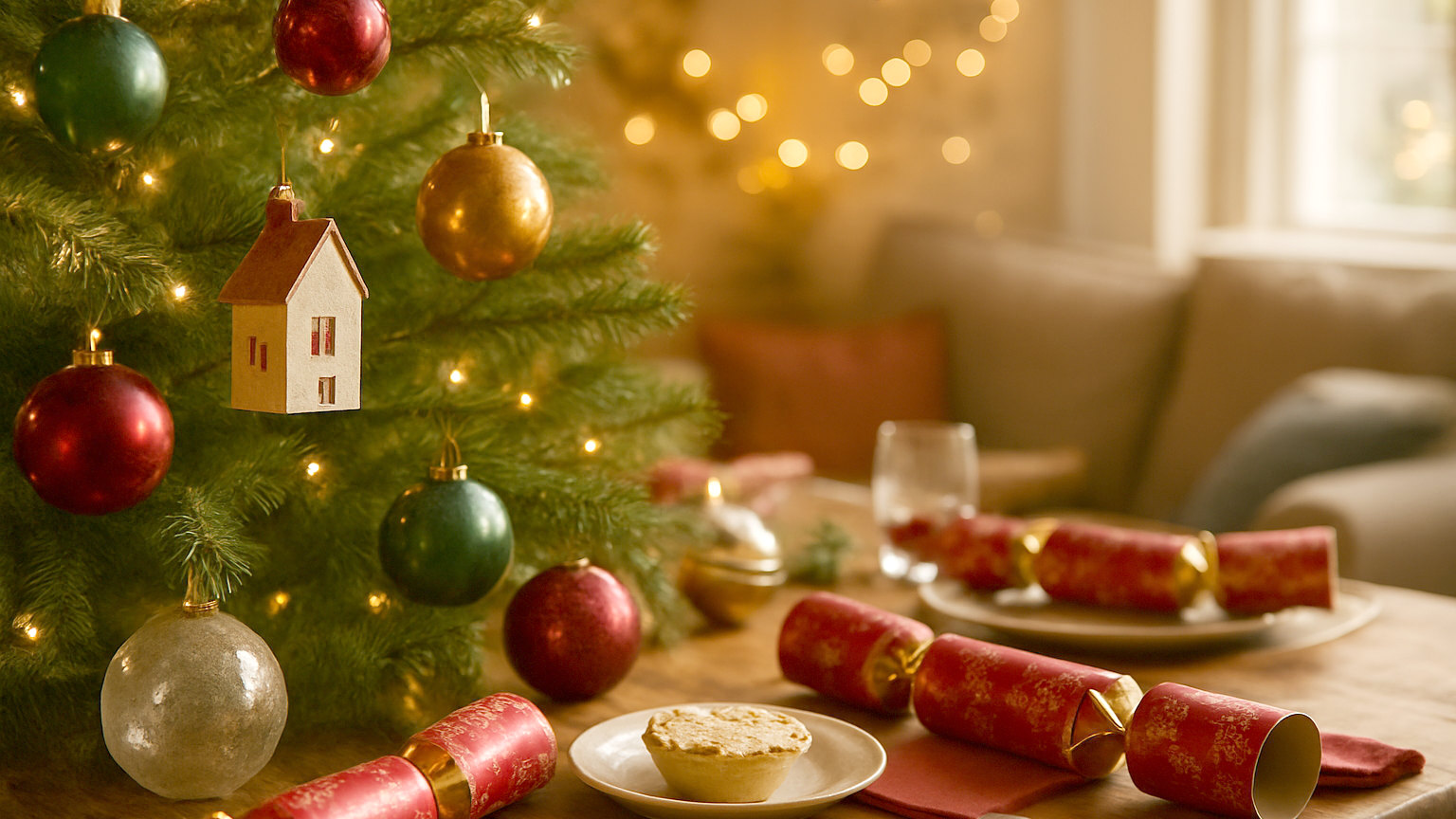
Deeper into the tree and lower down, which is counterintuitive. Placing the largest ornaments closer to the trunk fills the interior and creates depth, and putting the heaviest lower down where the branches are strongest keeps them secure. Smaller and lighter decorations go towards the branch tips and higher up. A tree with everything hung on the outer few inches looks flat.
How do you build depth?
Hang things at three different distances from the trunk rather than all at the perimeter, and vary the height at which they sit on each branch. Tuck a few plain matt baubles right inside near the trunk, where they catch light and stop the interior reading as a black hole. This one technique does more for how a tree looks than any amount of extra decoration.
Stand back after every ten or fifteen decorations. Gaps and clusters are invisible from arm length and obvious from the doorway.
Does a colour scheme matter?
It helps, but a scheme does not have to mean two colours. Choosing a dominant metal, gold or silver, and one or two accent colours gives coherence while leaving room for everything else. Distribute each colour evenly around the whole tree rather than in patches, which is the most common mistake and the reason a tree can look busy on one side and empty on the other.
What do you do with the handmade ones?
Put them on, and put them where they can be seen. A tree carrying a decade of salt dough stars and school photographs is doing something a styled tree cannot, and any scheme that excludes them has the priorities the wrong way round. If coherence matters to you, the usual compromise is a coloured scheme on a second smaller tree and the family tree left as it is.
How do you use ribbon or garland?
Wide wired ribbon tucked into the tree in loops, rather than wound tightly around it, gives volume and fills gaps. Work from the top down, pushing each loop into the branches so it appears to come from inside. Alternatively, drape it in swags from branch tip to branch tip for a more formal look. Either works; winding it round like tinsel does not.
What about children and animals?
Put anything glass, fragile or genuinely precious above the reach of small hands and tails, and use fabric, wood or shatterproof decorations on the lower third. Secure the tree itself, either with a wide based stand or with a discreet line to a hook in the wall. Chocolate decorations are best left off entirely in a house with a dog, since chocolate is toxic to them.
How many decorations does a tree need?
Considerably more than most households own. A six or seven foot tree comfortably takes fifty to seventy baubles alongside the lights, and a tree that looks sparse is almost always short of quantity rather than short of ideas.
Building up over several years by adding a few each January in the sales is how most well dressed trees are assembled, and it spreads a substantial cost across a decade.