
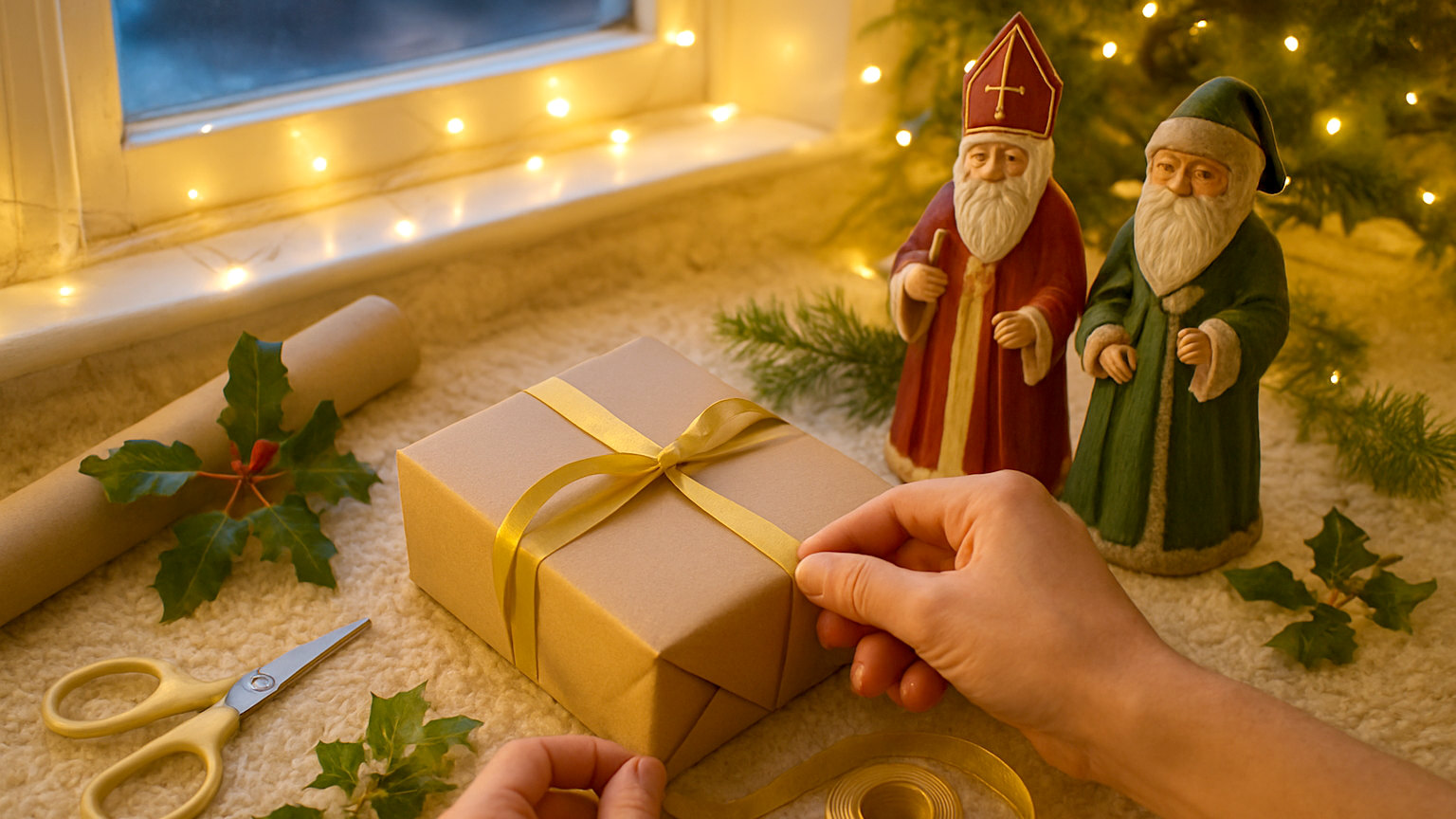
The figure most British children picture is the result of at least two separate traditions merging during the nineteenth century, and until fairly recently Father Christmas and Santa Claus were not the same person at all. Understanding how they combined explains several oddities, including why he is associated with both a fourth century bishop and with feasting and drinking.
Who was Saint Nicholas?
A bishop of Myra, in what is now Turkey, in the fourth century. Very little is known about him with certainty, but he became one of the most widely venerated saints in Europe, with a reputation for secret gift giving. The best known story has him providing dowries for three impoverished sisters by dropping gold through a window at night, which is the origin of the stocking.
How did he become a gift bringer?
Through his feast day, the sixth of December, which became an occasion for giving presents to children across much of Europe. In the Netherlands the figure of Sinterklaas developed, arriving by boat and leaving gifts in shoes. Dutch settlers carried the tradition to North America, where the name gradually became Santa Claus.
Who was the English Father Christmas?
An entirely different figure, and originally not a gift bringer at all. He appears in English writing from at least the fifteenth century as a personification of the season itself, associated with feasting, drinking and merriment rather than with children or presents. In seventeenth century pamphlets defending Christmas against Puritan suppression, he appears as a jovial old man representing hospitality and good cheer.
Father Christmas and Santa Claus were separate figures until the nineteenth century. One was a spirit of feasting; the other was a saint who brought presents.
How did the two combine?
Through the nineteenth century, as American traditions travelled back across the Atlantic and Victorian Britain rebuilt Christmas around children and the family. The English Father Christmas acquired the American Santa Claus role of bringing presents on Christmas Eve, and the two names became interchangeable. By the early twentieth century most people no longer distinguished between them.
What fixed the modern image?
An American poem of 1823, usually attributed to Clement Clarke Moore, which established the sleigh, the reindeer, the chimney and the arrival on Christmas Eve rather than on the saint feast day. Then the illustrations of Thomas Nast in American magazines from the 1860s onwards, which fixed the appearance: the beard, the fur trimmed suit, the workshop and the North Pole.
Are there other European gift bringers?
Many, and several are still the main figure in their own countries. The Christkind, an angelic child figure, brings presents across much of southern Germany and Austria. La Befana, a witch, arrives in Italy at Epiphany. Iceland has thirteen Yule Lads. Spain and much of Latin America give presents at Epiphany from the three kings rather than from Santa at all.
Why does it matter?
Because it explains why the tradition feels ancient and is in fact assembled. Almost every detail children take as fixed, from the sleigh to the North Pole to the red suit, was settled within the last two hundred years, and most of it within the last hundred and fifty. That is a considerably more interesting story than the one most people have.
Why does he live at the North Pole?
Because Thomas Nast put him there in an illustration in the 1860s, and it stuck. Before that no fixed home existed in the tradition at all. The workshop and the elves followed over the next few decades from the same illustrated sources.
Finland later established a rival claim for Lapland, which is now a substantial tourism industry, and both locations now coexist quite happily in the story.
What is he called elsewhere?
Pere Noel in France, Babbo Natale in Italy, Julemanden in Denmark, Joulupukki in Finland, Ded Moroz in Russia, and Sinterklaas in the Netherlands, where he remains a separate figure arriving in November.
Several of these are recent imports laid over an older local gift bringer, which is why some countries now have two figures operating on different dates.


