The food is the main reason most people go to a Christmas market and it is where almost all of the money goes. It is also priced well above what the same thing costs elsewhere, which is fine when it is part of an afternoon out and expensive when it becomes the afternoon. Knowing what is worth it makes the difference.
What should you eat at a German style market?
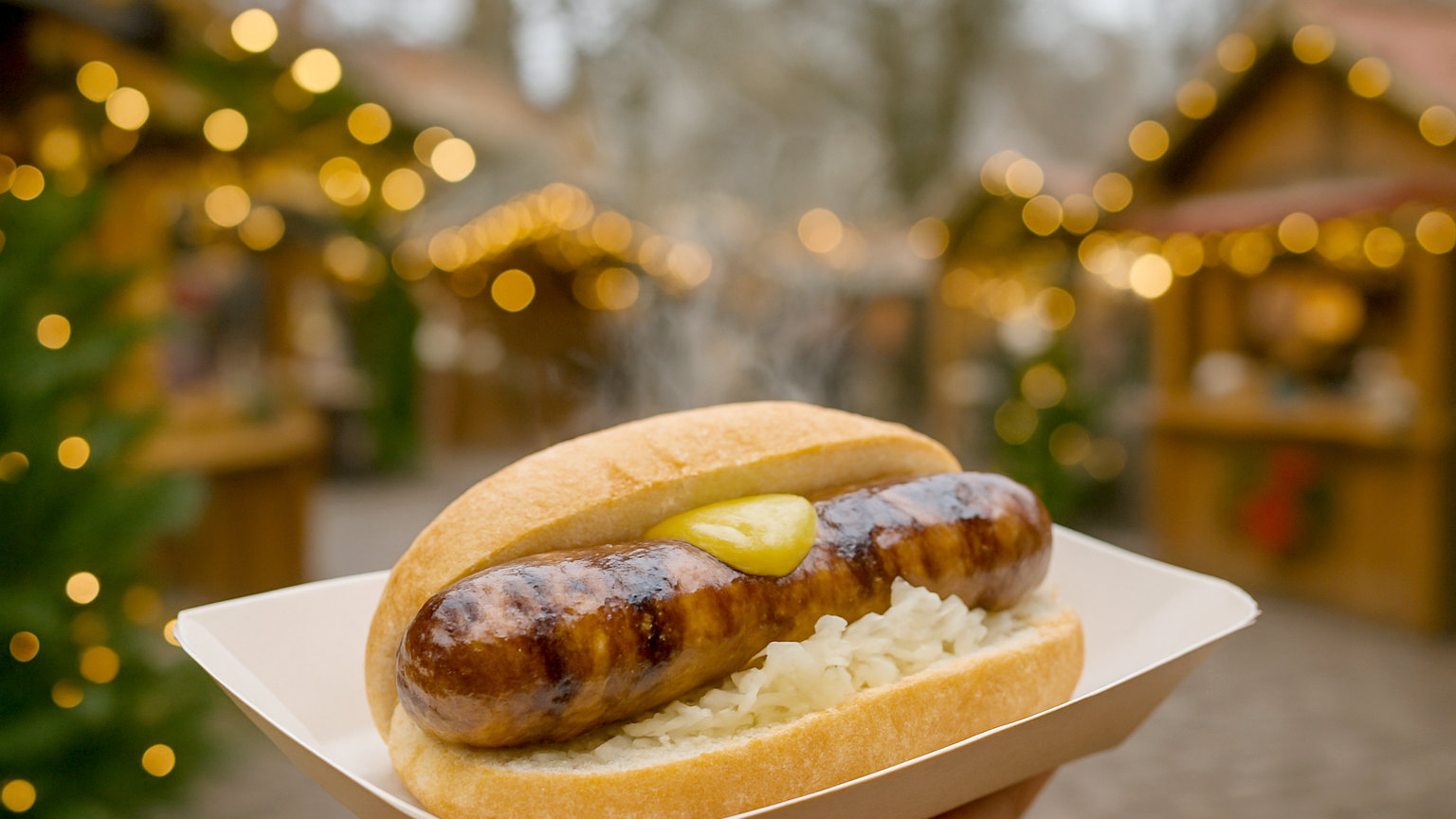
Bratwurst, which is the staple and where the regional differences are most obvious, from the small Nuremberg sausages served three to a roll to the long Thuringian ones. Raclette, scraped from a half wheel of melting cheese onto potatoes. Reibekuchen, which are potato pancakes with apple sauce. Flammkuchen, a thin baked flatbread. All of these are eaten standing up.
What is worth queueing for?
Anything being cooked in front of you at a stall with a queue of locals, which is a more reliable signal than anything on the sign. Raclette and hog roast both reward the wait. What is not worth queueing for is anything reheated, anything from a stall with no queue at a busy market, and anything at the entrance, which is always the most expensive.
What about the sweet things?
Roasted almonds and chestnuts, which are the traditional market smell and are genuinely good. Lebkuchen, the spiced biscuit, particularly the proper Nuremberg version. Stollen. Crepes and churros, which are everywhere and are the same everywhere. Poffertjes, the small Dutch pancakes, which appear at a good number of British markets and are better than they look.
The mug deposit is refundable. Hot drinks at German style markets include a few pounds for the mug, returned when you hand it back, and a great many British visitors simply do not realise.
What should you drink?
Mulled wine, obviously, and it is worth trying the white version, which is common in Germany and rare in Britain. Mulled cider. Hot chocolate with a shot in it. The alcohol free punch, which at German markets is genuinely good rather than a compromise. Prices are high, so this is where a flask in the bag saves the most money.
What is overpriced?
Almost everything, relative to a high street, and some things considerably more than others. Hot drinks carry the largest markup. Anything sold in a novelty container. Chips. Anything at a stall positioned at the entrance or beside a fairground ride, where the pricing assumes a captive audience in a good mood.
How do British markets differ?
They lean more towards British street food than towards the German model, so alongside the bratwurst you will find hog roast, halloumi fries, loaded chips and pie stalls. That is not a criticism, and the local producers selling cheese, cured meat and preserves to take home are frequently the best thing at a British market.
How do you keep the cost down?
Eat a proper meal before you go and treat the market food as one thing each rather than as grazing. Take a flask, which removes the largest single cost. Walk a full circuit before buying, since prices vary and the best stall is rarely the first one. And buy the things to take home rather than the things to eat there, which is where the value actually sits.
What about dietary requirements?
Better catered for than a decade ago, with most markets now carrying at least one vegetarian and vegan stall, though the choice is narrow and the queues at those stalls are frequently longer.
Anybody avoiding gluten should ask rather than assume, since most market food is served in bread and the fried items are usually cooked in shared oil.
What should you take home?
The things that keep, which is where a market genuinely competes: cheese, cured meat, preserves, chocolate, a bottle from a small producer. These are frequently sold close to trade prices by the person who made them.
That is also the answer to the cost problem, since twenty pounds spent on food to take home is worth considerably more than the same sum spent standing up in the cold.