
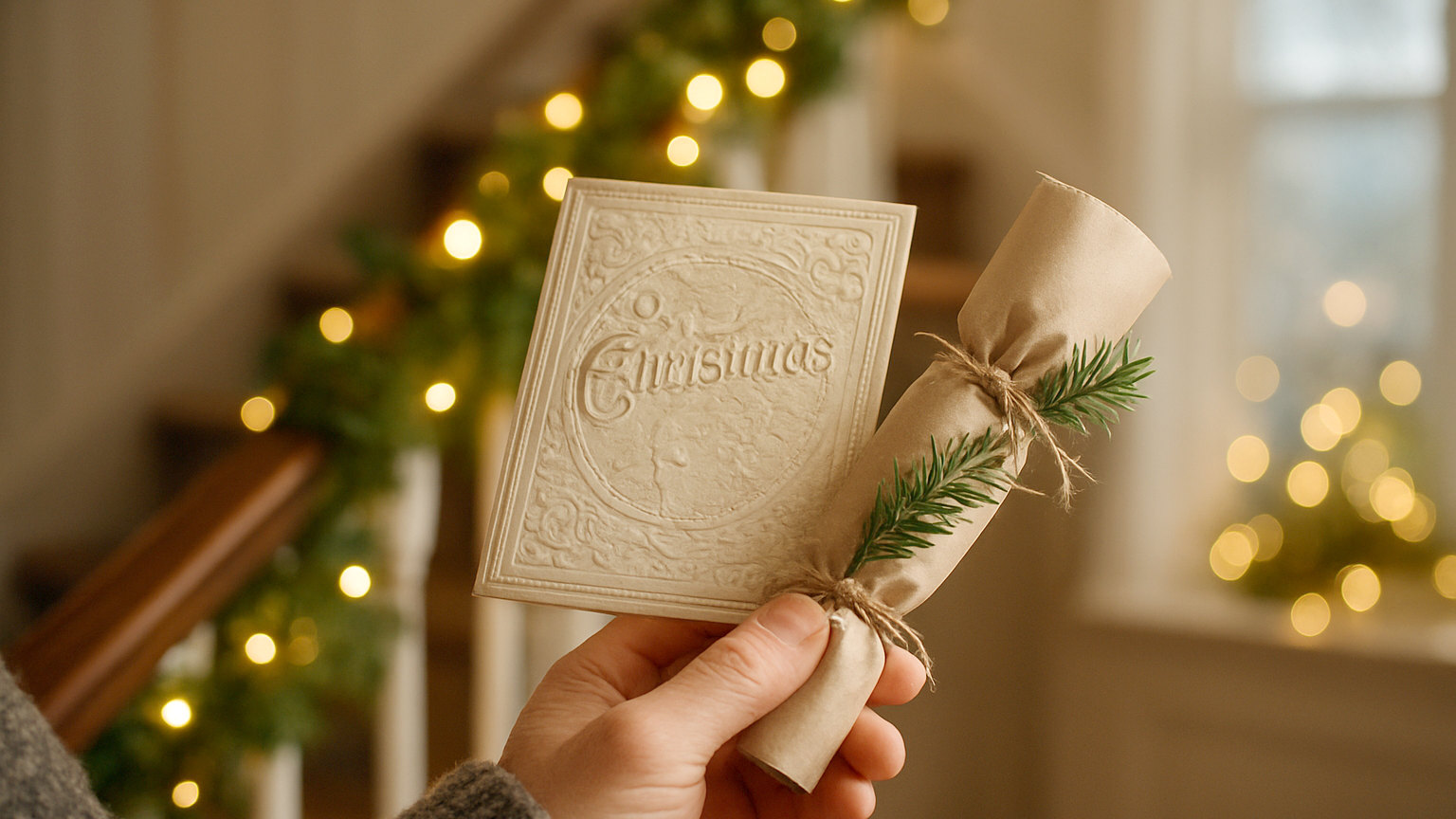
Almost everything a British household regards as traditional about Christmas arrives within about thirty years in the middle of the nineteenth century. The tree, the card, the cracker, the printed carol collection, the family day at home and the emphasis on children all become established between roughly 1840 and 1870. Before that, Christmas was a considerably smaller and more public affair.
What did Christmas look like before?
Weakened. The seventeenth century Puritan suppression had done real damage, and industrialisation had broken up the rural communities where the older customs lived. By the early nineteenth century Christmas was a modest occasion in many places, and a number of writers of the period comment on it as something that had been in decline for generations.
What did Dickens actually do?
A Christmas Carol, published in 1843, was enormously popular and gave the season a moral shape: family, generosity, the poor remembered, redemption. It did not invent the festival, but it crystallised an idea of what Christmas was for at exactly the moment the middle classes were looking for one, and its influence on the tone of the season is difficult to overstate.
Where did the tree come from?
Germany, and it was in Britain before Victoria. Queen Charlotte, herself German, had one at the very start of the century. What changed things was an illustration published in 1848 showing Victoria and Albert with their children around a decorated tree, which was widely reproduced and made the practice fashionable across the country within a few years.
The first commercial Christmas card was produced in 1843, the same year as A Christmas Carol. Both were commissioned by men who saw an opportunity in a festival that was being rebuilt.
How did the card start?
Henry Cole, a civil servant involved in the introduction of the penny post, commissioned an illustrated card in 1843 to save himself writing individual letters. About a thousand were printed and they were expensive. Cheaper printing and a reduced postal rate for cards through the following decades turned it into a mass habit within a generation.
Where did the cracker come from?
A London confectioner, Tom Smith, in the 1840s, developing from a wrapped sweet into a package with a snap and later a paper hat and a motto. It is a purely commercial invention with no folk origin at all, which is true of a surprising amount of the Christmas table.
What else made it possible?
The railways, which for the first time allowed families scattered by industrial work to travel home for a day. Bank holiday legislation later in the century, which fixed the days off. Rising middle class incomes and a growing manufacturing sector producing goods to buy. And the collection and publication of carols, which rescued a repertoire that had been surviving in fragments.
Why does it feel older than it is?
Because the Victorians deliberately dressed their inventions in antiquity, presenting a revived and largely reconstructed Christmas as the restoration of something ancient. That framing was extremely effective, and it is why a card printed in 1843 and a cracker invented by a sweet manufacturer both feel like they have always been there.
What did they get from elsewhere?
The tree from Germany, along with a good deal of the decorating. The gift bringer largely from America, where the Dutch Saint Nicholas had already been reworked. The carols from collectors gathering fragments across Britain and Europe.
Very little of the Victorian Christmas was invented from nothing. It was assembled from imports, revivals and commercial opportunities, and then presented as ancient.
What survived from before?
The food, largely, since the Christmas dinner and the pudding both predate the Victorian revival by a considerable margin. Mince pies are considerably older still.
Some of the carols also survived in oral tradition in rural areas, which is exactly what the Victorian collectors went looking for, and several of the best known were rescued rather than written.


