
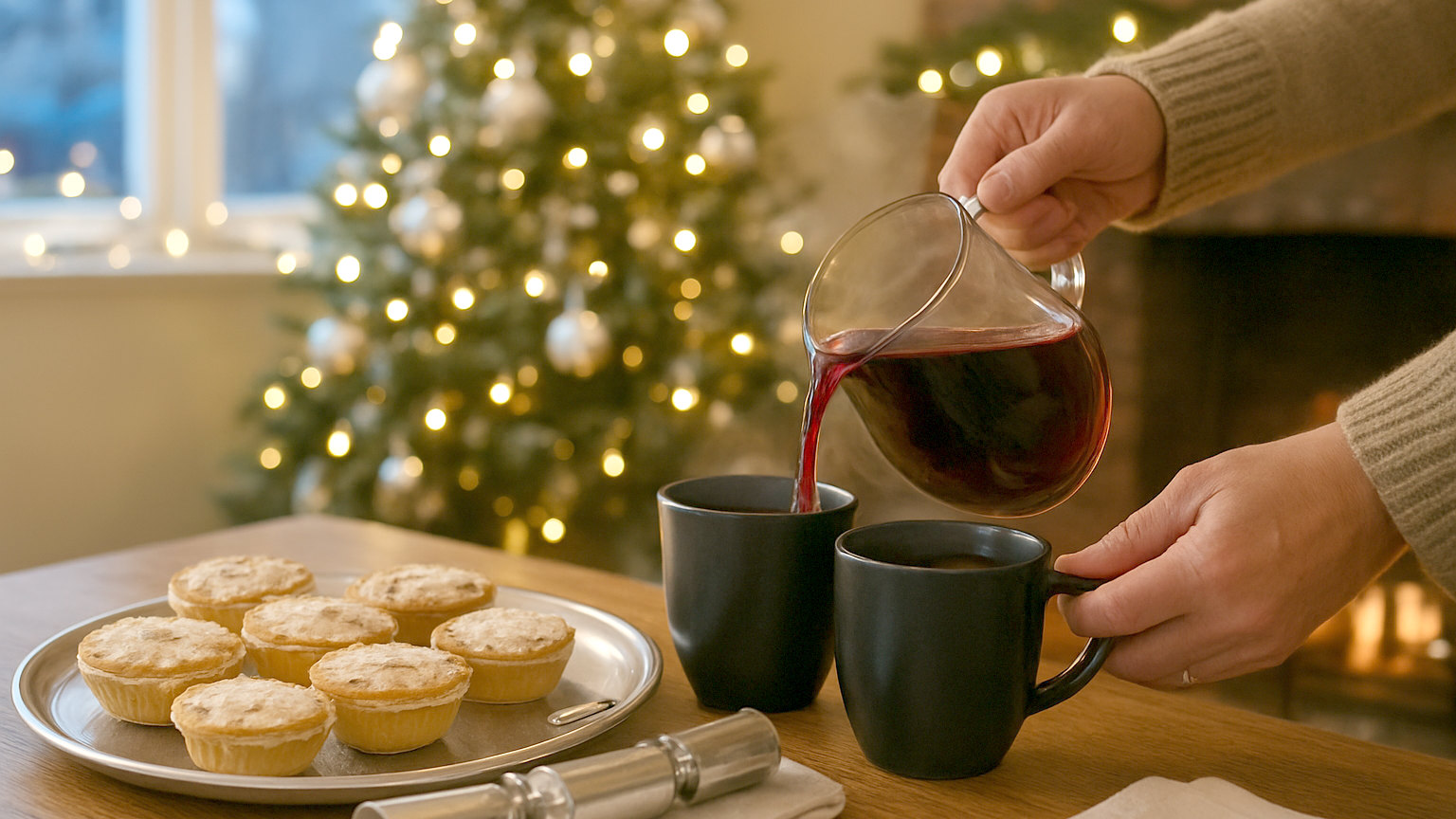
Almost everything written about Christmas Eve assumes a house containing small children, a stocking to fill and somebody who will not go to sleep. For a considerable number of households none of that applies, and the evening is a blank rather than a schedule. It is also, for many people, the better of the two days, and it is worth planning rather than letting it happen.
Why do many households prefer it?
Because Christmas Day frequently belongs to other people. If the twenty-fifth is spent travelling to relatives, cooking for eight, or fitting into somebody else routine, then Christmas Eve is the part that is genuinely yours. Treating it as the main occasion rather than the build up is a decision plenty of couples and households make deliberately.
What can the evening be?
A proper meal, cooked without an audience and eaten slowly. Presents exchanged between the two of you, which many couples do on the evening rather than competing with the family morning. A film. A walk after dark to look at the lights, which is free and better than it sounds. A carol service. A drink somewhere that is open.
What should you cook?
Something you actually want rather than something festive. If tomorrow is a roast for a crowd, tonight should not be. Fish, a steak, a curry, or anything you would never cook for a table of relatives. Several households borrow the European convention of a fish supper on the twenty-fourth, which suits the evening and leaves the kitchen clear for the morning.
Do not cook a rehearsal of tomorrow lunch. Two roasts in twenty-four hours is a great deal of the same food and neither of them gets appreciated.
What is worth doing outside the house?
A midnight service, which anybody can attend regardless of belief and which is among the better hours of the season. A walk. The pub, which is a genuine tradition in a great many places and is at its best on the twenty-fourth. A drive to look at a street that goes in for lights. Most of it is free and none of it needs booking.
What if you are on your own?
Plan it deliberately rather than letting it arrive, since a solitary Christmas Eve goes considerably better with a shape to it. Decide the meal, line up something to watch or read, and treat it as an occasion. Arranging a call with somebody at a fixed time gives the evening an anchor. Many people find a Christmas on their own is far better than expected, and the ones who say so are the ones who planned it.
What about the preparation for tomorrow?
Do it in the afternoon rather than the evening, which is the single decision that frees the night. Vegetables prepared, table laid, timing plan written, drinks in the fridge. A kitchen finished by six turns the evening from a job into a night off, and it removes about two hours from tomorrow morning.
Is it worth having traditions?
Very much, and they are easier to sustain without children since nothing has to be organised around a bedtime. The same meal, the same film, a walk, a particular bottle opened at a particular moment. Three years running makes it a tradition, and a household of adults can keep one going for decades without any of the disruption that childhood brings.
What about the morning?
Without children there is no reason for Christmas morning to start early, and a great many households find that a slow start is the single best thing about an adult Christmas. Nothing has to happen before ten.
If the day is being spent elsewhere, the morning at home is the part that belongs to you, and it is worth protecting rather than filling with the drive.
Whatever you decide, decide it rather than letting the evening arrive, since an unplanned Christmas Eve without children in the house has a habit of becoming an ordinary Wednesday with better lighting.


