Midnight mass is among the few Christmas traditions that anybody can join without any preparation, cost or commitment, and it is attended every year by a substantial number of people who do not otherwise go to church. Most congregations are entirely aware of that and are glad to see them. The main thing that puts people off is not knowing what happens, which is easily solved.
Do you need to be religious to go?
No. Christmas services are the point in the year when churches expect visitors, and nobody will ask what you believe or why you are there. You are not required to do anything beyond sitting, standing when everybody else does, and singing if you want to. Many people go for the music, the atmosphere or the tradition rather than for the service itself.
What time does it actually start?
Frequently not at midnight, which catches people out every year. A great many churches now hold the service at eleven at night, or earlier still, and some hold it in the late afternoon for families. Check the specific church rather than assuming, since the times vary considerably between parishes and between denominations and are published in advance.
What happens during it?
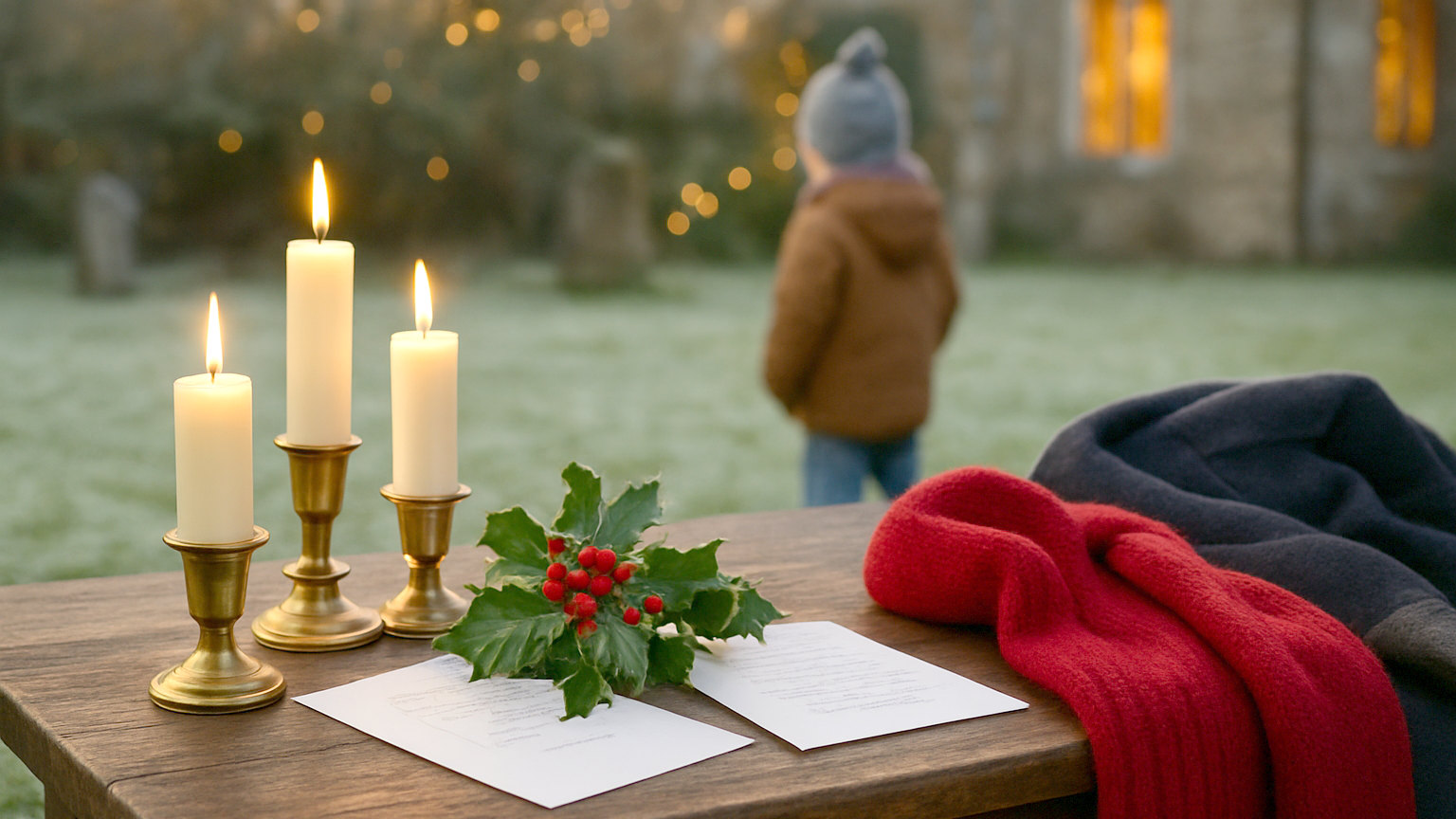
Carols, readings from the nativity accounts, prayers, a short address, and in most traditions communion. It typically runs to about an hour, sometimes longer in a cathedral. There will be candles. The order of service is usually printed and handed out at the door, which tells you exactly what is coming and when to stand.
Check the start time with the specific church. A great many midnight services now begin at eleven, and turning up at midnight to a locked building is a familiar Christmas Eve experience.
What about communion?
You are not obliged to take it and nobody will mind if you do not. Practice varies between denominations, and in some churches it is offered to anybody while in others it is limited to members. If you would rather not, you can stay in your seat, or go up and receive a blessing instead, which is usually indicated by crossing your arms.
What should you wear?
Whatever you would wear to a restaurant, and warm layers, since old buildings in December are cold and you will be sitting still for an hour. Nobody is judging clothing. Some congregations dress up considerably and some do not, and both will be present at the same service.
Should you take children?
Depends on the child and the time. A late service is a great deal to ask of anybody under about ten on the night before Christmas. Most churches also hold a crib service or a family nativity earlier on Christmas Eve, typically in the afternoon, which is designed for children, is much shorter, and is frequently the better option.
How busy will it be?
Busier than at any other point in the year, and the popular churches fill well before the service begins. Arriving twenty or thirty minutes early is worth doing if you want a seat, particularly at a cathedral or a well known parish church. Some now issue free tickets for Christmas services, which is worth checking in early December.
What else happens in churches at Christmas?
A great deal, and most of it is free and open to anybody. Carol services, which are usually the best singing of the year. Crib services for families in the afternoon of Christmas Eve. Nine lessons and carols. Christmas morning services, which are shorter and considerably less crowded than the night before.
Details go up on church websites and noticeboards from late November, and the popular services fill early enough that turning up on the night is not always sufficient.
Is it worth going if you never otherwise would?
A great many people do exactly that, once a year, and find it one of the better hours of Christmas. The building, the candles and several hundred people singing together produce something that is difficult to get anywhere else.
Nobody will ask why you came or expect you back in January, and the congregation is entirely used to a full church of people they will not see again until next December.