
Christmas Eve attracted more folklore than any other night in the British calendar apart from Halloween, largely because a night sitting between the ordinary world and a major feast was regarded as a moment when the usual rules were suspended. Most of the beliefs have gone. A few survive in households that would be surprised to hear they were superstitions at all.
Do animals speak at midnight?
The most widespread of the beliefs, recorded across Britain and much of Europe: that at midnight on Christmas Eve, animals in the stable are granted speech, in memory of the animals present at the nativity. In most versions it is unlucky or dangerous to try to listen, since anybody who eavesdrops will hear something they would rather not.
What about the bees?
A related and specifically English belief held that bees hum a particular tune in their hives at midnight on Christmas Eve. There are eighteenth and nineteenth century accounts of people going out to listen. The wider tradition of telling the bees about births, deaths and marriages in the household belongs to the same family of beliefs.
What is the mince pie rule?
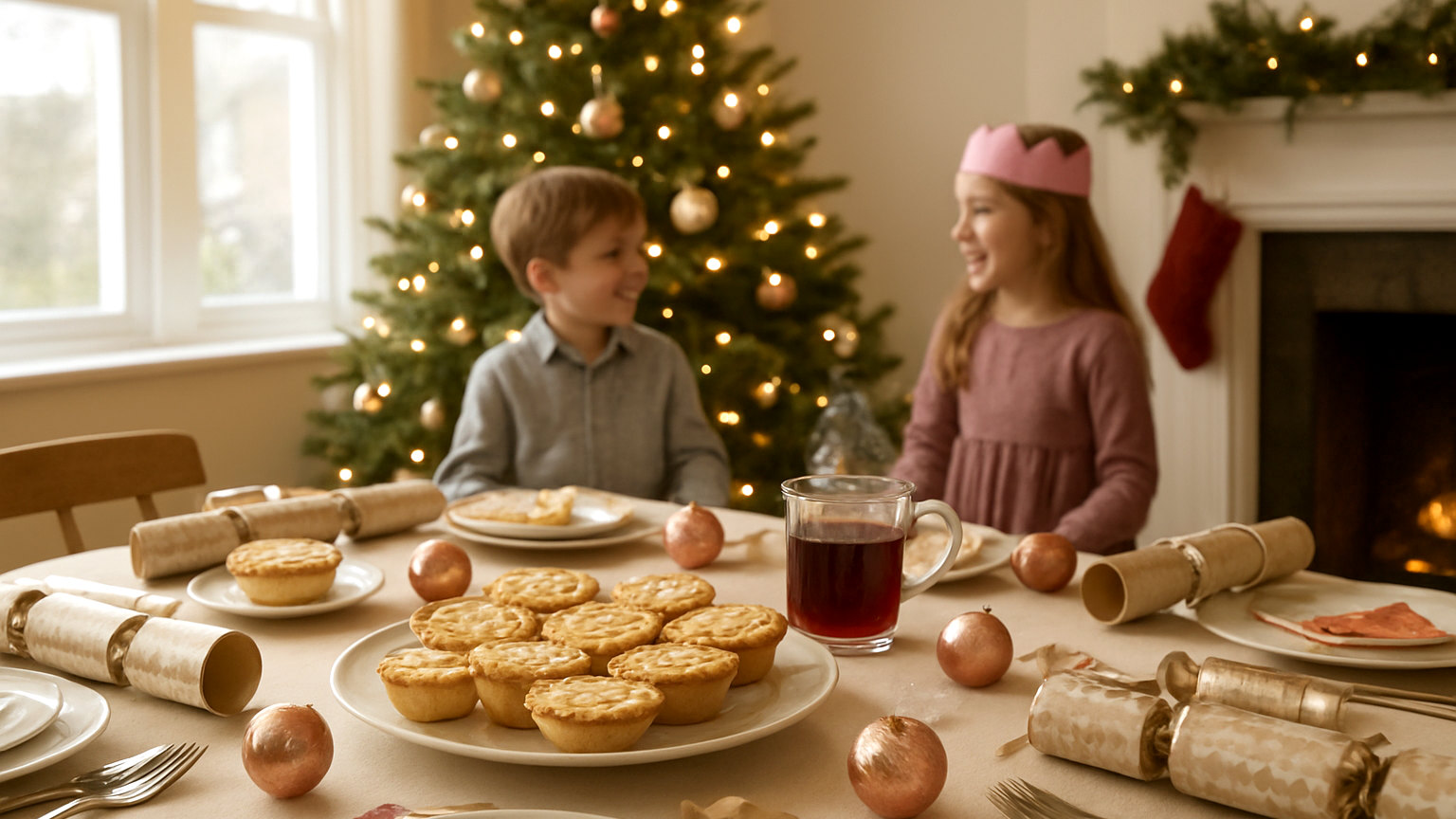
That eating one mince pie on each of the twelve days of Christmas brings twelve months of happiness in the year ahead, and that they should be eaten in silence, and that refusing one offered to you brings bad luck. It is the most cheerfully observed piece of Christmas folklore in Britain and the one most people know without knowing it is folklore.
Never refuse a mince pie you are offered. It is the one Christmas superstition almost everybody keeps, usually without realising they are keeping it.
What were the rules about work?
Numerous and mostly about not doing any. Laundry in particular was widely regarded as unlucky over the Christmas period, with the specific warning in several regions that washing clothes at Christmas would bring a death in the family within the year. Sewing, spinning and anything involving a wheel were similarly avoided.
What about the pudding?
Two customs survive. Stirring the pudding on Stir up Sunday, with everybody in the household taking a turn from east to west in memory of the wise men, and making a wish while they do it. And the silver coin baked into it, bringing wealth to whoever finds it, which used to be a silver sixpence and now needs wrapping in foil for safety.
Which beliefs were about the fire?
A great many, since the hearth was the centre of the house. The Yule log must not go out. The fire must not be allowed to die on Christmas Eve. Ashes must not be thrown out on Christmas Day, since doing so would throw the household luck out with them. All of these belong to the same world as the log itself and went the same way.
Which ones do people still keep?
The mince pies, the pudding stirring, the coin, and taking the decorations down by Twelfth Night for fear of bad luck, which a substantial number of otherwise unsuperstitious people observe rather firmly. That last one is a genuine survival, and the confidence with which it is asserted every January is a small piece of living folklore.
Where did the beliefs come from?
A mixture of pre-Christian midwinter tradition, church teaching absorbed into local custom, and a good deal of straightforward invention. Most were recorded by Victorian folklorists collecting from rural communities, which is why so many survive in written form at all.
That recording is also why some of them look more fixed than they were, since a collector writing down one village version tends to make it look like the version.
Which are worth reviving?
The pudding stirring, which gives everybody in the house a small ceremony in November and costs nothing. The coin, wrapped properly. And the mince pie rule, which most households are already keeping.
The ones about laundry and ashes can safely be left where they are, though it is worth knowing they existed the next time somebody insists that Christmas has always been a relaxed occasion.


