
The midnight service is not the only option on the twenty-fourth and it is the wrong one for most families. Churches run afternoon services designed specifically for children, they are short, they are free, and anybody can attend regardless of belief. They are also one of the better things to do with a restless child on the longest afternoon of the year.
What is a crib service?
A short service, usually late afternoon on Christmas Eve, built around the nativity scene. Children are frequently invited to bring a figure to place in the crib or to dress up and take part, and the readings are broken up with carols. It typically runs to half an hour or less and it is deliberately informal, with noise entirely expected.
What is a Christingle?
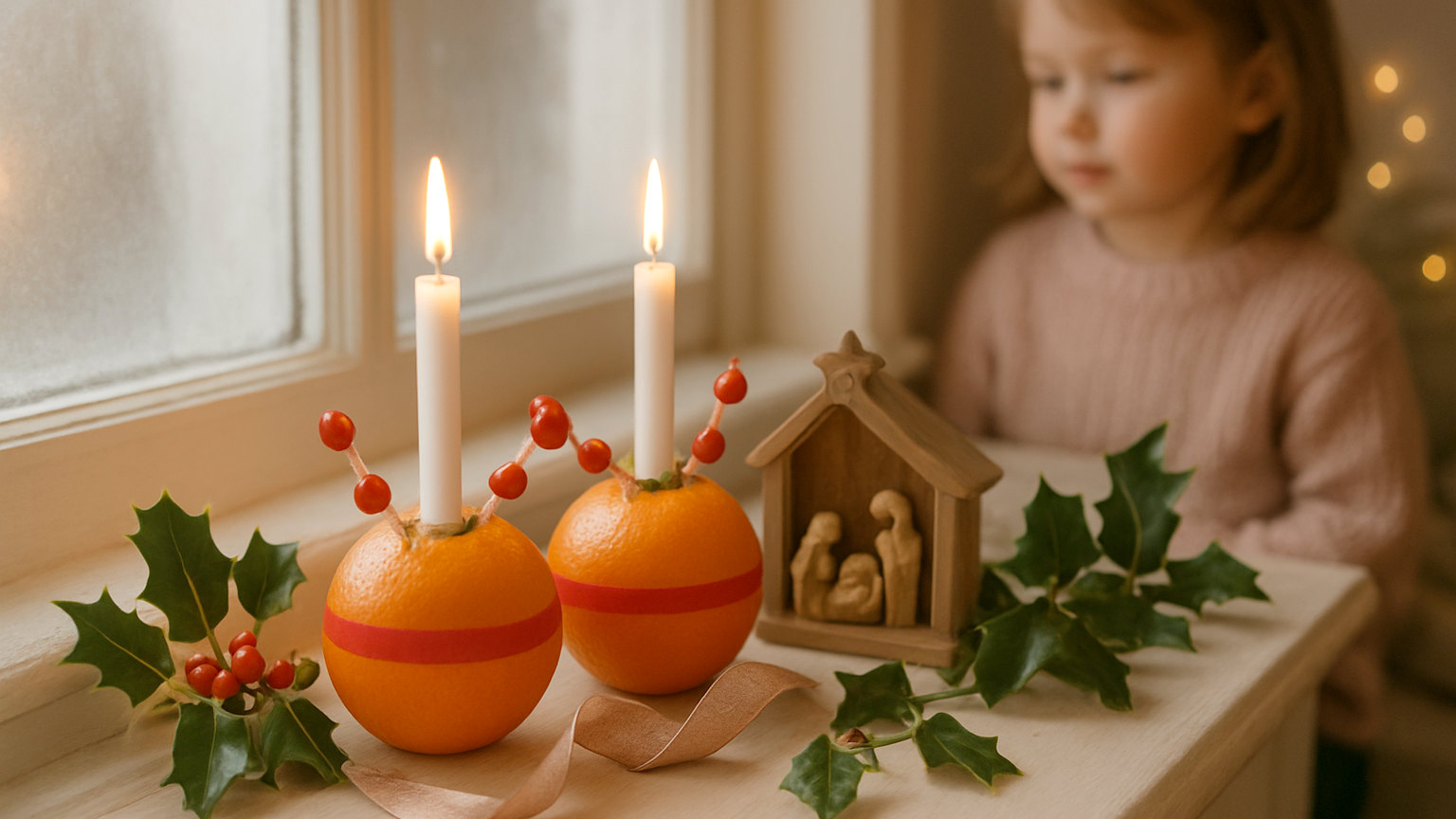
A service built around an orange with a candle in the top, a red ribbon around it and sweets or dried fruit on cocktail sticks, each element carrying a meaning explained during the service. The tradition comes from the Moravian church in the eighteenth century and was introduced to Britain in the 1960s as a fundraising service for a children charity, which is what most Christingles still are.
When do these services run?
Christingles across December rather than only on Christmas Eve, frequently on a Sunday afternoon. Crib services almost always on the twenty-fourth, typically between three and five in the afternoon. Times are published on church websites and noticeboards from late November, and the popular ones fill up, so arriving early is worth doing.
Christingle candles are lit and held by children in a darkened church. Keep long hair tied back and sleeves clear, and hold it for a very young child rather than handing it over.
Do you need to be religious?
No, and these services in particular are attended by a great many families who go nowhere else. Nobody will ask what you believe or expect you back. Children are welcome to move about and make noise, which is the whole design of a crib service and is stated explicitly at most of them.
What should you expect with young children?
Informality. Prams in the aisle, children on the floor, a good deal of movement, and a service pitched at holding the attention of a four year old. It is considerably closer to a school assembly than to a formal service. If your child is not going to sit still, that is entirely anticipated and nobody minds.
What else is on across December?
Carol services, which are usually the best singing anybody will hear all year and are free. Nine lessons and carols. School and community choir concerts held in churches. Nativity plays. Christmas morning services, which are short and considerably less crowded than the night before. All of it is open to anybody who wants to come.
Why is it useful on Christmas Eve?
Because it puts a fixed point into the most difficult afternoon of the year, gets everybody out of the house, costs nothing and finishes in time for an early dinner. For a household counting down the hours until bedtime with an excited child, a thirty minute service at four o clock is genuinely helpful quite apart from anything else it is.
What should you take?
Very little, since these services are deliberately low effort. Warm layers, because old buildings in December are cold, and something small for a young child to hold if they are likely to fidget.
Money for the collection if there is one, though nobody will look and nobody is obliged. Christingle services in particular are usually raising funds for a children charity and that is stated at the start.
How do you find out what is on?
Church websites and noticeboards from late November, which is where almost all of it is announced. A great many parishes list the whole December schedule on a single page.
Local council listings, school newsletters and community noticeboards carry the rest. None of it is advertised anywhere a person would look unless they already knew, which is why so many of these services are half empty.


