
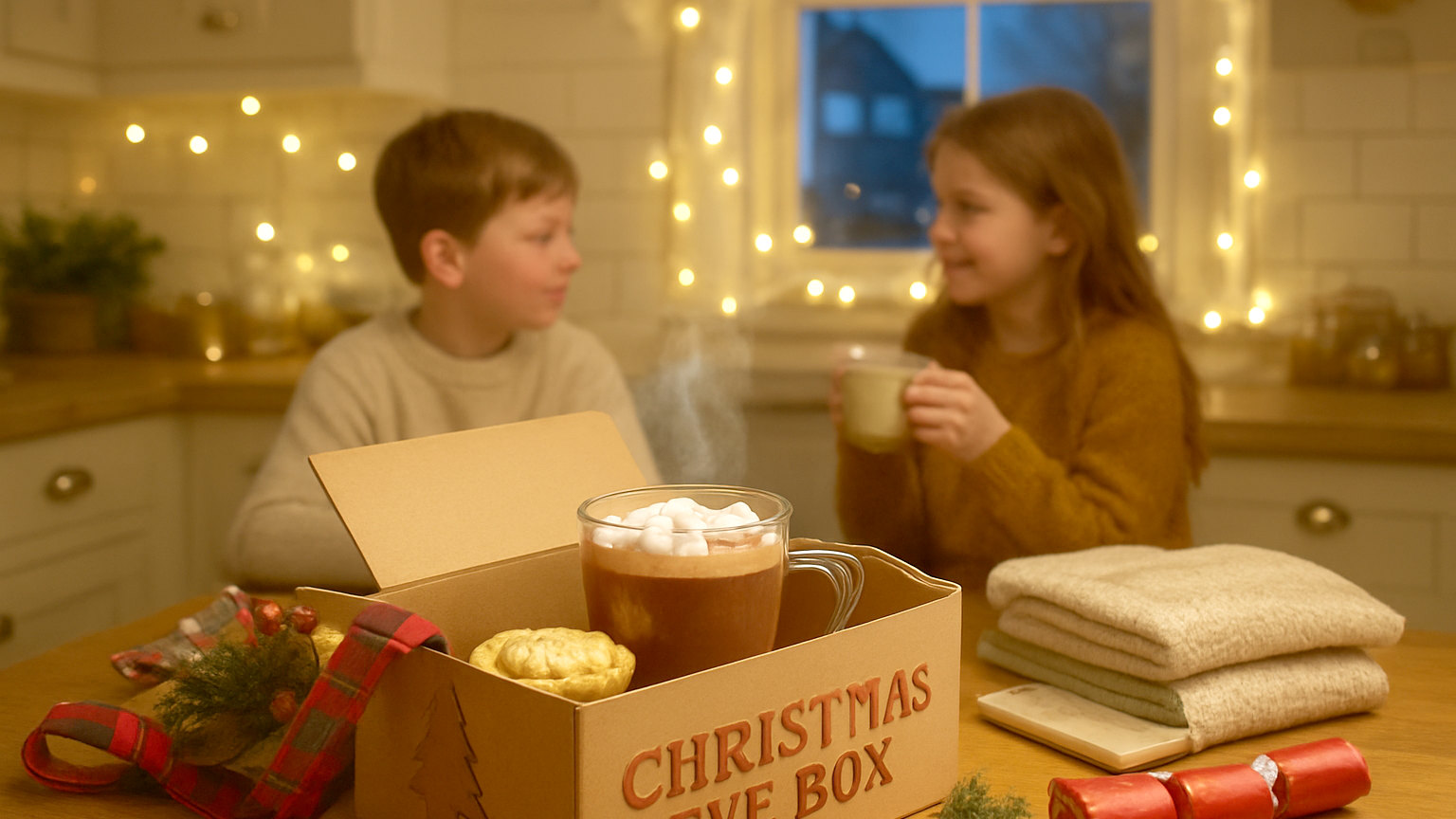
The Christmas Eve box feels like something that has always been done, which is a good indication of how quickly a tradition can establish itself. It is in fact about fifteen years old in its current form, it spread almost entirely through social media, and its rapid escalation from a small evening ritual into a substantial second round of presents is the main thing worth understanding about it.
Where did it actually come from?
Not from anywhere ancient, whatever the marketing suggests. It appeared in Britain and North America in the early 2010s and spread through parenting forums and image sharing sites, which is why every version looks broadly the same. Claims that it descends from a specific European custom are generally retrofitted. It is a genuinely modern invention.
Does it have older relatives?
Loosely. Several European countries have long treated Christmas Eve as the main event, with a meal, a service and presents on the twenty-fourth, and the Icelandic tradition of giving a book on Christmas Eve to be read that night is a genuine older custom. The modern box borrows the shape of those without descending from any of them.
Why did it spread so fast?
Because it solves a real problem. Christmas Eve is the longest and most difficult day of the year with children in the house, and the box gives the evening a structure: something to open, then a film, then a bath, then bed. It also photographs extremely well, which is a considerable part of how anything spreads now.
Everything in the box should be used before bedtime. If an item survives to Christmas morning, it belonged under the tree instead.
How does it escalate?
Predictably. Whatever went in last year becomes the baseline, and comparison with more elaborate versions online pushes the contents upwards each December. Within three or four years a box that started as pyjamas and a film has become a substantial pile, at which point it competes with Christmas morning rather than leading into it.
How do you keep it in proportion?
Apply the test above and nothing else. Pyjamas, something to watch, something to eat and drink, a book, and the plate for the mince pie. All of it consumed by bedtime. That is a complete box, it costs very little beyond the pyjamas, and it does the job the tradition exists to do without turning into a second Christmas.
What should the box itself be?
Something reusable, which is both cheaper and more likely to become an actual tradition. A wooden crate, a basket, a fabric bag or a decorated shoebox reappearing each year is something children attach to in a way they never attach to a printed cardboard box that goes in the recycling on the twenty-fifth.
Is it worth doing at all?
If it suits your household, yes, and if it does not, nothing is lost. A tradition invented fifteen years ago carries no obligation whatsoever, and plenty of families do something entirely different on the evening of the twenty-fourth or nothing structured at all. The useful part is the running order for the evening, which can be had without any box.
What do older children make of it?
Teenagers are frequently more attached to it than they admit, particularly if it has run since they were small, and the contents simply change: pyjamas still work at fifteen, and a film everybody watches together still works at eighteen.
What stops working is anything obviously aimed at a younger child, since the box is one of the places a teenager checks whether they are still being treated as small.
When should you give it?
Early evening, so it leads directly into the film, the bath and bedtime. Handing it over at breakfast means the contents are finished by lunchtime and the evening has nothing left in it.
The timing is what makes the tradition work at all, since the whole purpose is to give the last few hours of the twenty-fourth a structure that gets everybody to bed.


