Stockings are where most of the throwaway plastic in Christmas arrives, in the form of small items that cost a pound, entertain for an afternoon and are in a bin by February. Replacing them does not require spending more. It requires choosing things with a function, because an object with a use survives and an object with only a novelty does not.
What can replace the small plastic items?
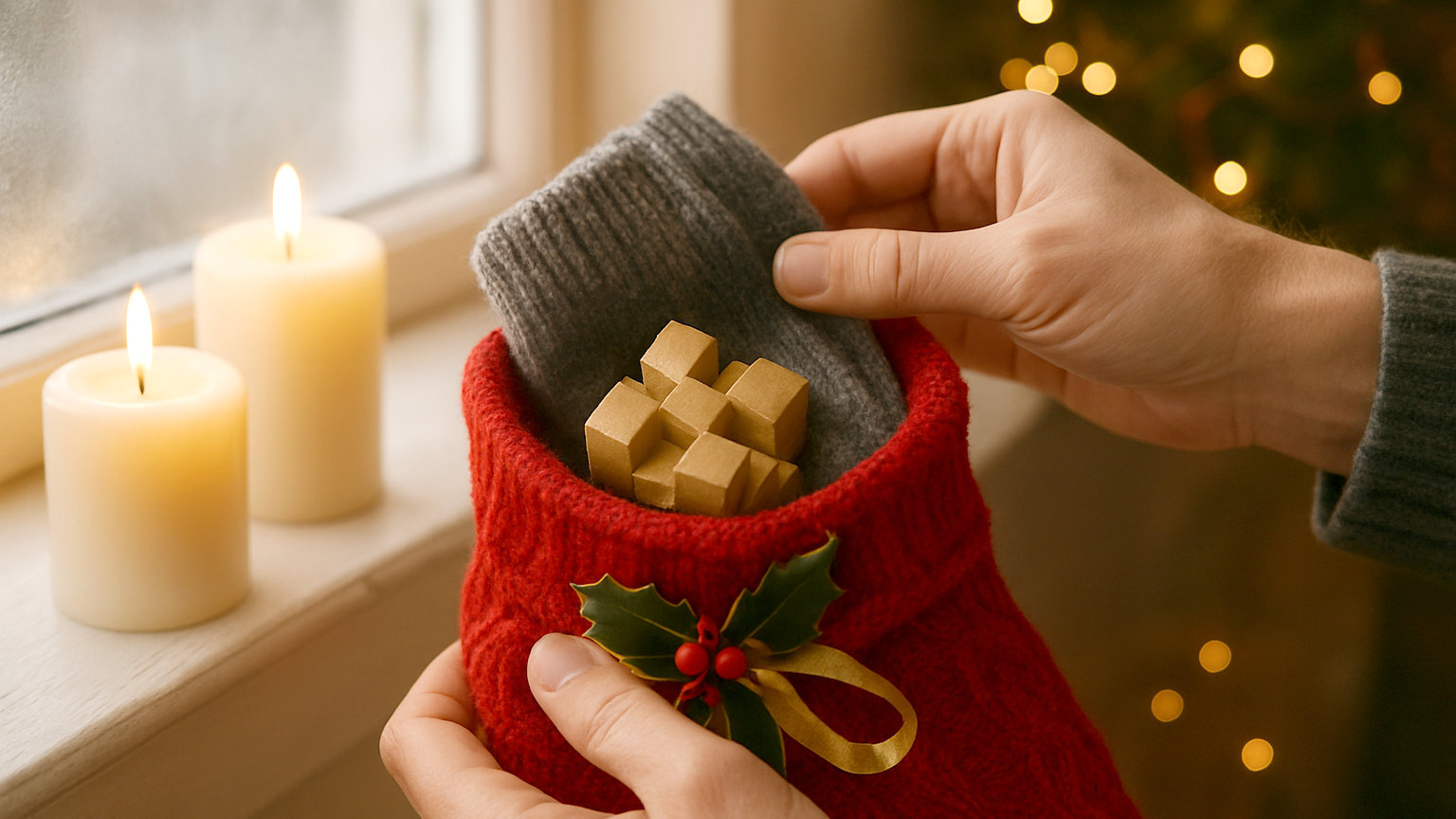
Anything edible, which is the easiest substitution and the most reliably welcome. Wooden puzzles, yo-yos, spinning tops and skipping ropes, all of which existed long before plastic versions did. Card games, which pack flat and outlast almost everything. Seeds, bulbs and a small trowel. Beeswax crayons, pencils and a decent sharpener. Metal torches and pocket knives for older children. Wool socks and gloves, which are used daily through January.
Which materials actually last?
Hardwood, metal and glass, in roughly that order for children. Wood tolerates being dropped and can be sanded if it splinters. Metal survives almost anything but rusts if left outside. Paper and card are short lived but recyclable, which is a reasonable trade for something like a puzzle book. Where plastic is genuinely the right material, such as in construction bricks, buying it second hand keeps the item in use rather than adding a new one.
Does it cost more?
Not if you buy fewer things. Six good items cost roughly what ten cheap ones do, and a stocking with six well chosen presents is a better stocking than one with ten forgettable ones. The apparent expense comes from comparing a wooden yo-yo with a plastic one rather than comparing a full stocking with a full stocking, which is the comparison that actually matters.
Buy things with a use rather than things with a joke. Almost everything that survives to spring had a function on the day it arrived.
What about the wrapping?
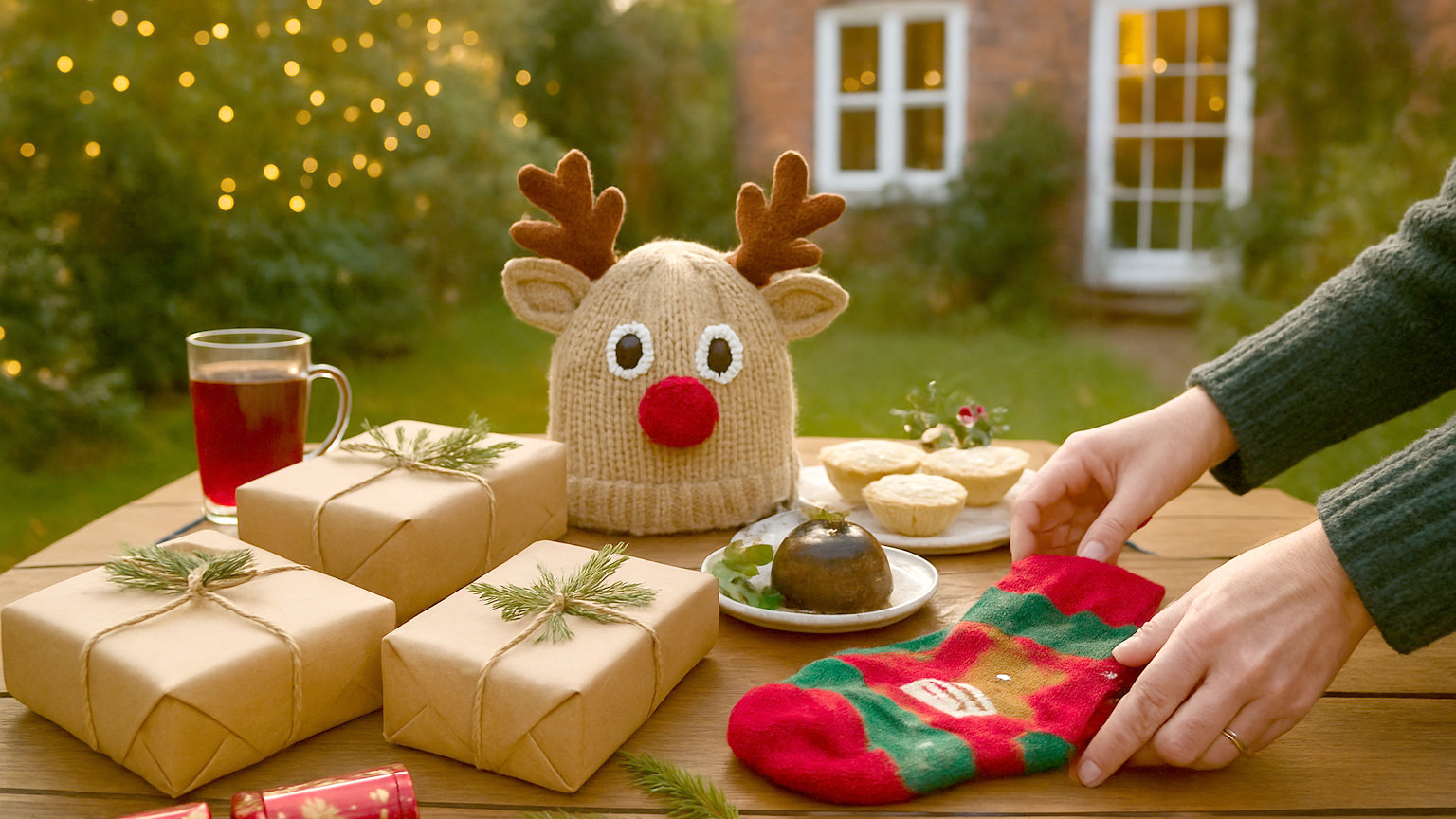
Most glittered and foiled wrapping paper cannot be recycled, and the usual test is to scrunch it: paper that stays scrunched is recyclable, paper that springs back is not. Brown kraft paper with string and a sprig of something takes about the same time to wrap, costs less and looks better than most of what is sold for the purpose. Fabric bags for stocking items can be reused every year and remove the wrapping question entirely.
Which edible fillers work best?
Chocolate coins, which are traditional and mostly foil. Good chocolate rather than novelty shapes. Sweets from a market stall in a paper bag. A satsuma at the toe. Hot chocolate, marshmallows, a small jar of honey or jam for adults. Edible fillers have the advantage of leaving the house entirely, which is the most reliable way to keep a stocking from becoming clutter.
When should you start collecting?
Through the year rather than in December, because the good non plastic items are found in hardware shops, garden centres, museums and markets rather than in a single Christmas aisle. Keeping one box and adding to it whenever you see something suitable spreads the cost and removes the December scramble that is responsible for most last minute plastic purchases in the first place.
What about the packaging things arrive in?
Much of the plastic in a stocking is not the present but the blister pack around it, which is why buying loose items from a market, a hardware shop or a delicatessen removes a surprising amount without changing what goes in the sock.
Where something does arrive over packaged, unwrap it at home and rewrap it in paper before it goes in. It looks better, it removes the moment on Christmas morning where a small child has to wait while an adult attacks a sealed plastic shell with scissors, and the packaging goes straight into the right bin rather than into a bin bag with everything else.
Loose sweets from a market stall in a paper bag are the clearest illustration of the whole principle: the same treat, the same price, and nothing left over afterwards that has to be sorted into a bin.