
It happens in every office every year, usually to somebody who had a genuinely good idea in November and then had a difficult fortnight. The situation is entirely recoverable, and the difference between a decent recovery and an obvious one is not the amount spent but where you shop. A present bought in thirty minutes from the right kind of shop is indistinguishable from one bought three weeks earlier.
How much time do you actually have?
More than it feels like. If the exchange is tomorrow, a lunch hour is enough. If it is this afternoon, twenty minutes and a nearby high street will do it. What you do not have is time for delivery, which rules out anything ordered online unless a click and collect slot is available that day. Working out which of those three situations you are in is the first decision, because it determines where you can shop rather than what you can buy.
What should you buy at short notice?
Something consumable and good, from a shop that sells food or drink rather than gifts. A bag of coffee from a roaster, a bar of proper chocolate, a jar of something from a delicatessen, a good bottle. A plant from a florist. A hardback from a bookshop. Each of these costs about the same as a novelty item and looks entirely deliberate, because nobody can tell when a bag of coffee was bought.
Which shops should you avoid?
Petrol stations, which are recognisable at a glance. Supermarket gift aisles in the final week, which contain what is left rather than what is good. Anywhere selling a display of items under ten pounds assembled for exactly this situation. The problem with all three is not the price but the visible fact that the present came from a shop nobody visits deliberately, which is the part that gives the game away.
Choose the shop before you choose the present. Ten pounds spent in a delicatessen looks like thirty pounds spent in a gift shop, and that holds even more strongly under time pressure.
How do you make it look considered?
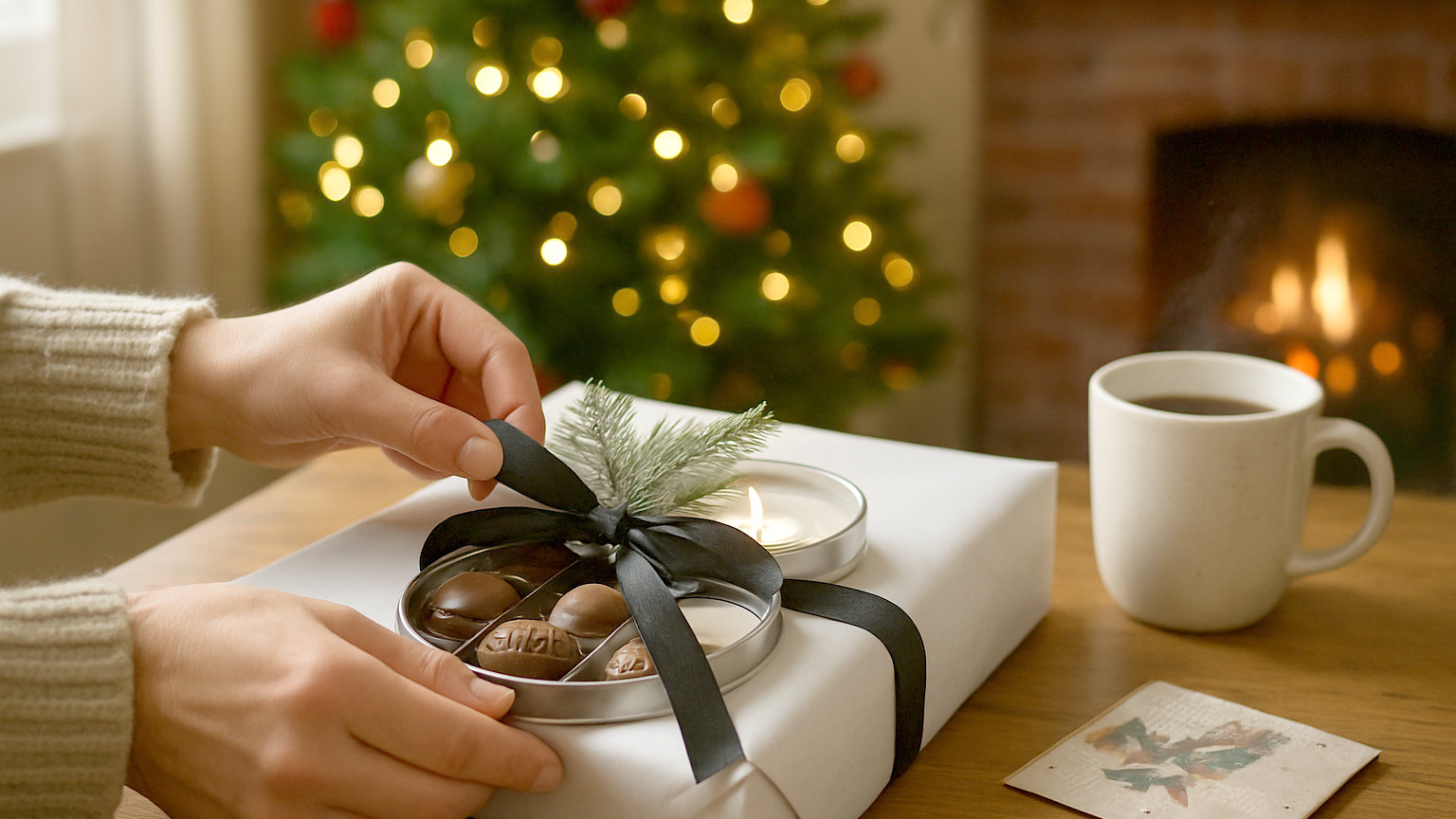
Wrap it properly, which takes five minutes and does most of the work. Write a tag by hand rather than sticking on a printed label. If you know one small thing about the person, mention it in the note, since a single specific line converts a generic present into a chosen one. Two items that go together, such as coffee and a bar of chocolate, read as a deliberate pairing rather than as a single item grabbed in a hurry.
What if you miss the exchange entirely?
Say so directly to the organiser rather than to the room, apologise once and hand it over the following day. Do not overcorrect by buying something considerably more expensive, which draws attention to the miss and puts the recipient in an awkward position. A present a day late with a brief explanation is a minor matter. The same present accompanied by an elaborate story is a larger one.
How do you avoid it next year?
Buy on the day the draw happens rather than at some point before the deadline, which is the only reliable method. Failing that, keep one good spare present in a drawer at home, bought in January when everything is reduced. A spare bottle or a decent boxed item costs very little out of season and removes the whole problem permanently, for Secret Santa and for the unexpected present that arrives from somebody you had not bought for.
What if the present you ordered has not arrived?
Print the confirmation, put it in a card and hand that over with something small bought locally, then pass on the parcel when it turns up. It is honest, it takes five minutes and it is considerably better than arriving empty handed.
Delivery estimates in the second half of December are optimistic across the board, so anything ordered after the first week should be treated as likely to slip rather than as a firm date.


