Battery toys have three problems that reveal themselves in a fixed order. They need batteries nobody has on Christmas morning, they are loud in a house full of people, and the trick they perform stops being interesting within about a week. None of that means every electronic toy is a poor present, but it does explain why the toys still in use at Easter are so often the ones that never needed a battery at all.
Why do battery toys lose interest quickly?
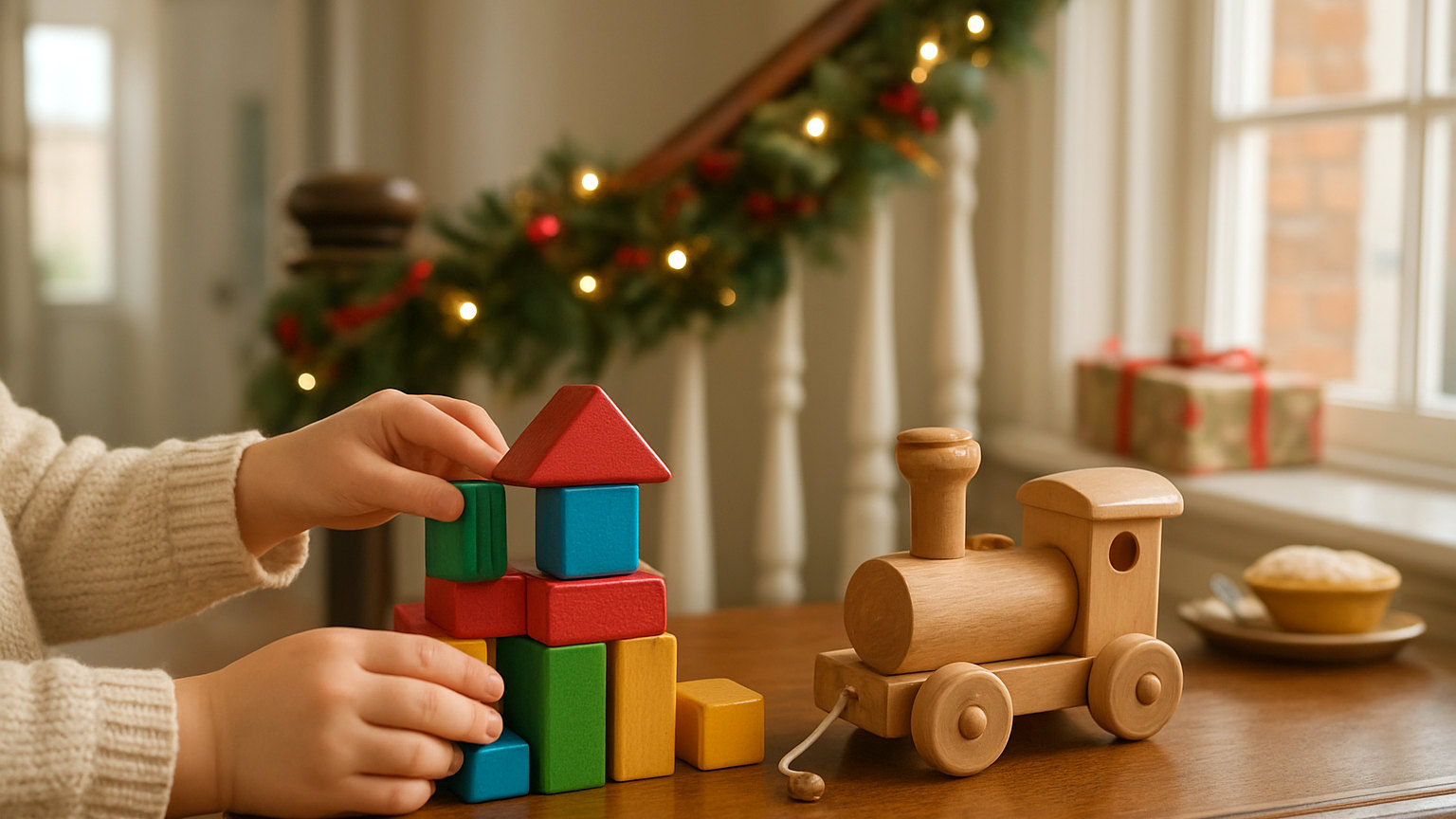
Because the toy is doing the playing. When an object moves, speaks and lights up by itself, the child watches rather than invents, and watching has a natural end point. A toy that does nothing until a child does something with it has no such limit, which is why a box of bricks outlasts almost everything else in a playroom. The activity is coming from the child rather than from the batteries.
What should you buy instead?
Anything that can be built, arranged or combined: construction bricks, magnetic tiles, marble runs, train track, blocks. Figures and vehicles, which become props in invented games. Art and craft materials in quantity. Dressing up. Balls, bats, ropes and anything for outdoors. Board and card games from about six. Musical instruments, if the household can bear it. Each of these has no fixed ending, which is the property that predicts how long a toy survives.
Are wooden toys automatically better?
Not automatically, and the assumption costs people money. Wood is more durable and resells well, which changes the effective price considerably, but a poorly designed wooden toy is still a poorly designed toy. Judge by what the child does with it rather than by the material. Where wood genuinely wins is in the things that get dropped, stood on and passed between children, since those survive several childhoods rather than one.
If you do buy something electronic, buy the batteries at the same time and tape them to the box. The alternative is a shop run on Christmas morning.
Which battery toys are worth an exception?
Torches, which children love and which have an obvious use. Cameras, for a child interested in photography. Remote control vehicles, which do hold attention because the child is controlling them. Anything with a rechargeable battery built in, which avoids the drawer of dead cells. The distinguishing feature in each case is that the electronics enable an activity rather than perform one.
What about noise?
It is worth thinking about, particularly if you are buying for somebody else household. A toy with no volume control, playing the same eight bar loop, is a joke at the expense of the people who live there. If a noisy toy is genuinely the right present, check whether it has a volume switch, and consider whether you would want it in your own living room in the fortnight after Christmas.
How do you judge a toy before buying it?
Ask what the child is doing while playing with it, how many different ways it could be used, and whether it would still be interesting on the twentieth occasion. If the answer to the first is watching and to the second is one, it is a short experience regardless of price. This test takes five seconds in a shop and is more reliable than any review.
Where do you find them?
Independent toy shops, which stock a different range from the large chains and whose staff know what lasts. Craft shops and art suppliers, for materials in useful quantities rather than in small sets. Second hand listings, which are full of construction sets in good condition. Museum shops, for science and building kits. All four produce better results than the aisle of heavily advertised items that dominates November.
What about the batteries you already have?
Keep a labelled box of the sizes your household actually uses and check it in early December rather than on the morning. Rechargeable cells and a charger pay for themselves within a year in any house with children and remove the problem permanently.
Loose batteries stored for months in a drawer can leak and ruin whatever they are sitting in, so keep them in their packaging until they are needed.