Buying for nieces, nephews and godchildren means buying inside someone else rules, and those rules are rarely stated out loud. Space, noise, screen time, sugar and what the other grandparents have already bought are all constraints you cannot see. One short message in November removes almost all of the risk, and most parents will be relieved to be asked rather than offended.
What should you check with the parents first?
Whether the child already has it, since duplication is the most common failure. Whether there is space for something large. Whether there are rules about screens, weapons, makeup or sweets, all of which vary considerably between households. And whether the parents are coordinating a bigger present that you could contribute towards instead, which is frequently the case and is nearly always the better use of the money.
Which presents do parents quietly dread?
Anything loud with no volume control. Anything with a large number of very small pieces, particularly for a household with a baby in it. Slime, glitter and paint given without warning. Drum kits, recorders and whistles, which are a joke at the expense of somebody else house. Live animals, obviously, and pets of any kind unless explicitly agreed months in advance.
How much should you spend?
Less than the parents, and roughly the same across all the children in a family. Uncles and aunts who outspend the parents create an awkward comparison, and a child who receives noticeably more than a cousin will notice. Consistency between siblings matters more than the amount, and if the children are different ages, matching the number of parcels rather than the value avoids most complaints.
Books are the one present almost no parent objects to. They take little space, they are quiet, and duplication is easily solved.
What works when you barely know the child?
Books, art materials, money into a savings account, or a voucher for a shop the parents actually use. All four sidestep taste entirely. For a godchild you see rarely, something that arrives every year and builds into a collection, such as a book from the same series or a contribution to the same account, becomes more meaningful over time than a series of unconnected objects.
Is giving money acceptable?
Yes, and for older children it is often preferred, provided it is given with some acknowledgement rather than handed over in an envelope as an afterthought. For younger children, money into a savings account with a card explaining what it is for works well and is quietly appreciated by parents. Cash directly to a small child tends to end up with the parents anyway, which everyone understands and nobody says.
When should you send it?
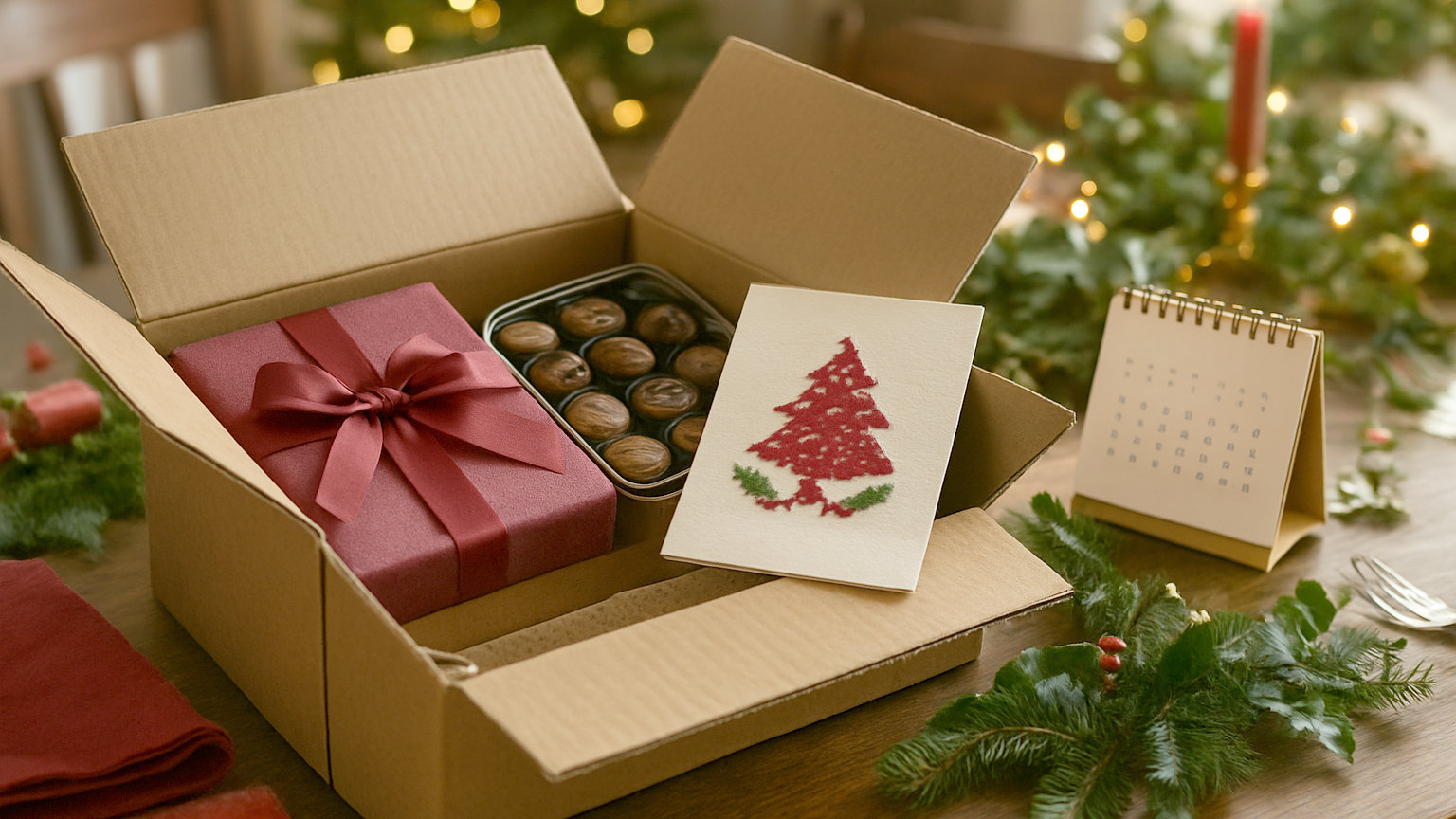
Early enough that it can be wrapped and put with everything else, which means arriving before the final week rather than on the twenty-fourth. If you are posting to another household, check the last posting dates and add a few days, since December delivery estimates are optimistic. Label the parcel clearly with which child it is for, because unlabelled presents cause a small crisis on Christmas morning.
How do you avoid buying the same thing every year?
Keep a note of what you bought and roughly what it cost, one line per child per year. It takes seconds and prevents both the duplicate purchase and the slow escalation that happens when each year is judged against a half remembered version of the last.
It also helps with the opposite problem. A child who received something substantial one year and something modest the next will notice the difference, and a written record makes it easy to keep the scale steady without thinking about it each December.
One further courtesy is worth extending. If a present turns out to be a duplicate, tell the parents to exchange it without asking, because most will otherwise feel obliged to keep it rather than risk causing offence.