Five to eight is the age at which Christmas is at its most intense, and it is also the age at which taste changes fastest. A child in reception and a child in year four are entirely different customers, despite sitting in the same bracket on most gift lists. What they share is a growing capacity for sustained attention, which changes what is worth buying: presents that require some effort now succeed where they would have failed a year or two earlier.
What holds attention at this age?
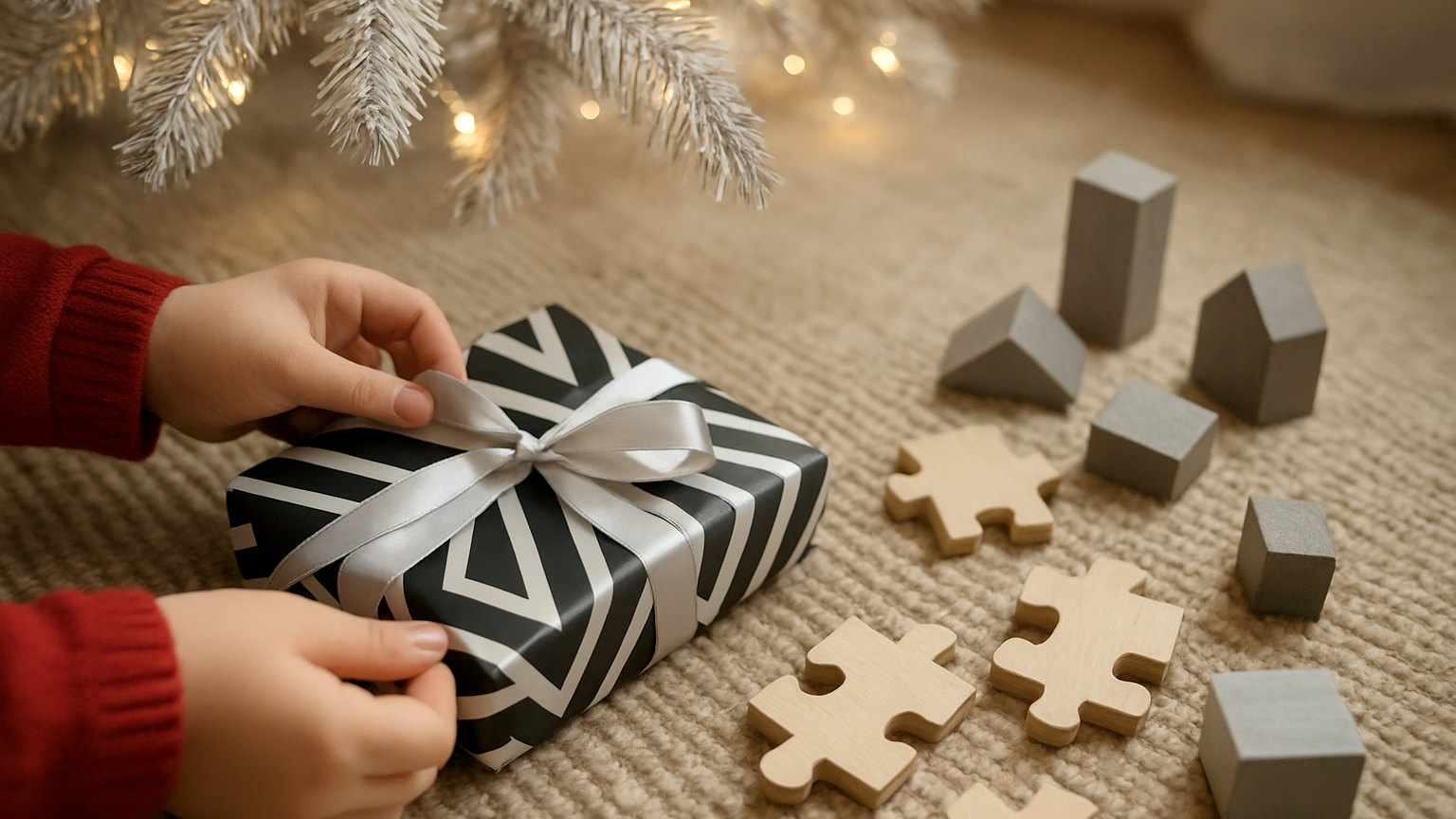
Anything that can be built, arranged, combined or added to. Construction sets, model kits, marble runs, magnetic tiles and train track all reward repeat play because the child makes something different each time. Craft materials, provided there is enough of them to make several things rather than one. Board and card games, which become genuinely playable around six. And anything to do with a specific obsession, which at this age is usually intense, specific and reliably known to every adult nearby.
Why is the popular toy of the year a gamble?
Because it is popular for reasons that have nothing to do with how long it lasts. The heavily advertised item performs a trick, and the trick is the whole experience, so interest ends once it has been seen. Toys tied to a film or a series carry an additional risk, since the interest expires with the popularity of the thing behind it and children are ruthless about last year. Buying it as one present among several is fine; building the whole Christmas around it is not.
How do you buy for a group of mixed ages?
Look for things that scale. Construction sets, art materials, dressing up boxes and outdoor equipment all work across a four year spread, because older children use them in more complicated ways. Games are harder, since the difference between five and eight is large in terms of reading and rules, so check the stated age and expect a five year old to need a partner. Buying one shared thing plus a small individual present for each child usually works better than trying to match six separate gifts.
Anything with a large number of very small pieces needs checking with the parents first. Households with a baby or a toddler in them cannot have it on the floor.
Which presents survive to the summer?
Those with no natural end point. A bucket of building bricks, a bag of craft supplies, a bike, a set of figures that can be added to, a good book series. What does not survive is anything with a single function, anything requiring an adult to set it up each time, and anything needing an app that will stop being supported. If the child is watching rather than doing, the toy is doing the playing and will be finished quickly.
What about screens and devices?
Entirely a decision for the parents, and one that varies enormously between households, so it must be asked about rather than assumed. A tablet or a games console given by a relative without checking can put parents in the position of confiscating a present, which is unfair on everybody. Games and accessories for a device the child already owns are much safer ground, provided you check which system it is, since they are not interchangeable.
When should you buy?
By the end of November for anything specific, since the genuinely popular items sell out in early December and return at inflated prices on resale sites. Second hand is excellent value at this age, particularly for construction sets and games, which survive several children. Check that sets are complete, wash everything on arrival, and keep the receipt for anything electrical.
What about presents from school friends?
Class present exchanges are common at this age and can escalate quickly if nobody sets a limit. A word with other parents in November usually establishes a modest figure, and most are relieved somebody raised it.
Small consumables and stationery work best, since they suit every child regardless of interest and none of the parents has to find space for them afterwards.