
A first Christmas is largely for the adults, and everyone who has had one knows the baby will spend most of the morning with the wrapping paper. That is not an argument for buying nothing, but it is a useful correction of scale. Small children are overwhelmed by volume far more easily than adults expect, and a smaller pile opened slowly produces a better morning than a large one opened at speed.
What is genuinely worth buying for a first Christmas?
Things the child will grow into rather than things that suit them this week, since a baby changes ability every few weeks. Board books, which survive being chewed and are read hundreds of times. Stacking and posting toys, which stay interesting for a year or more. Something soft that might become the attachment object. And practical items the parents need, which sound like a present for the adults and are quietly the most welcome thing in the room.
What do the age labels actually mean?
The not suitable for under three warning is a safety label about small parts and choking rather than a comment on difficulty. It must be observed, and it applies to anything in reach of a small child rather than only to their own toys, which matters in a household with older siblings. Other age ranges are developmental suggestions from the manufacturer and can be treated as a rough guide rather than a rule.
How do you avoid overwhelming a toddler?
Open a few things at a time with gaps between, and put some presents away for later in the day or the following week. Small children lose interest partway through a large pile and become distressed rather than delighted, which is the opposite of the intended effect. Holding back two or three parcels also gives you something for the long stretch between Christmas and the return to nursery.
Ask the parents before buying anything large, noisy or requiring storage. Space in a house with a small child is usually the scarcest resource in it.
Which presents do parents actually want you to buy?
Clothes in the next size up, which are constantly needed and rarely given. Nappies and consumables, which is an unglamorous present and a genuine help. Money towards something larger, such as a pushchair, a car seat or a savings account. Books, always. And an offer of childcare, which costs nothing and is worth more than anything wrapped.
Are wooden toys worth the extra cost?
Often, for durability rather than for any developmental advantage. Wooden blocks, shape sorters and pull along toys survive several children and can be passed on or resold, which changes the effective cost considerably. Where wood is not worth the premium is anything with moving parts that plastic does better, and anything bought for the look of it rather than for how a child will use it.
When should you buy?
Late November for anything popular, since the well reviewed baby items sell through quickly. Second hand is particularly sensible at this age, because toys for babies and toddlers are outgrown before they are worn out and appear in excellent condition for very little. Avoid used items where safety depends on condition, which means car seats, helmets, cots and anything electrical.
What should you do with the wrapping?
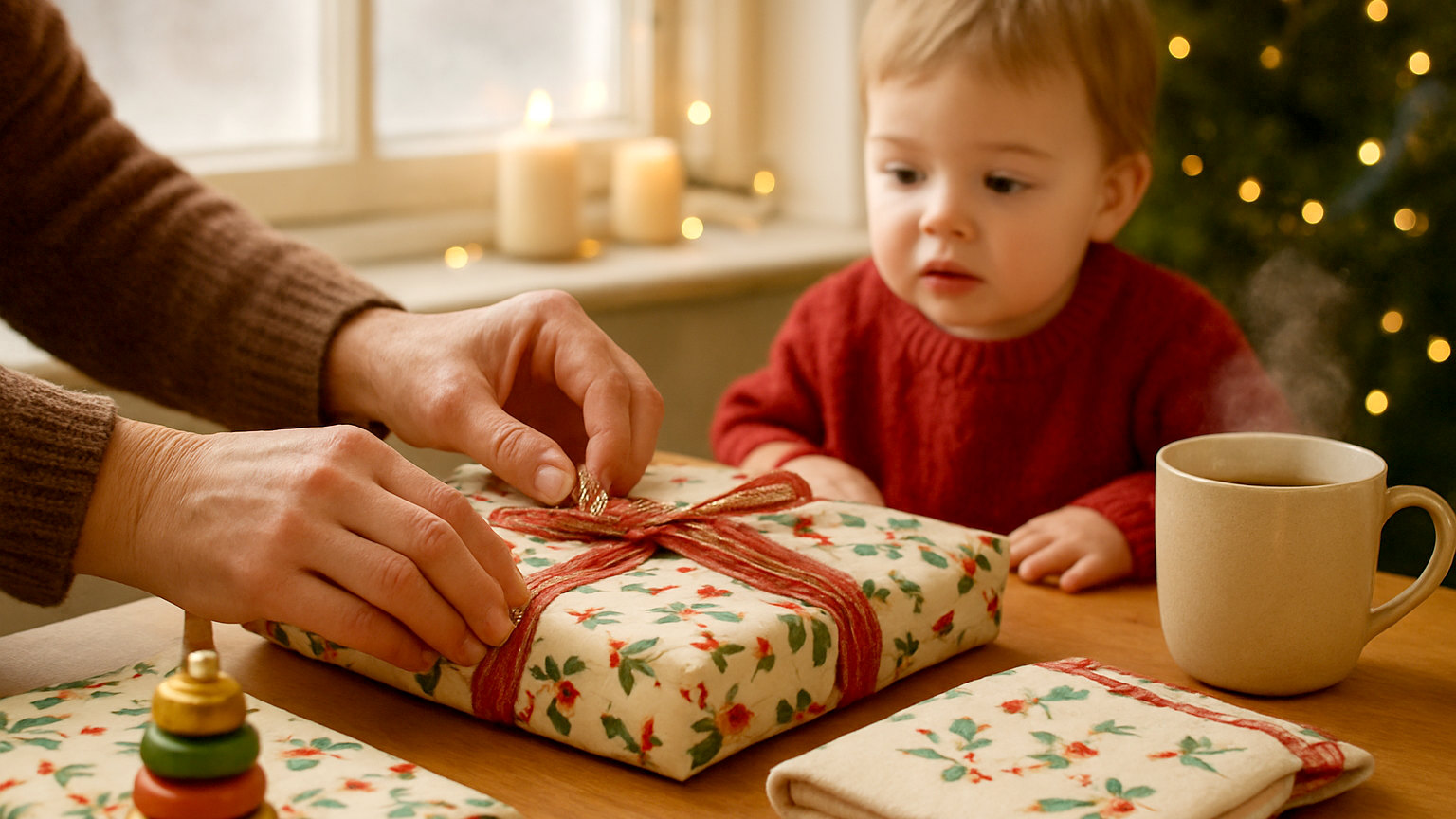
Keep it simple and keep it safe. Small children will put paper, ribbon and tape in their mouths, and shiny bows come apart into pieces that are exactly the wrong size. Plain paper with a fabric ribbon that can be pulled off in one piece is easier to supervise.
Since the paper is genuinely half the entertainment at this age, it is worth wrapping a couple of the smaller items in several layers. It costs nothing, extends the interest considerably and is usually the part of the morning that ends up in the photographs.
It is also worth photographing the labels of anything given by relatives before the paper goes in the bin, since exchanges and returns in January almost always need the shop rather than the receipt.


