
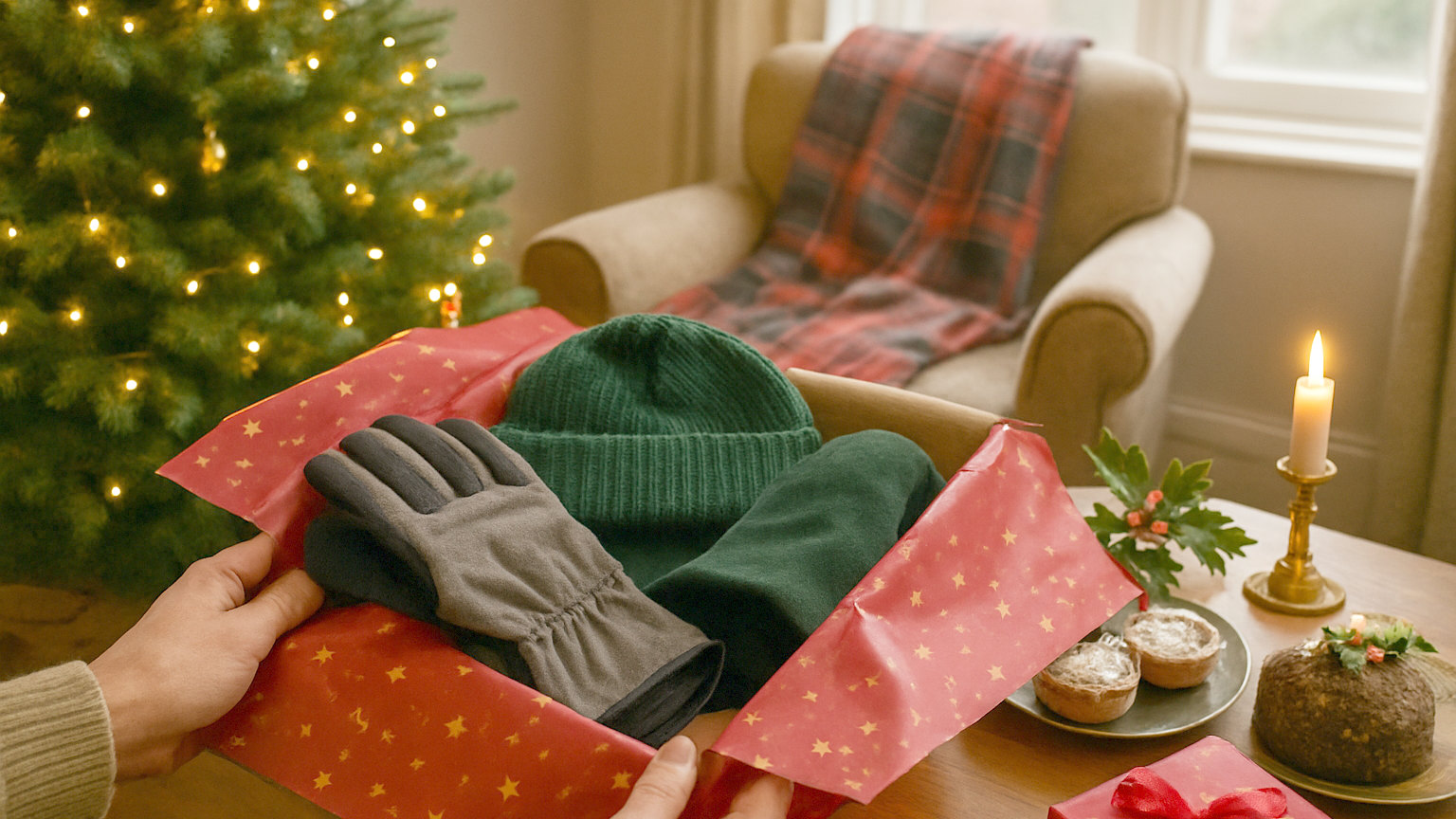
Anybody who works outside through a British winter has strong and specific views about kit, formed by being cold and wet in it. That makes the category easier rather than harder, because the standards are clear and the failure points are well known. What he will not do is spend his own money on the good version of something when the adequate version is in the van already, which is precisely the gap a present should fill.
What is genuinely worth buying?
Merino base layers, which cost several times what synthetic ones do and are worth it because they stay warm when damp and do not smell after a long day. Good gloves, ideally two pairs so one can dry. Proper waterproof socks. A thermos that actually holds heat for eight hours rather than three. A head torch, which is needed from mid afternoon in December. Insoles, which almost nobody buys and which change how a day feels more than most items twice the price.
Why is the cheap version a false economy?
Because outdoor kit fails at the worst possible moment and the cost is measured in a ruined day rather than in money. A cheap waterproof wets out after two hours of steady rain, at which point it is a plastic bag holding water against his back. Cheap gloves lose dexterity when wet. A poor thermos produces lukewarm tea at eleven. In each case the difference is obvious in use, which is why people who work outside are willing to talk at length about brands and why buying the good one is a genuinely appreciated present.
What will he never buy for himself?
The second pair. Anyone with functioning gloves will not buy spares, and yet a spare pair is what turns a wet morning into a manageable afternoon. The same applies to hats, socks and base layers. Duplicates of the things that get soaked are the most useful presents in this whole category, and they are almost never bought because a working item does not feel like a reason to spend money.
Check what he already wears before buying anything technical. Fit, cut and layering system all matter, and a jacket that does not go over his existing fleece will not be worn.
What should you avoid?
Anything branded as outdoor that is really fashion, which is most of what appears in high street shops in November. Boots, unless you know the exact model and size he wears, because fit is everything and breaking in a new pair during a working week is unpleasant. Anything requiring charging daily. And gadgets that promise warmth through batteries, which mostly deliver two hours of mild heat and then become dead weight in a pocket.
Which small items make the most difference?
A decent flask, a spare hat, hand warmers, a proper first aid kit for the vehicle, a knife or multi tool he can keep in a pocket, lip balm and barrier cream for weather-cracked hands. All of these are cheap, all are used constantly, and none of them are the sort of thing anybody buys themselves in advance. A box of several of them assembled together makes a better present than one larger item at the same price.
When should you buy?
Before the cold arrives rather than during it, since the good sizes in genuinely warm kit sell through by early December and what remains is the picked-over end of the range. Late November is the sensible window. If the present is meant to be used at work rather than at the weekend, buy it in dark colours and accept that it will be filthy by February, which is a sign it was the right present rather than the wrong one.
What about the drying problem?
Anybody working outside spends the evening trying to dry kit for the following morning, and in a wet week it never quite happens. A boot dryer, a drying rack for the utility room or a heated airer solves a genuine daily irritation and is rarely bought.
It is an unglamorous present and it is the sort of thing that gets mentioned to other people, because it changes how the whole week feels rather than how one day does.


