Kitchen presents fail for one reason above all others: they duplicate something already in the drawer. Anyone who cooks regularly has bought the things they use most, and they have opinions about them. That narrows the field considerably, but it narrows it towards better presents rather than worse ones, because the gaps in a well equipped kitchen are specific and easy to identify if you look.
How do you find the gap?
Open the drawers while he is out of the room. What is missing is usually obvious: no digital thermometer, no scales that measure below five grams, a chopping board that has warped, a peeler that has gone blunt, no fine grater. The other reliable method is to notice what he improvises with, because every improvisation is a tool he has not got round to buying.
Why is the good knife usually already owned?
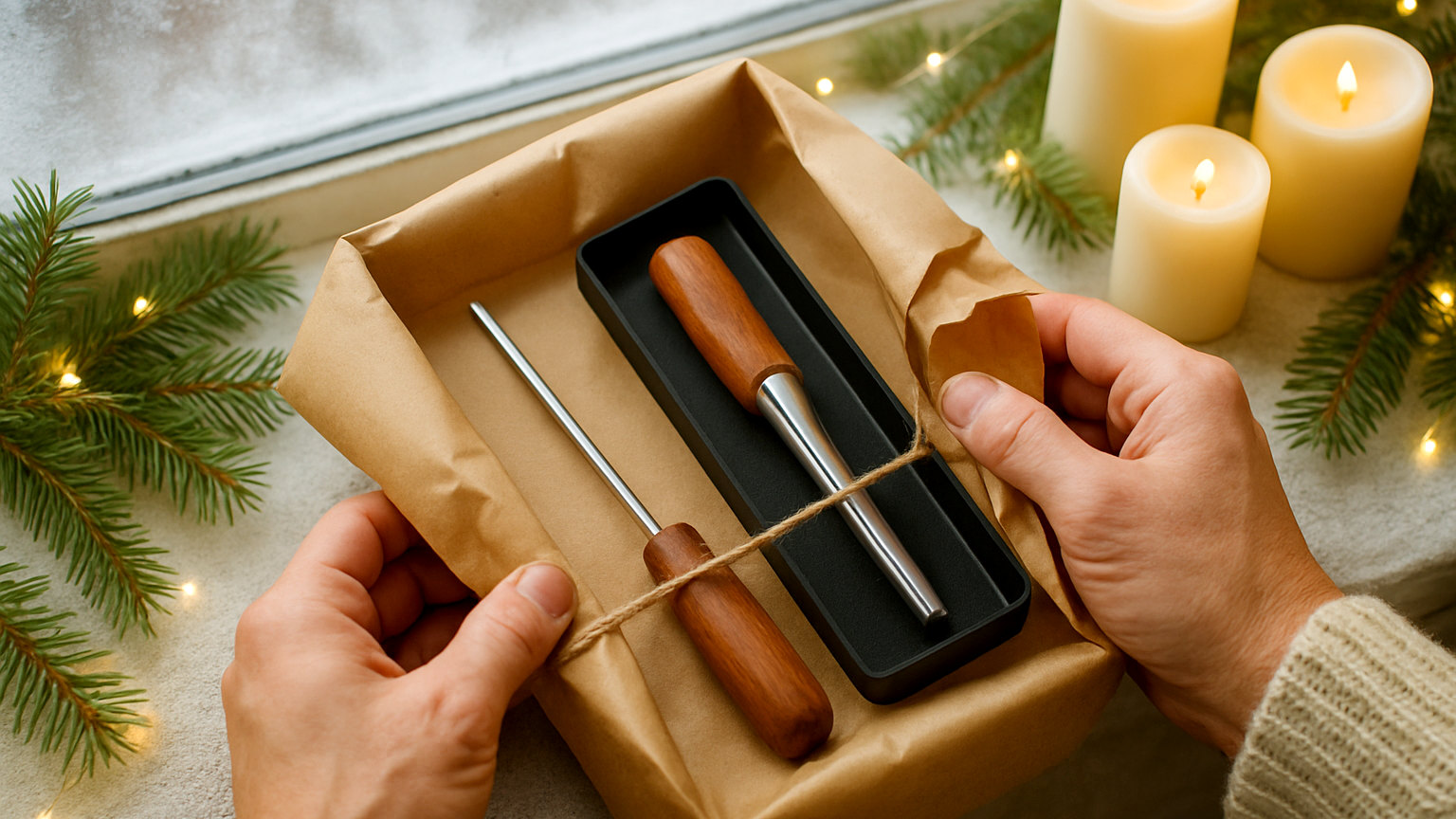
Because it is the first thing anyone serious about cooking buys for themselves, and because knife preference is intensely personal in weight, length and handle shape. Buying a knife for someone who cooks is close to buying shoes. What is far more likely to be missing is a way of keeping it sharp: a steel, a whetstone or a session at a professional sharpening service are all genuinely useful and rarely bought.
Which single items are worth the money?
A digital probe thermometer, which improves roast meat more than any other object at the price. A heavy cast iron pan, which lasts a lifetime and is too expensive to buy casually. Good scales. A mandoline for anyone who has complained about slicing. A pepper mill that actually works. A pizza steel if he has mentioned pizza. Each of these is a thing people want and postpone, which is the ideal profile for a present.
Ingredients are the most reliably used kitchen present of all. Good olive oil, saffron, proper vanilla, aged vinegar and unusual spices are all used up rather than stored.
Are cookbooks a good present?
Yes, if the book matches how he cooks rather than how you imagine he might. Someone who cooks quickly on weeknights will not use a book of three day projects, and someone who enjoys projects will find a book of thirty minute meals patronising. Look at what is already on the shelf, then buy something adjacent rather than similar. A book about a cuisine he cooks often but has no book for is close to a certainty.
What should you avoid?
Single purpose gadgets, which occupy drawer space and get used twice. Novelty aprons. Matching sets of utensils, since anyone who cooks has assembled theirs deliberately. Cheap versions of expensive equipment, particularly pans, where thin metal is actively worse than the pan he already owns. And anything electrical that needs storing, unless you have checked there is somewhere to store it.
When is a course the better present?
When he has plateaued or when there is a technique he has mentioned finding difficult. Bread, butchery, pasta, knife skills and a specific cuisine are all commonly taught in single day classes, and they cost about the same as a good pan. A course also produces a day out, which most kitchen equipment does not, and it is one of the few presents in this category that cannot be duplicated by something already in the cupboard.
What is worth buying for a barbecue or outdoor cook?
A long probe thermometer, heat resistant gloves, a chimney starter and good lump charcoal are all used constantly and rarely bought as presents. So are hardwood chunks for smoking, which are consumable and specific enough to show you know what he does.
Avoid buying accessories that assume a particular grill unless you have seen it, since fittings vary and a rack that does not fit is worse than nothing. Anything consumable sidesteps that problem completely and gets used the first weekend the weather allows.