
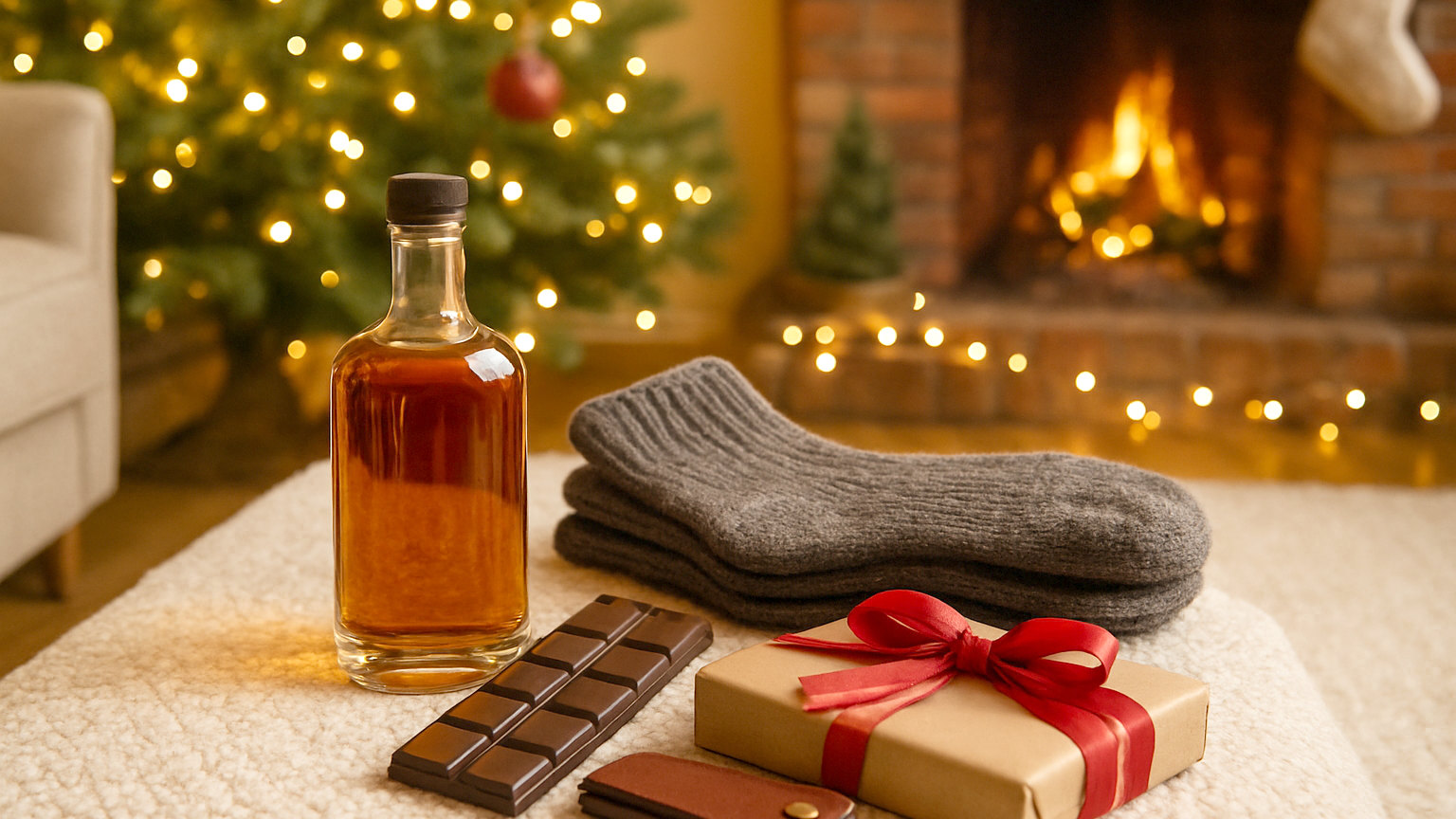
Thirty pounds is an awkward budget. It is more than a token, so a novelty item feels like a waste, but it is short of the price of most obvious upgrades. The way to use it well is to stop looking for a smaller version of an expensive present and start looking for categories where thirty pounds buys something genuinely good rather than something entry level.
Which categories are strongest at this budget?
Consumables win outright, because thirty pounds buys the top of the range rather than the bottom. That means a very good bottle of something, proper coffee, a serious block of cheese, or a hamper you assemble yourself from a delicatessen. Small hand tools are strong for the same reason: thirty pounds buys a good chisel or a good torch, whereas it buys a poor drill. Books, particularly hardbacks or a boxed pair, sit comfortably here. So do tickets to lower league football, the cinema or a local gig.
Why is one thing better than three?
Splitting thirty pounds three ways lands you at the bottom of three categories rather than the top of one, and the bottom of a category is where the disappointing versions live. One good thing, wrapped properly, reads as a decision. Three small things read as a budget being spent. The exception is a deliberate pairing where the items belong together, such as a bottle and the right glass, or a book and the thing it is about.
What should you check before buying clothing?
At this budget clothing is possible but narrow. Accessories work because they avoid sizing entirely: a decent hat, good gloves, a proper belt, warm socks in merino rather than novelty cotton. Anything sized should be checked against a garment he already owns and wears, measured flat, rather than against the size he tells you he is. Returns queues in January are long and most men will not join one.
How do you avoid the middle-budget trap?
The trap is buying a cheap version of an expensive category, such as a thirty pound smartwatch, a thirty pound speaker or a thirty pound shaver. In each case the good version costs several times more and the difference is obvious in use, so the present becomes a reminder of what it is not. Choose a category where thirty pounds is a lot of money instead of one where it is a little.
Ask whether thirty pounds is near the top or near the bottom of the category you are shopping in. If it is near the bottom, change category rather than lowering your expectations.
Which presents work for someone you barely know?
Food, drink and anything for the house. None of them assume a size, a taste in clothing or a hobby, and all of them get used. For a colleague or a new partner meeting the family for the first time, this budget is generous, and something edible from a local producer with a hand written tag does more work than an object chosen from a general list.
When is the best time to buy?
Late November, when the pre-Christmas sales are running but stock is still deep. Independent shops in this bracket sell out of their best items early because they order in small quantities, so the last week of November to the first week of December is the useful window. Anything perishable should be bought in the final ten days, and anything from a small maker should be ordered as soon as you have decided.
How do you stretch this budget with a hamper?
Assembling a small hamper yourself is the most efficient way to use thirty pounds, because you buy four good things at market prices rather than four ordinary things at gift set prices. Choose items that work together rather than a random assortment: a cheese, a chutney, good crackers and a small bottle. Presentation costs almost nothing if you use a box you already have and line it with paper. The result reads as considerably more expensive than it was, which is the opposite of how most gift sets read.


