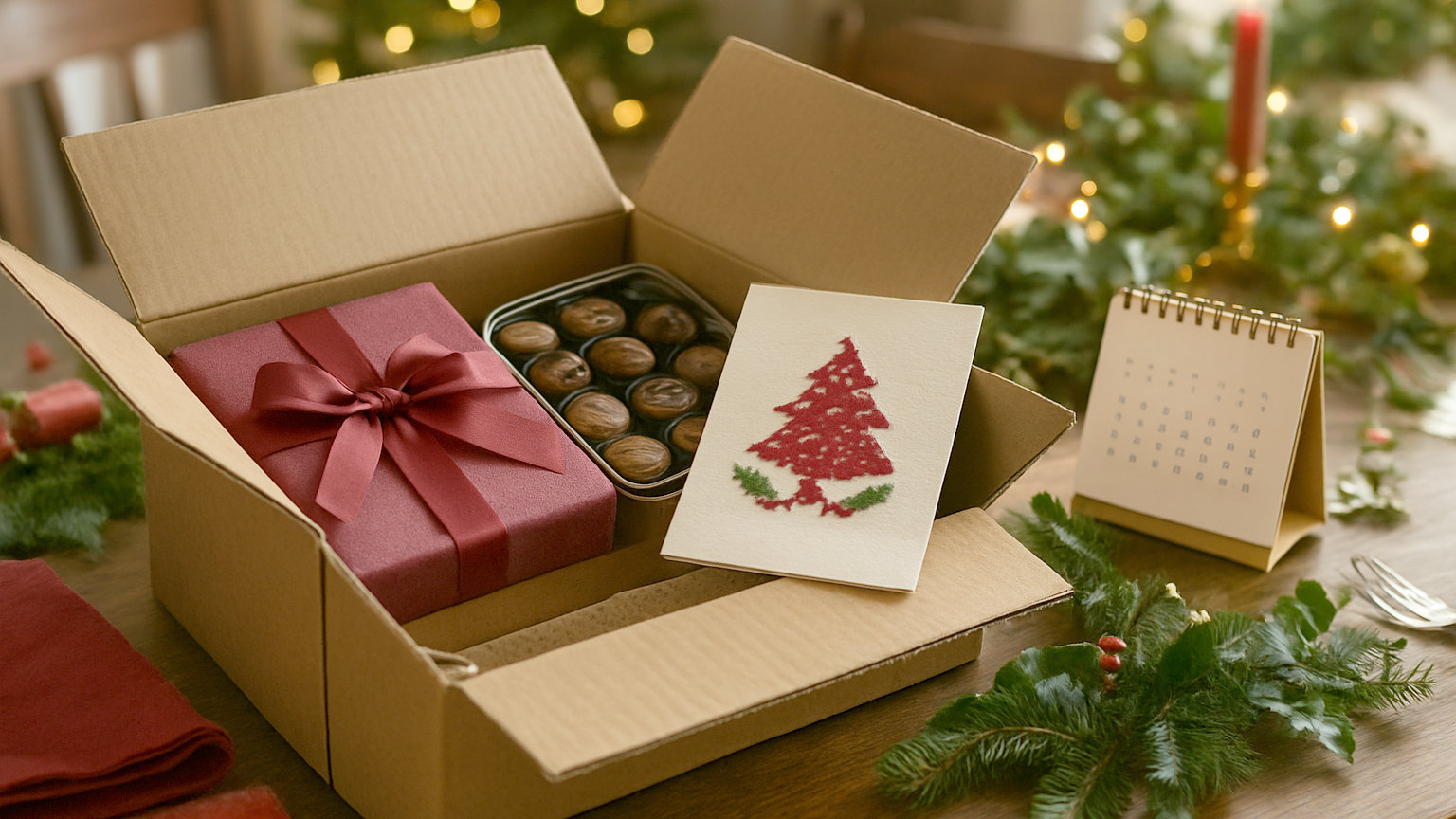
The present for the person who knows you best is reliably the hardest one to buy. Everyone else can be handled with a sensible guess, but a wife will read the gift accurately: how much thought went into it, whether you were listening in October, and whether you defaulted to a category because it was easy. That is uncomfortable, but it is also the whole method, because it means the answer is almost always something she has already told you.
How do you find out what she actually wants?
Most people announce their presents throughout the year without realising it. The phrase to listen for is any version of I keep meaning to get one of those, or I really should replace this. Those sentences are a gift list being read aloud. Writing them down in a note on your phone through the year is unglamorous and works better than any amount of December searching. If nothing has been said, ask what she would like less of rather than more of, which usually reveals whether the answer is an object, a treat or some time.
Why do the obvious choices misfire?
Perfume, jewellery and clothes are the three defaults, and each carries a risk the giver rarely sees. Perfume is personal to the point of being a signature, so a new one can read as a suggestion. Clothes involve a size, and a size involves an opinion. Jewellery is the safest of the three but only if it matches what she already wears, since most people wear one metal and one weight of thing consistently. None of these are wrong choices, but they are only right when you have paid attention to the specifics.
Which is better, one large present or several small ones?
Several small presents almost always land better, provided they are not padding. A morning of opening things is more enjoyable than a single box, and it spreads the risk so that one misfire does not define the day. The exception is when there is a genuine big item she has wanted for a long time. In that case the smaller presents should be deliberately modest, so the main one is not competing with a pile.
When is an experience better than an object?
An experience works when the house is already full, when she values time more than things, or when you have been short of both. Concert tickets, a night away, a course she has mentioned or a restaurant booking all convert money into a date in the diary, which is often the harder thing to arrange. The failure mode is the voucher that never gets used, so book an actual date rather than handing over an open-ended credit, and put it in both calendars on the day it is opened.
An experience gift needs a date attached or it becomes an obligation. An unused voucher sitting in a drawer for eleven months is worse than no present at all.
What if she says she does not want anything?
Take it as information about scale rather than as an instruction. It usually means she does not want more possessions, does not want money spent, or is worried about the fuss. Consumables, experiences and practical help all satisfy that while still being a present. Taking something off her list of jobs, arranged and paid for in advance, is a genuine gift and is frequently the one remembered longest.
When should you buy it?
Anything personalised, engraved or made to order needs ordering by the end of November at the latest. Jewellery that may need resizing wants a similar lead time. Experiences with limited dates, particularly around New Year, sell out earlier than people expect. Everything else can be left until early December without difficulty, but leaving the main present until the final week reliably produces the panic purchase that neither of you will mention again.
How do you keep it a surprise in a shared house?
Shared bank statements, shared delivery addresses and a shared calendar defeat most attempts at secrecy. Have parcels sent to a work address or to a relative, pay from an account she does not check, and put any booking in the diary under a neutral description until the day. If she has already guessed, and many wives do, saying nothing is still better than confirming it, because the guess and the confirmation are two different pleasures and only one of them can be had on Christmas morning.