Jewellery is among the most bought Christmas presents and among the most returned, which tells you most of what you need to know. It fails not because the piece is poor but because it does not match what she already wears. Almost everyone wears one metal, one rough weight of piece and one level of visibility, and a present outside those three settings will be admired politely and then left in the box.
How do you find out what she already wears?
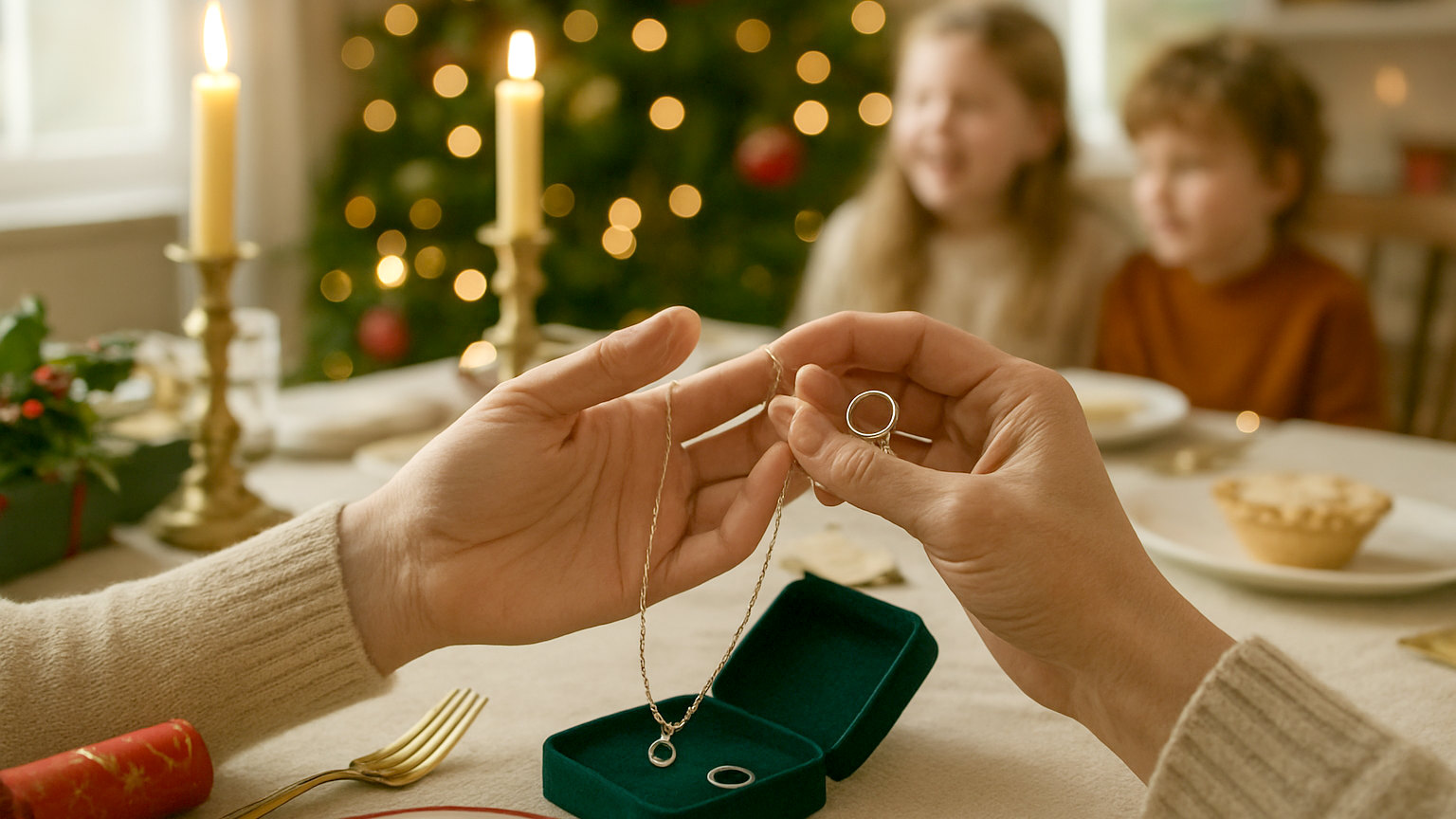
Look at the jewellery she puts on for an ordinary day rather than for an occasion, because that is what she actually likes. Note the metal colour, whether the pieces are delicate or substantial, and whether she wears stones or plain metal. Photograph the inside of her jewellery box while she is out, which sounds underhand and is the single most effective piece of research available. If she wears one necklace almost every day, the safest present is something that works alongside it rather than something intended to replace it.
Which metal should you choose?
Match what she owns rather than choosing on price. Yellow gold, white gold, rose gold, silver and platinum all look wrong beside each other for someone with a settled preference. Silver and gold plate are both perfectly reasonable at a modest budget, but plating wears through on rings and bracelets faster than on earrings and pendants, so put a limited budget towards solid metal in a smaller piece rather than plated metal in a larger one. If she reacts to costume jewellery, look for nickel free or solid gold, since a skin reaction ends the life of a present quickly.
What do the hallmarks mean?
In the United Kingdom, precious metal items above a small weight threshold must carry a hallmark, which is a set of tiny stamped marks usually found on the inside of a ring or on the clasp of a chain. The number is the important one: 925 for sterling silver, 375 for nine carat gold, 750 for eighteen carat gold, 950 for platinum. A piece sold as gold with no hallmark and no explanation deserves a question rather than a purchase.
How do you get the size right without asking?
For rings, borrow one she wears on the correct finger and have it measured, or press it into a bar of soap to take an impression. Bear in mind that fingers differ between hands and that the ring you borrow may not be from the right finger. For necklaces, measure a chain she wears flat on a table, since the difference between forty and fifty centimetres changes where the pendant sits entirely. If sizing is genuinely unknown, earrings and bracelets carry far less risk, and most retailers will resize a ring free within a set period after Christmas.
Ask about the returns and resizing window before you buy, not after. Many jewellers extend it over Christmas, but the extension is rarely automatic and almost never applies to engraved pieces.
Why does engraving change the rules?
An engraved piece cannot usually be returned, exchanged or resized, so it converts a flexible present into a final one. That is a good trade only when you are confident about size and taste. Engraving also needs lead time, typically one to three weeks in the season, and the workshops fill from late November. If you want the personal touch without the risk, put the message on a card rather than on the metal.
When should you buy it?
Late November for anything that may need resizing or engraving, and early December for everything else. Independent jewellers often have shorter queues than the chains and will give straight advice about what suits, which is worth more than a discount. Keep the receipt somewhere she will not find it, and keep the box, since most returns policies want both.
What suits someone who wears very little jewellery?
Someone who wears one small thing daily and nothing else is telling you their taste clearly rather than telling you they are hard to buy for. A single plain piece in the metal they already wear, small enough to sit under a collar, will be used far more than something decorative. Earrings are the safest entry point, since they need no sizing and can be worn without comment. Avoid anything statement sized, and avoid a second piece intended to be worn alongside the one they never take off.