Clothing is the most returned Christmas present in Britain, and sizing accounts for most of it. The difficulty is not that sizes are hard to find out, since almost every garment she owns has the answer printed inside it. The difficulty is that women clothing sizes are inconsistent between shops to a degree that makes the number on the label close to meaningless on its own, which means the research has to go one step further than most people take it.
How do you find the real size?
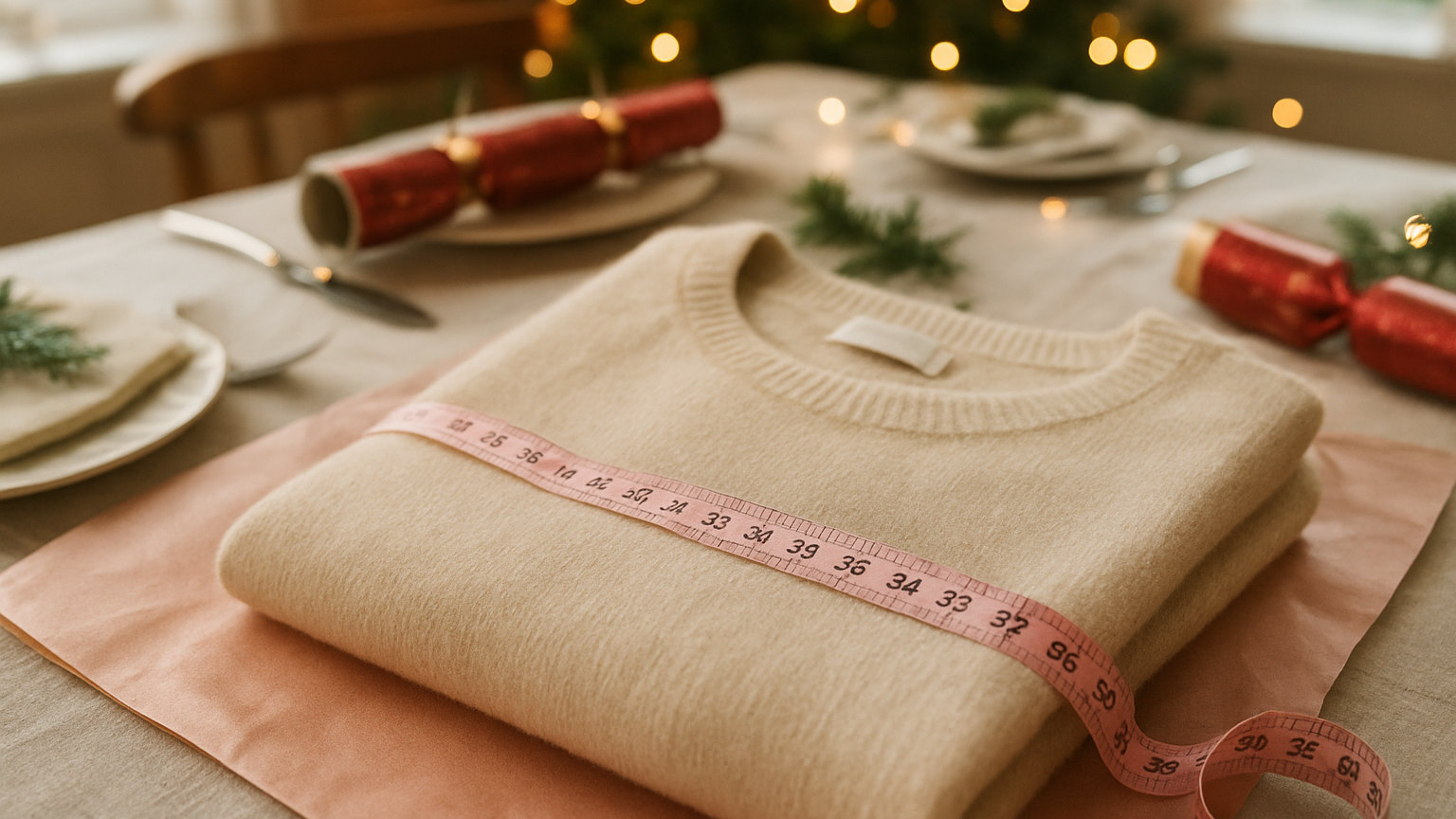
Look inside several garments she wears regularly rather than one, and note the brand alongside the size, because a twelve in one shop is a fourteen or a ten in another. If several labels from the same shop agree, you have a reliable answer for that shop and no others. Better still, lay a garment of the type you intend to buy flat on a table and measure it across the chest, the waist and the length, then compare those figures against the size guide on the website.
Why are sizes so inconsistent?
Because there is no enforced standard. Each retailer sets its own measurements, and many have quietly adjusted them over the years so that customers take home a smaller number. The result is that the same person genuinely wears three different sizes across three high street shops, all of them correct. This is why buying to the number is unreliable and buying to the shop, or to the measurement, is not.
Which garments forgive a mistake?
Anything loose, anything knitted and anything worn over other clothes. Scarves, hats, gloves, socks and jewellery need no size at all. Cardigans, wraps, oversized jumpers and dressing gowns tolerate a size in either direction. Coats are usually fine because they are worn over layers and are cut generously. What does not forgive a mistake is anything fitted: trousers, jeans, tailored jackets, dresses and anything described as slim or body con, all of which fail entirely at one size out.
Photograph the label rather than trying to remember it. Brand, size and the washing instructions are all in the same place, and the third one is worth having too.
What should you check before buying?
The returns window, which many retailers extend over Christmas but rarely automatically, so it needs confirming rather than assuming. Whether returns are free, since paying to send back a present is a poor end to it. The fabric, because a jumper that must be hand washed will be worn less than one that goes in the machine. And whether the item is in a sale, since sale goods are frequently excluded from exchange policies entirely.
Is it better to buy something she can exchange?
Usually, and there is no shame in it. Including the gift receipt is not an admission that you guessed; it is an acknowledgement that sizing is unreliable and that you would rather she had something she wears. Most people would far prefer a present they can change to one they feel obliged to keep, and saying so plainly when she opens it removes any awkwardness about using it.
When is an accessory the better answer?
Whenever you are not confident, which is most of the time. A good scarf, decent leather gloves, a bag, a hat or jewellery all sit in the same price range as a jumper, carry none of the sizing risk, and are considerably easier to choose well. If clothing is the plan regardless, buying one excellent accessory rather than a mediocre garment is almost always the stronger present, and it never needs returning in January.
What should you do about shoes?
Treat them like fitted clothing rather than like accessories. Shoe sizing varies between makers as much as clothing does, and a half size out is uncomfortable rather than merely wrong. Check the size inside a pair she wears often and buy from somewhere with a free returns policy.
Slippers and boots worn over thick socks are the two exceptions, since both are usually bought slightly generous anyway and tolerate a small error without being unwearable.