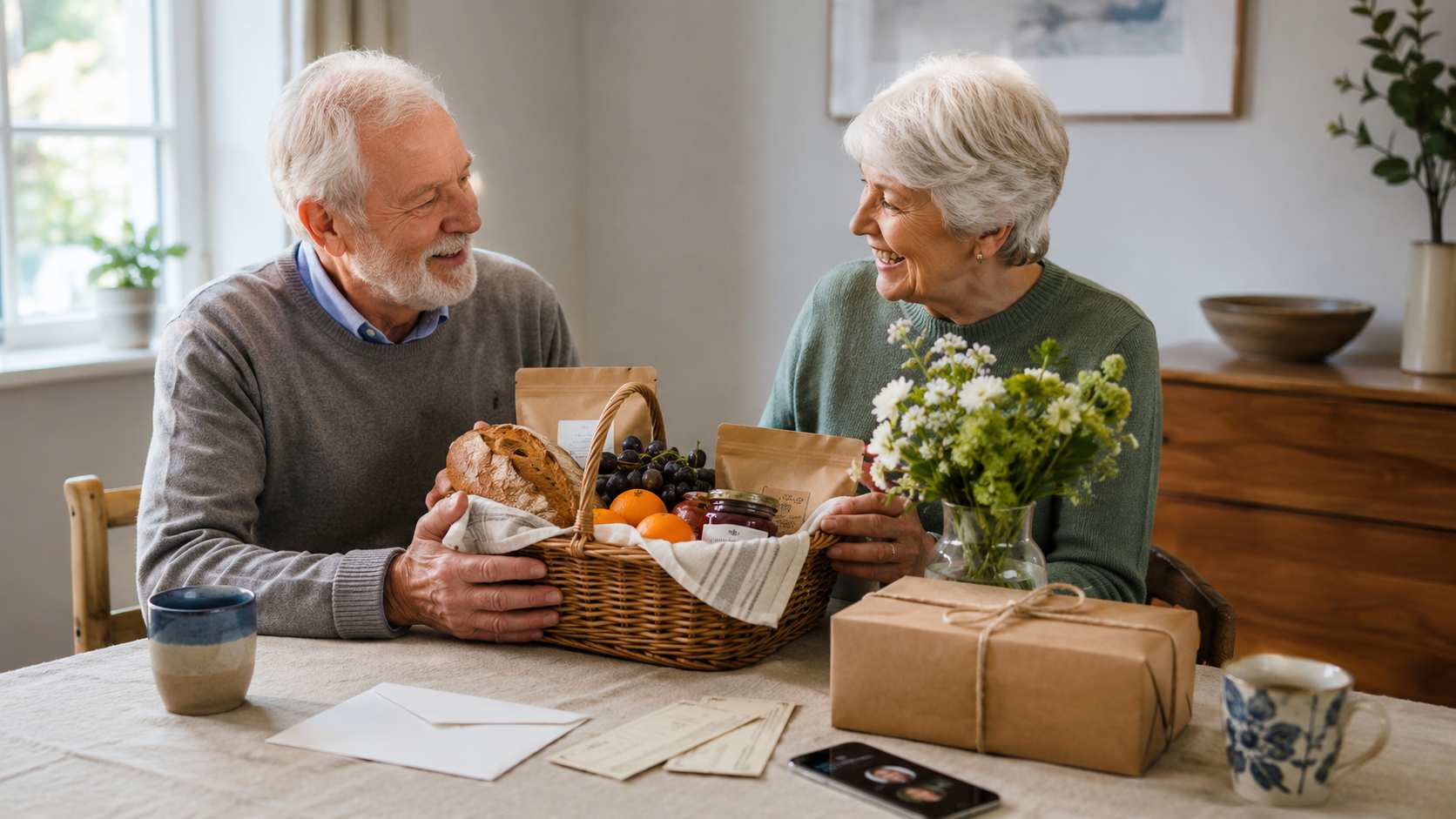
Most gift advice aimed at this age group is quietly patronising, built around the assumption that a woman over sixty wants a cardigan, a jigsaw and a photograph of her grandchildren. Some do, and there is nothing wrong with any of those, but the assumption skips the more useful observation. What actually changes at this age is the relationship with possessions rather than the range of interests, and once you understand that, the whole category becomes considerably easier to shop for than it looks.
What actually changes about buying at this age?
Two things, and only two. The first is that the house is usually full, so anything that occupies permanent space needs to earn it, and many people in their sixties and seventies have started actively reducing what they own rather than adding to it. The second is that time and health become more valuable than objects, which pushes experiences, comfort and convenience up the list. Everything else stays exactly as it was: taste, humour, curiosity and a low tolerance for being condescended to.
What does not change at all?
Interests, mainly. A woman who has read crime novels for forty years still reads crime novels. Somebody who ran, gardened, painted, travelled or followed a football team at forty is doing the same at sixty-five, frequently with more time available for it. Buying to the interest rather than to the age is the single most useful correction available, and it removes most of the awkwardness people feel about this category. The birthday you would have bought for at fifty is largely the same birthday.
Which categories work consistently?
Experiences and days out, particularly ones you go on together, which is often the real present. Consumables of genuine quality, since good food and drink are appreciated more once the novelty of buying things has worn off. Books, always. Anything supporting a hobby she already has, bought at the consumable end. Comfort items done properly, meaning good wool rather than novelty fleece. And photographs, printed and framed rather than sitting on a phone belonging to somebody else.
Buy for what she does on a Tuesday, not for what the category pages think a woman of sixty wants. The gap between those two things is where most disappointing presents come from.
What should you avoid?
Anything that references age as a joke, which is funnier to buy than to open in front of a room. Technology that needs configuring, unless you are going to set it up and stay for the first use, since a device posted in a box with a manual is a chore rather than a present. Ornaments and decorative items, which need shelf space and are difficult to refuse politely. And anything that implies frailty, from grab handles to memory aids, unless it has been asked for directly.
How do you handle somebody who insists on nothing?
Take it as a statement about scale rather than an instruction to skip her. It usually means no more possessions, no money spent on my account, or please do not make a fuss. Consumables and experiences satisfy all three while still giving her something to open. If she is uncomfortable with money being spent, something homemade, printed or grown carries the meaning without the price tag, and it is frequently the present kept longest.
When is help the better present?
When a job has been quietly waiting. Gutters, hedges, heavy cleaning, a lift to an appointment, help with paperwork or anything needing a ladder all qualify, and they land far better arranged and paid for in advance than offered in the abstract. An offer requires her to ask, which many people will not do. A booking made for a named date, written in a card, removes the asking entirely and is one of the few presents that genuinely improves the following month rather than the following morning.
Who should coordinate a large family?
Where several children and grandchildren are all buying, one person collecting a short list in November saves the household from three identical scarves and two of the same book. It is a small piece of admin and it consistently produces better presents than everyone working independently.
It also opens the option of combining budgets on one substantial thing, which at this age is nearly always preferable to a pile of modest parcels that each need finding a home for.