
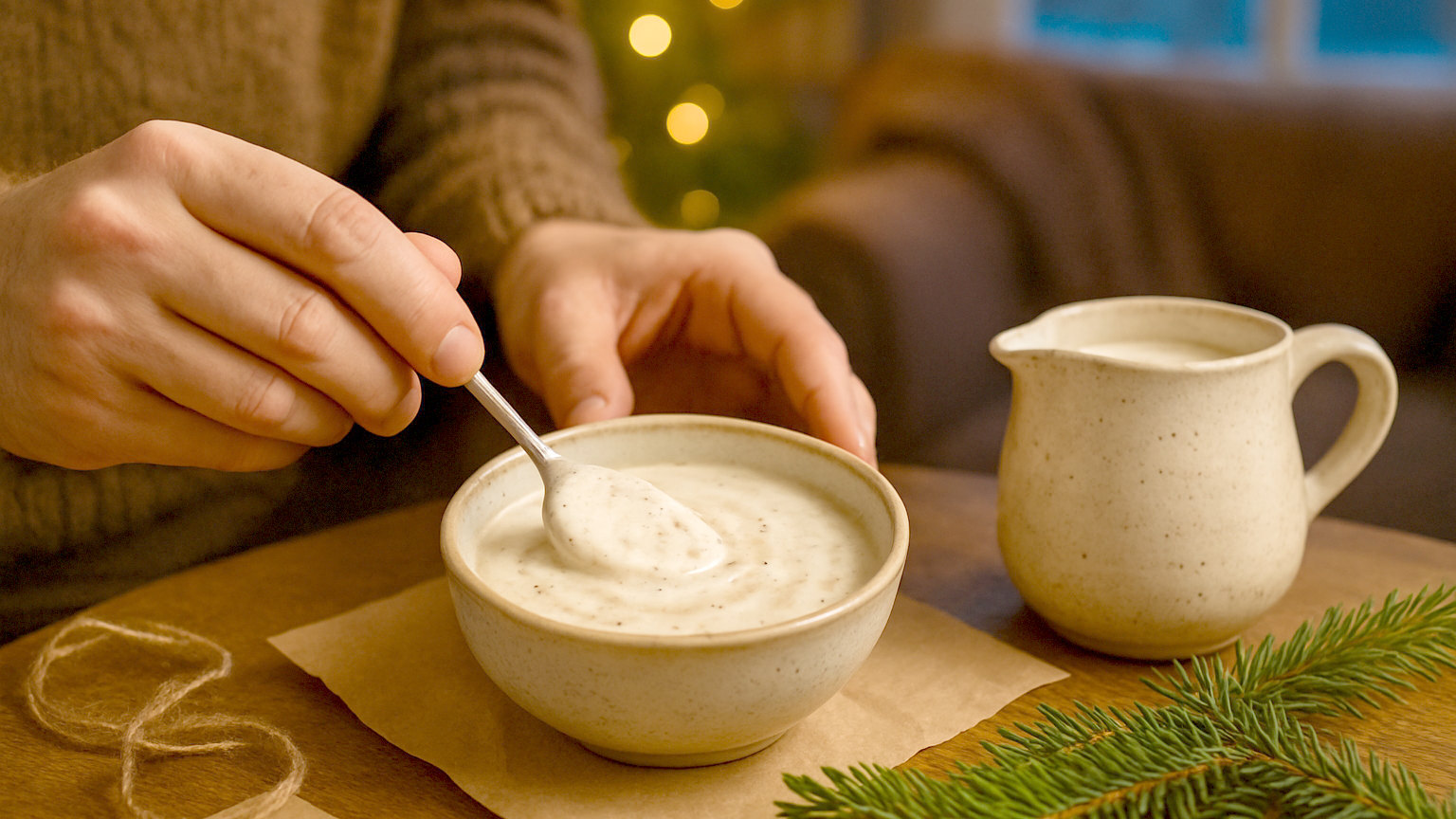
Bread sauce divides a table more sharply than any other item on it, and the division is almost entirely between people who have eaten a good one and people who have not. Made badly it is a bowl of thick, bland paste. Made properly it is fragrant with clove and nutmeg, loose enough to spoon, and the thing people go back for. The difference is one step that takes no effort but does take time.
What is the step people skip?
Infusing the milk. Put the milk in a pan with a peeled onion studded with cloves, a bay leaf, a few peppercorns and a blade of mace if you have it. Bring it to just below a simmer, take it off the heat and leave it for at least an hour, ideally two or three. Everything that makes bread sauce worth eating happens during that hour, and adding breadcrumbs to plain milk skips all of it.
Which bread should you use?
Stale white bread, a day or two old, with the crusts removed. Fresh bread turns gluey because the starch has not dried out. Sourdough and heavily flavoured breads compete with the delicate infusion. Tear or blitz it into coarse crumbs rather than fine ones, since coarse crumbs give the sauce a little texture and fine ones dissolve into wallpaper paste, which is the usual complaint.
How thick should it be?
Loose enough to fall off a spoon slowly. It thickens considerably as it sits and again as it cools, so make it noticeably looser than you want it and hold back some of the milk to let it down before serving. Almost every home made bread sauce is too thick, and the fix at the table is a splash of hot milk stirred in, which takes ten seconds.
Infuse the milk the day before and keep it in the fridge with the onion still in it. An overnight infusion is better than an hour and removes the job from Christmas morning entirely.
What finishes it?
A knob of butter and a spoonful of cream stirred in at the end, plenty of salt, white pepper and a generous grating of nutmeg. Season it properly, because bread and milk absorb an enormous amount of salt and an under seasoned bread sauce tastes of nothing. Taste it hot rather than warm, since flavours read differently at serving temperature.
How far ahead can it be made?
The whole thing can be made two days ahead and kept covered in the fridge, which is one of its great advantages on a crowded morning. Reheat it gently on the hob or in a microwave with an extra splash of milk stirred through, since it will have set firm. It also freezes, though the texture is slightly grainier afterwards and it needs a good beating with a spoon as it warms.
Can it be made without dairy?
Yes, using oat milk, which has the closest texture, or soya. Infuse it in exactly the same way. Finish with a plant based butter or a spoonful of oat cream. The result is slightly sweeter than the dairy version because most plant milks are, so be a little more generous with the salt and the pepper to balance it.
What else is it good with?
Any roast bird, which is where it belongs, and it is worth making for a Sunday chicken rather than reserving it for one day a year. Leftover bread sauce is excellent stirred into a soup, spread in a turkey sandwich in place of mayonnaise, or used as the base for a gratin topping. It is one of the few Christmas accompaniments that has a genuine second life.
Why do people dislike it?
Almost always because the version they met was thick, under seasoned and made from fresh bread, which produces a texture close to paste. That is a badly made sauce rather than a dislikeable dish.
It is worth serving a good one without comment rather than announcing that it will change their mind, since the reputation is strong enough that the announcement puts people off before they have tasted it.


