
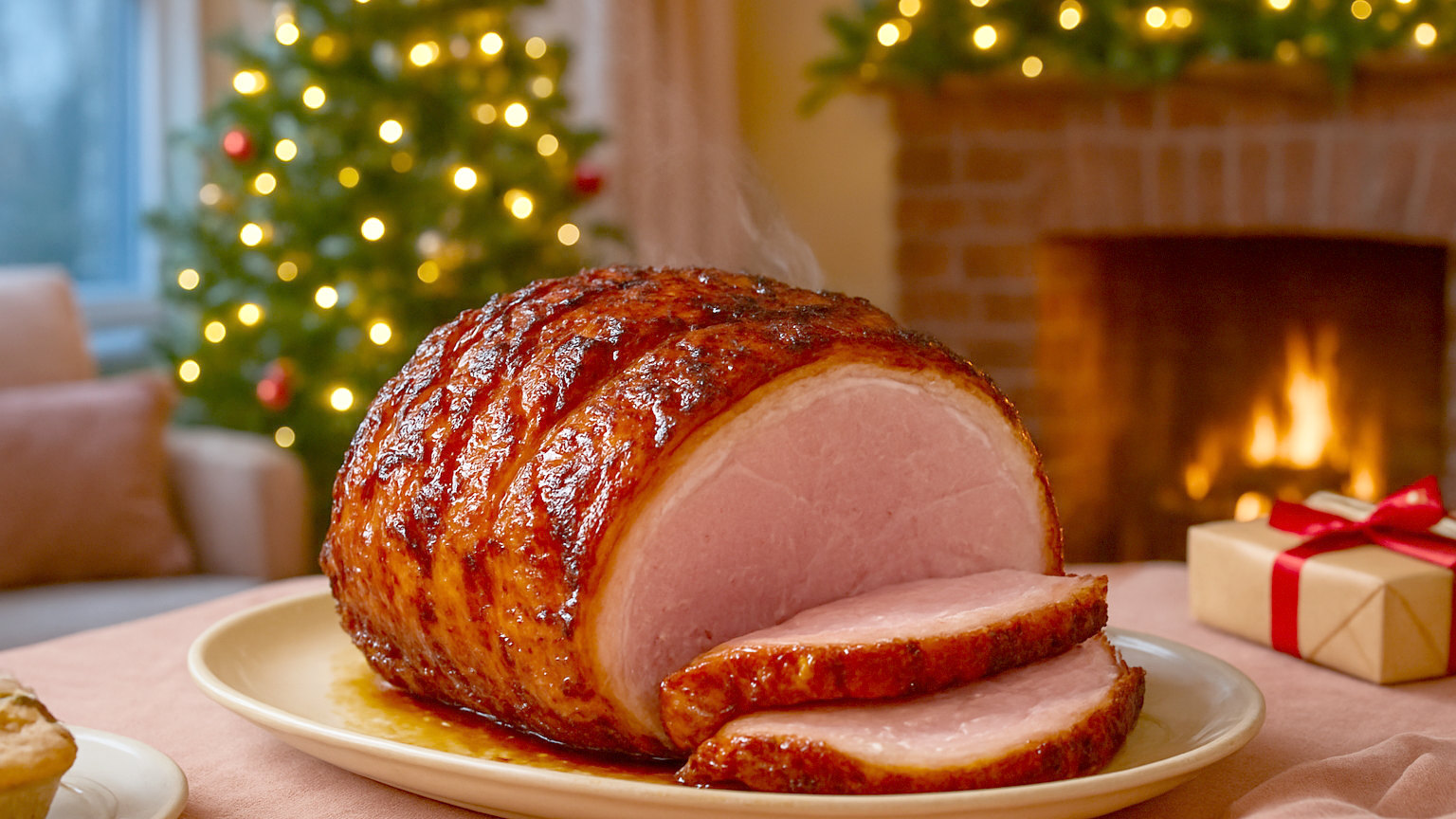
A glazed ham is the most useful thing in a Christmas kitchen, and it is underrated for exactly the reason that makes it valuable: it is finished the day before. It occupies no oven space on Christmas morning, it serves hot or cold, it feeds a large number of people, and it slices for the rest of the week. If you cook one thing in advance this December, this is the one to choose.
What are you actually buying?
Gammon, which is cured pork that has not yet been cooked. Once cooked, it becomes ham. It comes on the bone or boned and rolled, and smoked or unsmoked. On the bone gives better flavour and a carcass for stock; boned is easier to carve. A joint of around two kilograms feeds eight to ten people hot and considerably more as cold cuts.
Do you need to soak it?
Sometimes, and it depends on the cure. Modern gammon is usually mildly cured and needs no soaking, but a traditionally cured or dry cured joint can be very salty. Ask the butcher, or check the packaging. If in doubt, cover it in cold water overnight, or bring it to the boil, discard that water and start again with fresh, which takes fifteen minutes and removes the risk.
Should you simmer or bake it?
Either works. Simmering in water with an onion, bay and peppercorns keeps it very moist and gives you a stock afterwards, which makes excellent pea and ham soup. Baking wrapped in foil is less work and concentrates the flavour. Both want roughly 20 minutes per 500g plus 20 minutes, and both should finish at an internal temperature of around 65C to 70C before the glazing stage.
Take the skin off but leave the fat on. The fat is what caramelises under the glaze; a joint stripped back to the meat will dry out and the glaze will not stick.
How do you score and glaze it?
Once cooked and cool enough to handle, peel the skin away with a knife and your fingers, leaving an even layer of fat. Score the fat into diamonds, cutting into the fat but not through to the meat. Push a clove into each intersection if you want them. Brush the glaze on generously, working it into the cuts, and press on any sugar or crumb coating at this point.
What should the glaze be?
Something sweet, something sharp and something savoury. Honey with English mustard is the standard and hard to beat. Marmalade with wholegrain mustard. Demerara sugar with cider vinegar and cloves. Maple syrup with bourbon. Marmite and brown sugar, which sounds unlikely and is excellent. Whatever the combination, it needs enough acidity to stop it being simply sweet.
How do you get a dark crust without burning it?
High heat and short time. Around 200C for 20 to 30 minutes, glazing again once or twice during that period with the juices from the tin. Watch it closely towards the end, because sugar goes from dark to burnt in a couple of minutes. If parts are colouring faster than others, shield them with small pieces of foil rather than turning the oven down.
How long does it keep?
Around five days wrapped in the fridge, which is longer than most Christmas leftovers, and it freezes well sliced. Wrap it in greaseproof paper rather than clingfilm, which makes it sweat. It goes into sandwiches, omelettes, pasta, soup and a pie with turkey, and the bone makes a stock that is better than the turkey one for anything with pulses in it.
How do you serve it?
Hot on the day it is glazed, or cold from the fridge afterwards, and it is genuinely better cold on the second day once the glaze has set firm. Carve it thinly across the grain.
Alongside it, anything sharp works: piccalilli, pickled onions, mustard, chutney or a sharp apple sauce. The joint is rich and salty and it wants something acidic next to it rather than another sweet thing.


