
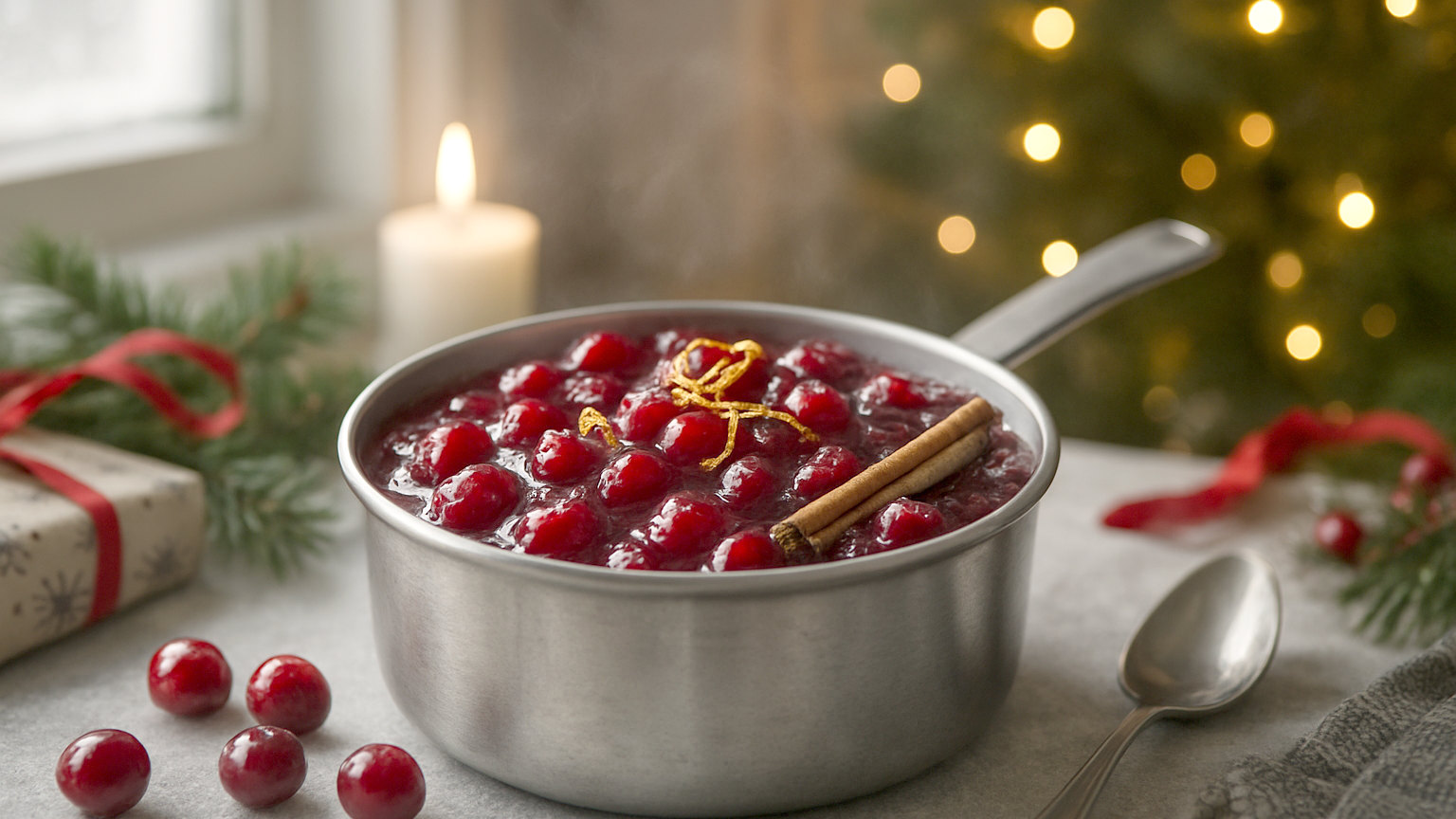
Cranberry sauce is the easiest thing on the Christmas table to make and one of the most commonly bought. A jar costs more than the bag of fruit and is usually far sweeter, because sugar is cheaper than cranberries. Making it takes about ten minutes of actual attention, sets by itself without any thickening agent, and can be done weeks in advance, which makes the jar rather hard to justify.
How does it set without thickening?
Cranberries are unusually high in pectin, the same substance that sets jam. As they cook the skins burst and the pectin is released, and it sets as the sauce cools rather than while it is hot. This is why a pan of cranberry sauce that looks alarmingly runny on the hob is perfectly firm two hours later. Adding cornflour or any other thickener is unnecessary and produces a cloudy, claggy result.
What is the basic method?
Put fresh or frozen cranberries in a pan with sugar and the juice of an orange, bring to a simmer and cook for eight to ten minutes, stirring occasionally, until most of the berries have burst. Take it off the heat while some berries are still whole, since they give the finished sauce texture. Stir in the zest at the end rather than at the start, so it keeps its perfume.
How much sugar does it need?
Less than most recipes call for. Around 100g of sugar to 300g of cranberries gives a sauce that is still noticeably sharp, which is the point of it on a plate of rich food. Taste it while it is hot and add more if you want, but remember that the sweetness reads differently once it is cold and next to gravy. A sauce that tastes slightly too sharp on its own is usually right at the table.
Take it off the heat while some berries are still intact. Cooked until every berry has collapsed, it becomes jam rather than sauce.
What can you add beyond orange?
Port, which is the classic and needs a couple of minutes of simmering to cook off the raw alcohol. A cinnamon stick or a star anise, removed before serving. Fresh ginger, grated. A splash of balsamic vinegar for depth. Chopped pear or apple for sweetness and body. Do not add all of these at once: cranberry sauce works because it is sharp and clean, and a crowded version loses the thing it is there for.
Can you use frozen or dried cranberries?
Frozen work exactly as well as fresh and need no defrosting, which makes them the sensible option since fresh cranberries have a short season and are only in shops for a few weeks. Dried cranberries do not work for this, as the pectin has largely gone and they are already heavily sweetened. If fresh are available in early December, buy extra and freeze them.
How far ahead can it be made?
Two weeks in a sealed jar in the fridge, or several months in the freezer. Made properly with a decent quantity of sugar it keeps very well, and the flavour settles and improves after a few days. Making it in the last week of November and forgetting about it is one of the easiest wins available in the run up to Christmas.
What do you do with what is left?
A spoonful stirred into gravy adds sharpness. It works in a turkey sandwich, obviously, and equally well with cheese, particularly a hard sheep or goat cheese. It goes into a bread and butter pudding, swirls through yoghurt, and glazes a ham. Very little of it needs to go to waste, and unlike most Christmas leftovers it keeps for a fortnight without any attention.
Can you make it without refined sugar?
Yes, using honey, maple syrup or apple juice concentrate, though the sauce will set more softly because sugar contributes to the structure as well as the sweetness. Reduce it a little longer to compensate.
A version sweetened mostly with chopped apple or pear works well and needs very little added sugar at all, since the fruit brings both sweetness and additional pectin.


