
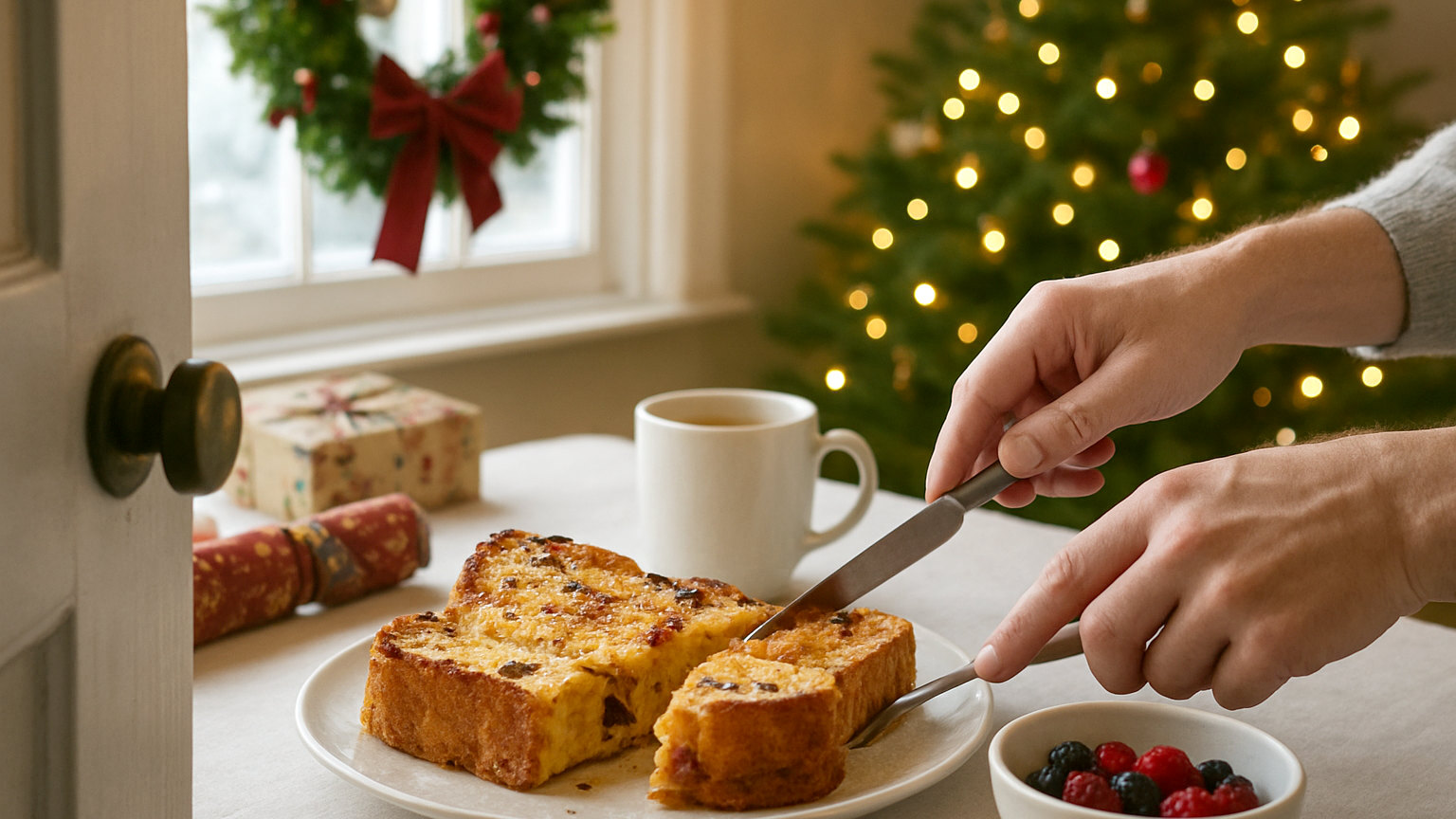
Christmas breakfast has two competing requirements. It has to feel like an occasion, because the morning is one, and it has to be light enough that everybody is still hungry at three in the afternoon. It also has to be produced by somebody who is simultaneously putting a turkey in the oven and dealing with wrapping paper, which rules out anything needing attention.
Why is a full cooked breakfast usually a mistake?
Because it uses the hob and the oven at exactly the point they are needed for something else, it takes a cook out of circulation for half an hour, and it fills everybody up four hours before the main meal. Households that do a full fry up on Christmas morning almost always end up eating dinner later than planned, which then pushes everything else back.
What can be made the night before?
An overnight bake, which is bread, eggs and milk assembled in a dish on Christmas Eve and baked in the morning while the oven is warming up anyway. Cinnamon buns, shaped and left to prove slowly in the fridge. Overnight oats. A fruit salad. Pastry items from the freezer. Anything in this category is twenty seconds of work on the morning, which is the correct amount.
What needs no cooking at all?
Smoked salmon with good bread and lemon, which feels like an occasion and takes no heat. Cured meats and cheese. Good pastries from a bakery, bought the day before. Yoghurt, fruit and honey. A panettone, sliced. Any of these can be laid out on a table and left, which means people can eat when they surface rather than being called to a meal.
Lay it out and let people help themselves. A morning with presents in it does not accommodate everybody sitting down at the same time, and trying to enforce that creates a row.
What works with young children?
Something quick and familiar, early, before the presents rather than after. Children who have been awake since five will need feeding well before the adults want to eat, and a small bowl of something at six prevents the mid morning collapse that otherwise arrives at ten. Save anything special for later in the morning when the initial excitement has settled.
What about the traditions elsewhere?
Several are worth borrowing. The Scandinavian rice porridge with an almond hidden in it, where whoever finds it gets a small prize. Cinnamon buns, which are a Nordic staple and can be prepared the night before. Panettone with coffee, which is how much of Italy starts the day. A cold table of bread, cheese and cured meat, which is the northern European pattern and requires no cooking whatsoever.
Should there be a drink?
If your household does that, buck fizz is the traditional answer and works because it is weak. Keep the orange juice cold and the sparkling wine cheap, since the mixture buries any subtlety. Have something good and alcohol free alongside it in the same glasses, since Christmas morning is a long way from dinner and starting early is easier than people admit.
When should it happen?
Around the presents rather than in competition with them. In most households that means something small and early for whoever is up first, then the proper breakfast in a lull mid morning once the initial round of unwrapping has finished. Fixing the time in advance also helps the cook, who needs to know whether the oven is free at nine or not.
What should you do about the timing of dinner?
Decide it before the day and tell everybody, because the single most common cause of a difficult Christmas afternoon is a breakfast that ran into lunch and a dinner that slipped to five.
If dinner is at three, keep breakfast light and skip lunch entirely. If dinner is at seven, a proper lunch is needed or people will have eaten a tin of chocolates by four.


