
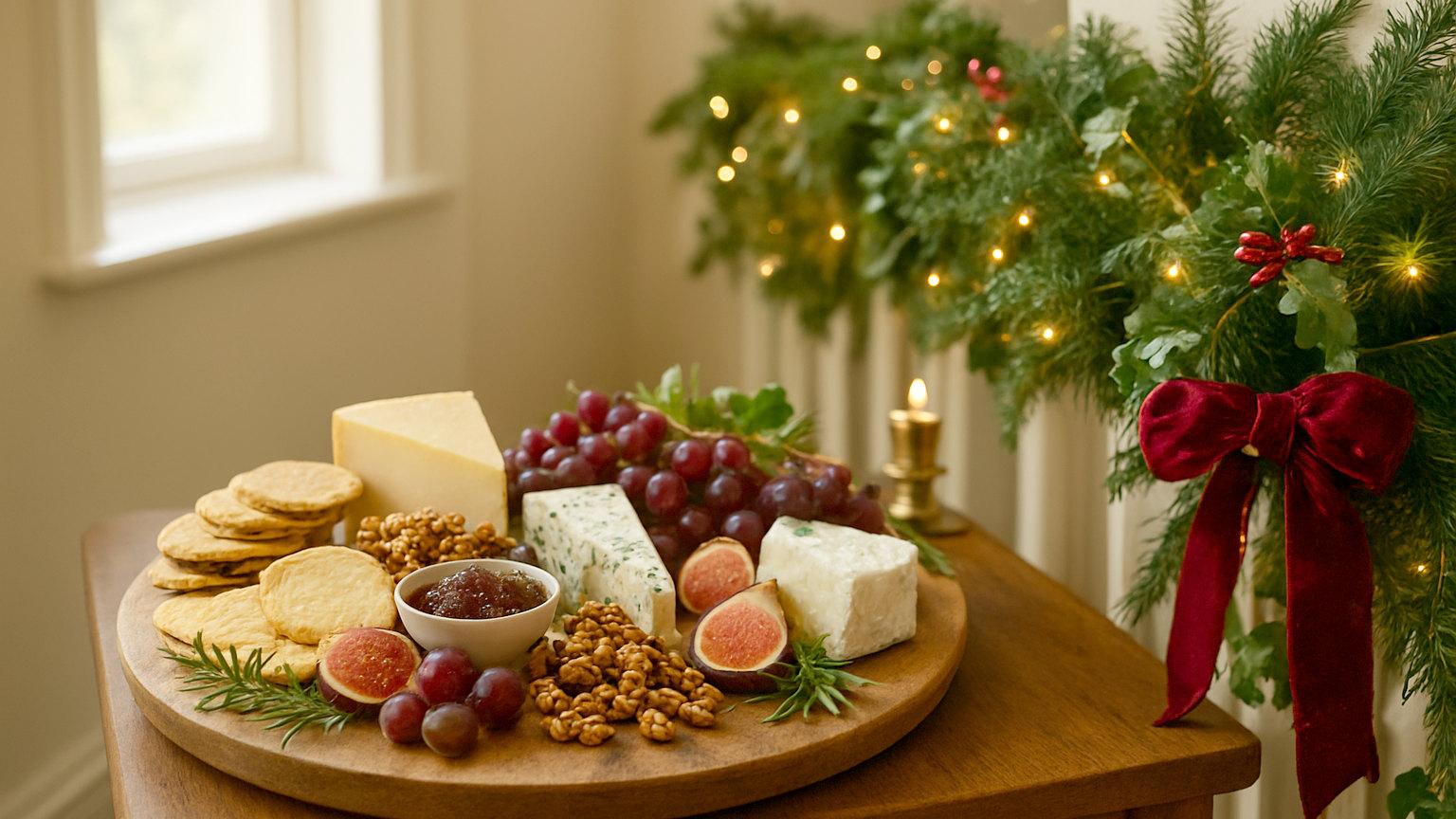
A grazing board is the most efficient thing you can put in front of a room of people. It costs less per head than individually assembled canapes, it requires no cooking, it can be built an hour before guests arrive, and it looks considerably more generous than the same money spent on anything else. The only real skill involved is choosing things that differ from each other and laying them out so the board keeps its shape.
How much do you need per person?
Around 100g of cheese per person if the board is the main event, and 50g to 70g if it follows a meal. Charcuterie at roughly 50g to 80g per person. Crackers and bread in more quantity than feels necessary, since they fill people up and are cheap. Add fruit, nuts, olives and something pickled to fill the gaps, which serve a visual purpose as much as a culinary one.
How many cheeses should there be?
Three to five, chosen to contrast rather than to cover every possible taste. A good working set is one hard and aged, one soft and creamy, one blue, and one that is a bit unusual. Buying five that are all mild and semi hard gives you a board that looks varied and tastes the same throughout. Three excellent cheeses beat six ordinary ones every time.
How do you lay it out?
Place the largest items first, spaced apart: the cheeses, the bowls of olives or chutney, the bunch of grapes. Then fold and pile the charcuterie in the spaces between them, which creates height and looks abundant. Fill the remaining gaps with crackers, nuts and dried fruit. Working from large to small is the whole technique, and it is why professionally styled boards look full while home made ones often look scattered.
Take the cheese out of the fridge an hour before serving. Cold cheese tastes of very little, and this single step improves the board more than anything you could add to it.
How do you keep it looking full?
Hold back a third of everything and top the board up once, an hour in. A board that has been picked over looks unappealing and people stop eating from it, whereas the same quantity of food replenished halfway through keeps its appeal to the end. It also means the last arrivals get something that has not been sitting out under a warm light for two hours.
What should go alongside?
Something sharp to cut the richness: cornichons, pickled onions, chutney or quince. Something sweet: grapes, figs, dried apricots or honey for the blue cheese. Plenty of bread and a mixture of plain and seeded crackers. A separate small board or plate for anything vegetarian if the charcuterie dominates, so nobody is picking around ham to reach the cheese.
How do you cater for allergies and diets?
Keep a small separate board for anything that needs to stay clear of the main one, since cross contamination on a shared board is impossible to avoid once people start serving themselves. Label the cheeses, which also helps anybody avoiding unpasteurised milk, including pregnant guests. Gluten free crackers on their own plate rather than mixed in among the others is a small courtesy that makes a real difference.
What do you do with what is left?
Wrap the cheese in waxed paper rather than clingfilm and it will keep for a week or more. Hard cheese grates into a sauce, a soup or a toastie. Blue cheese makes an excellent pasta sauce. Charcuterie goes into an omelette or a pasta dish. Crackers that have gone soft crisp up again in a low oven. Very little of a grazing board needs to be thrown away if it is dealt with the same evening.
What board should you use?
Anything large and flat that is not porous, or a porous board lined with baking parchment, which is easier to carry and to clear away afterwards. A wooden board is traditional but a large tray or even a clean baking sheet works perfectly well.
Set it up where people can reach it from several sides rather than pushed against a wall, since a board approachable from one side only becomes a queue and stops people mixing.


