
Buffet quantities are guessed at far more often than they are calculated, which is why almost every Christmas gathering ends with several full trays and a fridge nobody can close. The arithmetic is not difficult and it depends on two things only: what time of day it is and how long people will stay. Everything else follows from those two numbers.
How many items per person?
For drinks and nibbles before a meal, count four to six items per person. For a two to three hour party where the food replaces a light meal, count eight to ten. For a longer evening where the buffet is dinner, count twelve to fourteen, spread across several types. Those figures assume a mixture of substantial and light items rather than fourteen identical sausage rolls, which nobody eats.
How does the time of day change it?
Considerably. A party starting at midday or at seven in the evening sits across a mealtime and needs to feed people properly. One starting at three or at nine sits between meals, and guests will have eaten before they came or will eat afterwards. The same guest list needs roughly half the food at four in the afternoon that it needs at seven, and misjudging that is the single most common cause of an oversupplied table.
Why do four trays always go untouched?
Because they were put out at the same time as everything else. People eat most heavily in the first hour, then graze. Putting the entire spread out at the start means the later items sit and dry out while everybody is already full. Holding back a third of the food and bringing it out an hour in keeps everything fresh and reduces the total quantity needed, because the second wave is eaten by people who are genuinely still hungry.
Put out two thirds at the start and hold a third back. It reduces waste, keeps the table looking full and means the last arrivals get something that has not been sitting out for two hours.
What proportions should the spread have?
Roughly a third substantial and hot, a third cold and picked at, and a third bread, crisps and dips which are cheap and fill people up. Something vegetarian in each category rather than one token plate. At least one thing that is obviously safe for anybody avoiding gluten or dairy, labelled so nobody has to ask. And something sweet, in smaller quantity than you expect, since most people take one.
Which items give the best return?
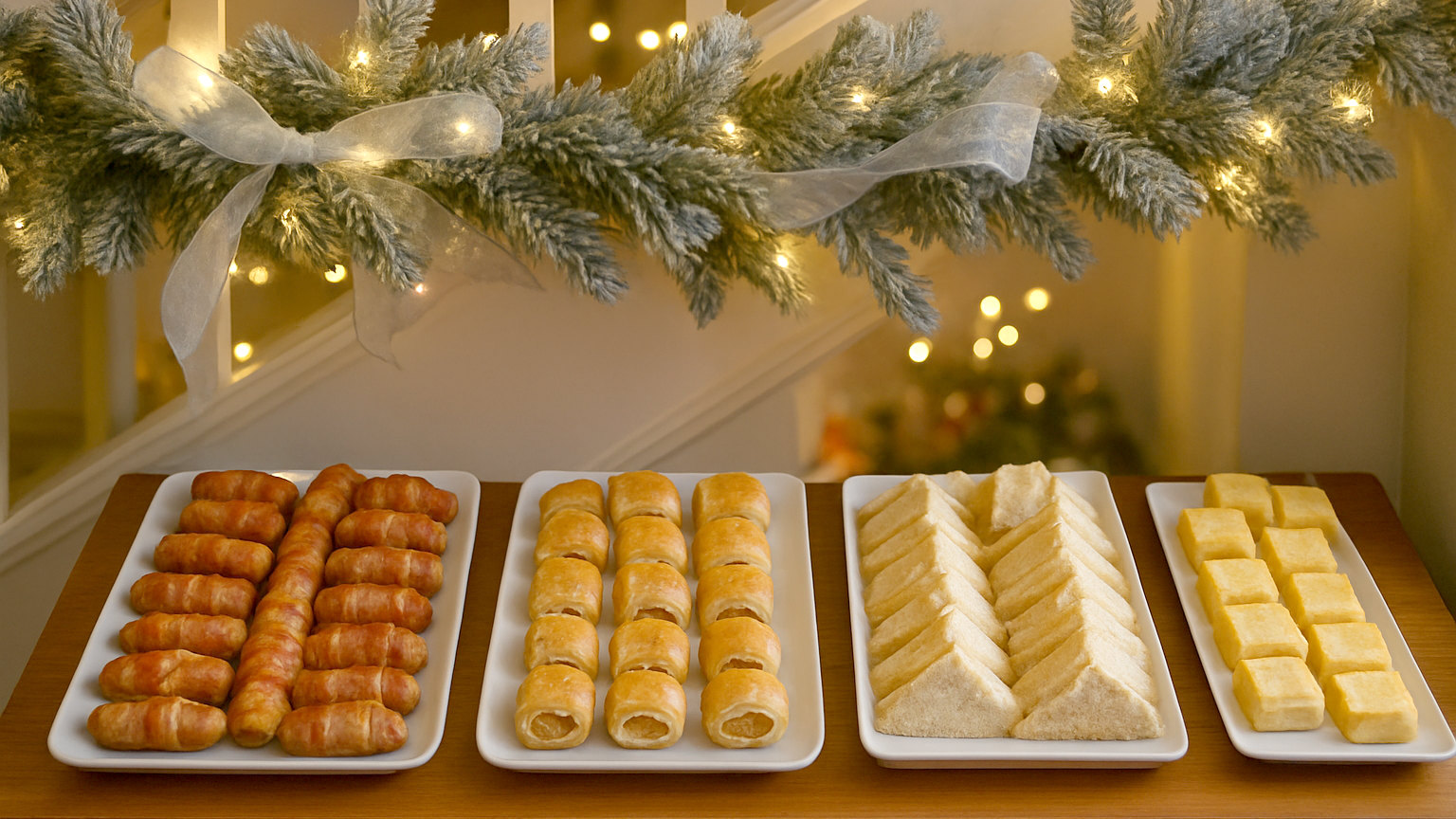
Bread, cheese and charcuterie assembled into a board, which looks generous, costs less than individual canapes and requires no cooking. Anything hot from the oven in batches, since hot food disappears and cold food lingers. Dips with good bread. Sausage rolls and anything pastry based, which are always eaten. What gives poor return is anything fiddly and individually assembled, which takes hours and is gone in twenty minutes.
How much can be prepared in advance?
Most of it, if you choose the menu with that in mind. Boards need assembling on the day but nothing cooked. Pastry items can be made and frozen unbaked weeks ahead. Dips keep for days. What should not be done ahead is anything that goes soggy, so keep assembly of bread based items to the last half hour and accept that some things have to be made while guests are already in the house.
What do you do with what is left?
Refrigerate promptly rather than the following morning, since food that has stood in a warm room for several hours should be thrown away rather than saved. Anything untouched and still cold goes in the fridge for the next day. Cheese, charcuterie and bread all keep well. Making the following day lunch out of the leftovers is worth planning for deliberately, because it is the difference between overcatering and simply catering for two days.


