
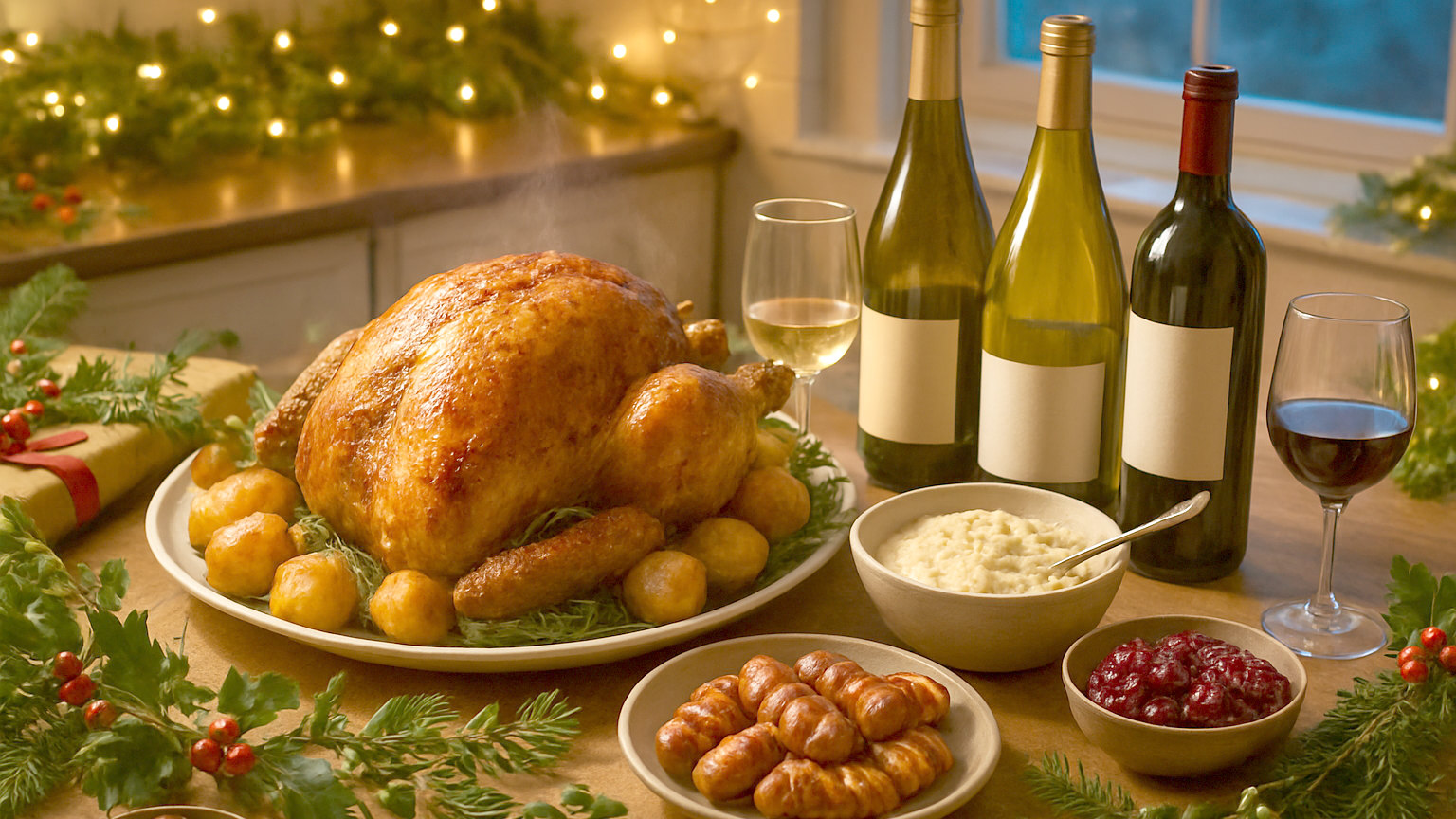
Christmas dinner is one of the hardest plates in the year to match a wine to, because it contains sweet, salty, sharp and rich elements simultaneously. Cranberry sauce is sweet and acidic, bacon is salty, the bird is mild, the stuffing is savoury and the gravy is rich. A wine that suits one of those will fight another, so what you actually want is a wine that gets on with everything rather than one that pairs perfectly with anything.
Why do heavy reds struggle?
Because tannin, which gives a big red its structure, clashes with the sweetness of cranberry sauce and with the delicacy of turkey. A powerful cabernet or a heavily oaked shiraz will simply dominate the plate and taste harsh alongside the sweeter items. Turkey is a lean, mild meat, and it wants a wine with fruit and acidity rather than one with weight and grip.
Which red styles work?
Light to medium bodied reds with good acidity and soft tannin. Pinot noir is the classic answer and it is the classic answer for good reason. Beaujolais, made from gamay, works very well and is inexpensive. Valpolicella, a lighter Rioja, or a fruity Chilean pinot all do the job. Any of these has enough fruit to sit alongside the cranberry and enough freshness to cut the fat without overwhelming the meat.
What about white?
White works better with turkey than most people assume. An off dry riesling or a pinot gris from Alsace copes with the sweetness on the plate extremely well. A lightly oaked chardonnay has the body to stand up to the gravy. Chenin blanc is a versatile choice. If the household is split, opening one red and one white is entirely normal and both will be finished.
Serve the red slightly cool. Room temperature in a house with the heating on is far too warm, and twenty minutes in the fridge makes a noticeable difference.
What should you open beforehand?
Something sparkling, which suits the salty, fried nature of most pre dinner food better than anything still. Champagne if the budget allows, and cremant, cava or a good English sparkling wine if not, all of which are made in the same way for considerably less money. Prosecco is softer and sweeter and works well with canapes. Keep it dry rather than sweet, since the food before dinner is usually savoury.
What goes with the pudding?
The rule is that the wine must be sweeter than the dessert, or it will taste sour by comparison. Christmas pudding is very sweet, so this means a proper sweet wine: a Sauternes, a late harvest riesling, a Hungarian Tokaji or a moscatel. Sweet sherry works. So does a tawny port, which is the traditional British answer and suits the dried fruit particularly well.
How much do you need to spend?
Rather less than the season suggests. In the middle of the range, most of what you pay above about eight or nine pounds goes into the wine rather than into duty and packaging, so the jump in quality between a cheap bottle and a moderate one is far larger than between a moderate one and an expensive one. Two decent bottles beat one expensive one and one poor one.
When should you buy it?
Late November, when the multibuy offers are running and the shelves are still full. Wine keeps, so there is no advantage in waiting and a clear disadvantage in leaving it to the final week, when the good bottles have gone and the offers have ended. Buy a spare of whatever you liked most, since the one certainty is that it will be the bottle that runs out first.
What should you do with what is left in the bottle?
Recork it and keep it in the fridge, red included, where an opened bottle stays drinkable for three or four days rather than the one day people assume. Take the red out half an hour before pouring.
Anything past its best goes into the gravy, a stew or a batch of mulled wine rather than down the sink, and a bottle that has genuinely turned makes perfectly good vinegar if left long enough.


