
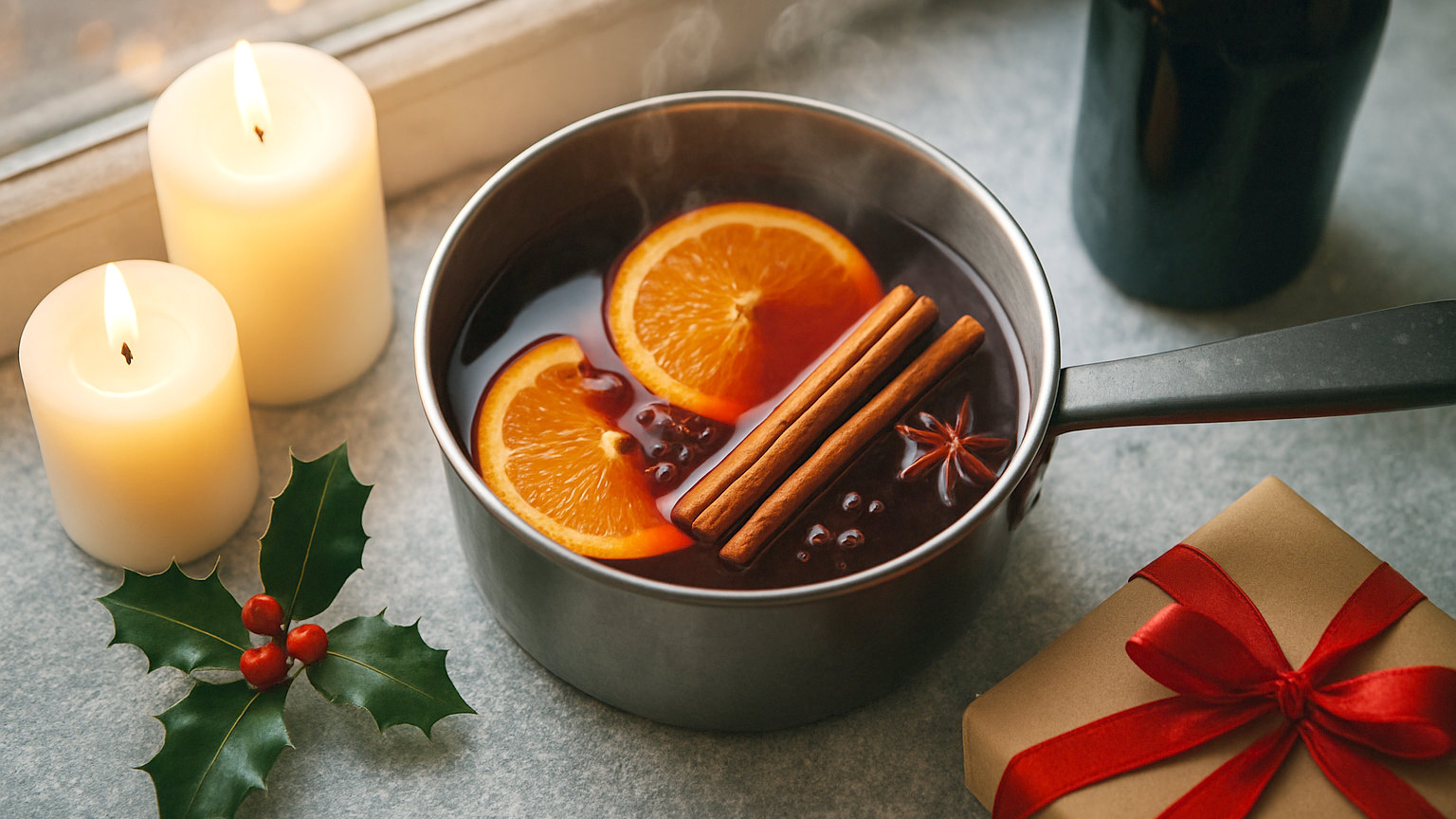
Most mulled wine is too sweet, served too hot and made from a bottle chosen because it was the cheapest on the shelf. All three are avoidable, and the resulting drink is a considerable improvement on what usually appears at a Christmas market. The principle is simple: you are warming and flavouring wine, not cooking it, and almost every failure comes from forgetting that distinction.
Which wine should you use?
Something fruity, medium bodied and not too tannic, since tannin becomes harsh when heated. Spanish garnacha, merlot, a soft Chilean red or an inexpensive Cotes du Rhone all work well. Avoid heavily oaked wines and avoid anything very tannic. There is no point using an expensive bottle, because the spices and sugar will bury the detail, but a wine you would not drink cold will not improve for being warmed.
Why must it not boil?
Because alcohol evaporates from about 78C and the wine loses both strength and character. Boiled mulled wine tastes stewed and slightly bitter, which is the flavour most people associate with the drink and assume is normal. Keep it below a simmer, at the point where steam rises but no bubbles break the surface, and hold it there. A thermometer is unnecessary; the absence of bubbles is the test.
What goes in it?
Cinnamon sticks, cloves, star anise, orange peel and sugar are the standard base, with a bay leaf, cardamom or a piece of ginger as useful additions. Use whole spices rather than ground, which cloud the wine and go gritty. Push the cloves into a halved orange rather than letting them float, which makes them easy to remove. A measure of brandy or port added at the end lifts it considerably.
Make a spiced syrup first, then add the wine. Simmering sugar, spices and citrus in a little water for five minutes extracts far more flavour than heating everything together in wine.
How much sugar?
Less than most recipes suggest. Start with around 75g per bottle, taste once it is warm, and add more only if it needs it. Sweetness is much more noticeable in a hot drink than a cold one, and mulled wine that is cloying is nearly always over sugared rather than over spiced. Orange juice adds sweetness as well, so account for it if you are including any.
How do you make it for a crowd?
A slow cooker on its lowest setting, which holds the temperature exactly where you want it and needs no attention at all. It also lets guests serve themselves, which removes one job entirely. Make the spiced syrup on the hob first, then transfer everything to the slow cooker. Top it up through the evening rather than making an enormous batch at the start, since the flavour is better fresh.
What about a non alcoholic version?
Apple juice, cloudy rather than clear, mulled with the same spices is excellent and does not taste like a compromise. Red grape juice works too, as does a mixture of apple and cranberry. A splash of strong black tea adds the tannin that the wine would otherwise provide, which is the detail that makes the difference between a good non alcoholic mull and a warm glass of squash.
Can it be made in advance?
The spiced syrup can be made days ahead and kept in the fridge, which reduces the job on the night to warming wine and adding syrup. Finished mulled wine can be cooled and gently reheated once, though it is better fresh. What does not work is leaving whole spices in it overnight, since cloves in particular become overwhelming after a few hours and the drink turns medicinal.
What else can you mull?
Cider works extremely well and is cheaper, particularly with orange, cloves and a little brown sugar. Port makes a richer and stronger version that suits a small glass rather than a mug.
White wine is worth trying with lemon, cardamom and honey instead of the usual red wine spices, and it is a considerably lighter drink than most people expect from something served warm.


