
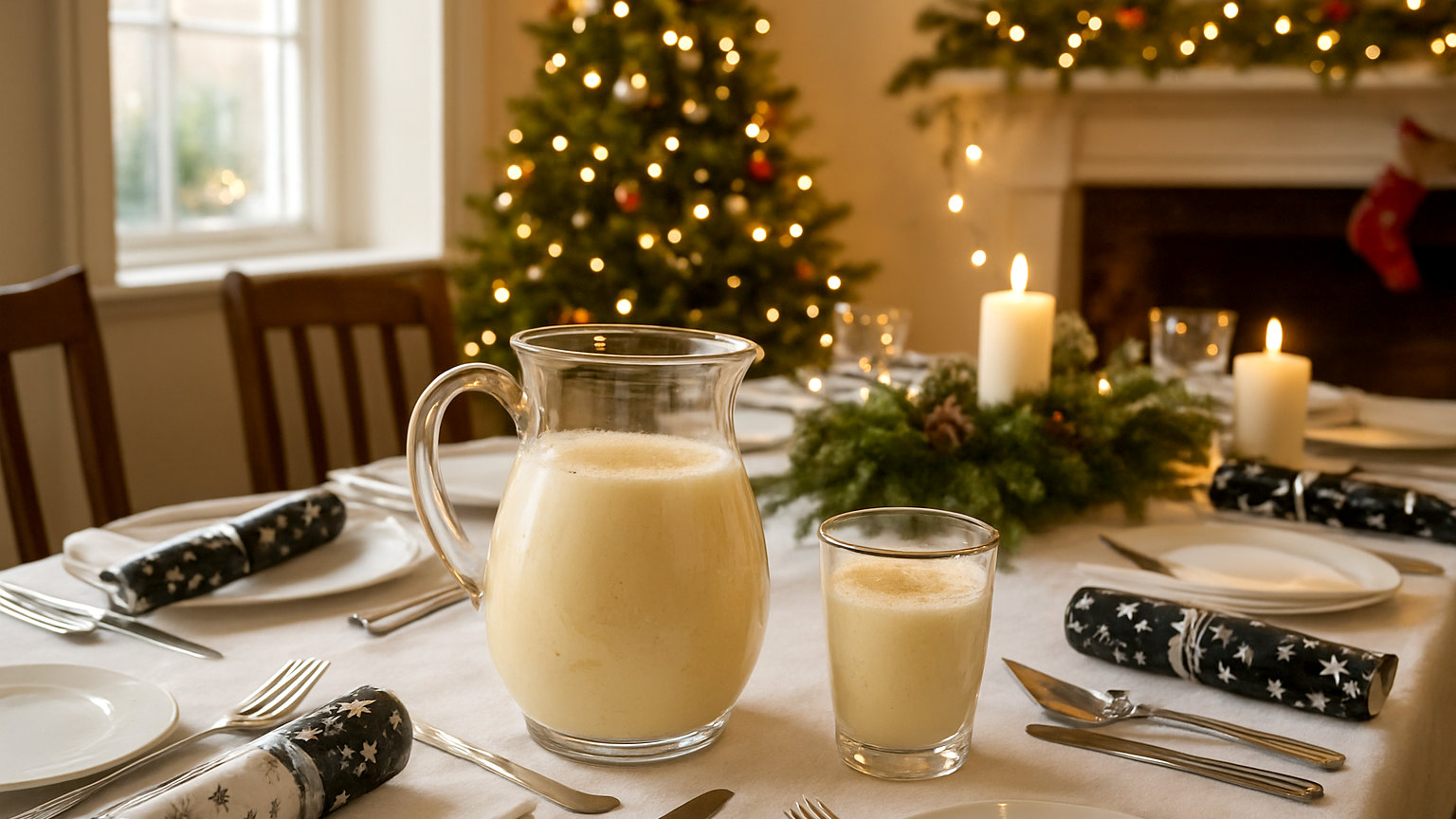
Eggnog has a reputation in Britain for being thick, sweet and faintly medicinal, which is largely the fault of the bought version. Made properly it is closer to a light custard with spirit in it, and the difference is mostly a matter of how much sugar goes in and how much cream. It is also one of the few Christmas drinks that genuinely improves if made weeks ahead.
What actually goes into it?
Egg yolks, sugar, milk, cream, spirit and nutmeg. That is the whole list. The classic spirit is a mixture of bourbon and dark rum, sometimes with brandy, and the mixture matters less than the quantity. Whipped egg whites folded in at the end make it lighter and frothier, which is the traditional American approach and is worth doing if you are serving it immediately.
How do you stop it being sickly?
Cut the sugar and shift the ratio away from cream towards milk. Most recipes call for considerably more sugar than the drink needs, and the spirit and the nutmeg supply plenty of interest on their own. Start with around half the sugar a recipe suggests, taste it cold rather than warm, and add more only if it needs it. A generous grating of fresh nutmeg does more than another spoonful of sugar.
What about the raw egg?
Traditional eggnog uses raw yolks. In the United Kingdom, eggs carrying the British Lion mark have been vaccinated against salmonella and are considered safe to consume raw or lightly cooked, including for vulnerable groups. If your eggs do not carry it, or if you would rather not, use pasteurised eggs or make a cooked custard base instead, which is the safest option and arguably tastes better.
If anyone drinking it is pregnant, elderly, very young or unwell, use the cooked custard method. It takes ten extra minutes and removes the question entirely.
How do you make the cooked version?
Whisk the yolks and sugar together, heat the milk and cream to just below a simmer, pour it slowly onto the yolks while whisking, then return the whole lot to a low heat. Stir constantly until it thickens slightly and reaches around 71C, which takes a few minutes. Strain it, cool it quickly, then stir in the spirit once cold. Adding alcohol to a hot mixture drives it off.
Why does aged eggnog exist?
Because the alcohol acts as a preservative and the flavour changes considerably over weeks in a cold fridge, losing its raw edge and becoming smoother and more integrated. Aged eggnog is a genuine tradition rather than a novelty, and batches are routinely kept for a month or more. It needs a decent proportion of spirit to be safe to age, so this is not something to attempt with a weak mixture.
Can it be made without alcohol?
Yes, and the cooked custard version is the one to use, since there is no alcohol doing preservative work. It becomes essentially a spiced pouring custard served cold, which children generally like a great deal. Make it the day before, keep it refrigerated and use it within two or three days. A little vanilla and extra nutmeg compensate for the missing warmth of the spirit.
How should it be served?
Cold, in small glasses, with nutmeg grated over each one at the moment of pouring. It is rich, and a large glass defeats most people. Serving it warm is a variation rather than the norm and needs care, since heat will scramble the eggs if the pan gets away from you. A jug in the fridge that people help themselves from works better than making it to order.
How long does it keep?
A version with a decent proportion of spirit keeps for several weeks in a sealed bottle in the fridge and improves over the first fortnight. Shake or stir it before pouring, since it will separate.
A cooked custard version without alcohol should be treated like any other fresh custard and used within two or three days.


