
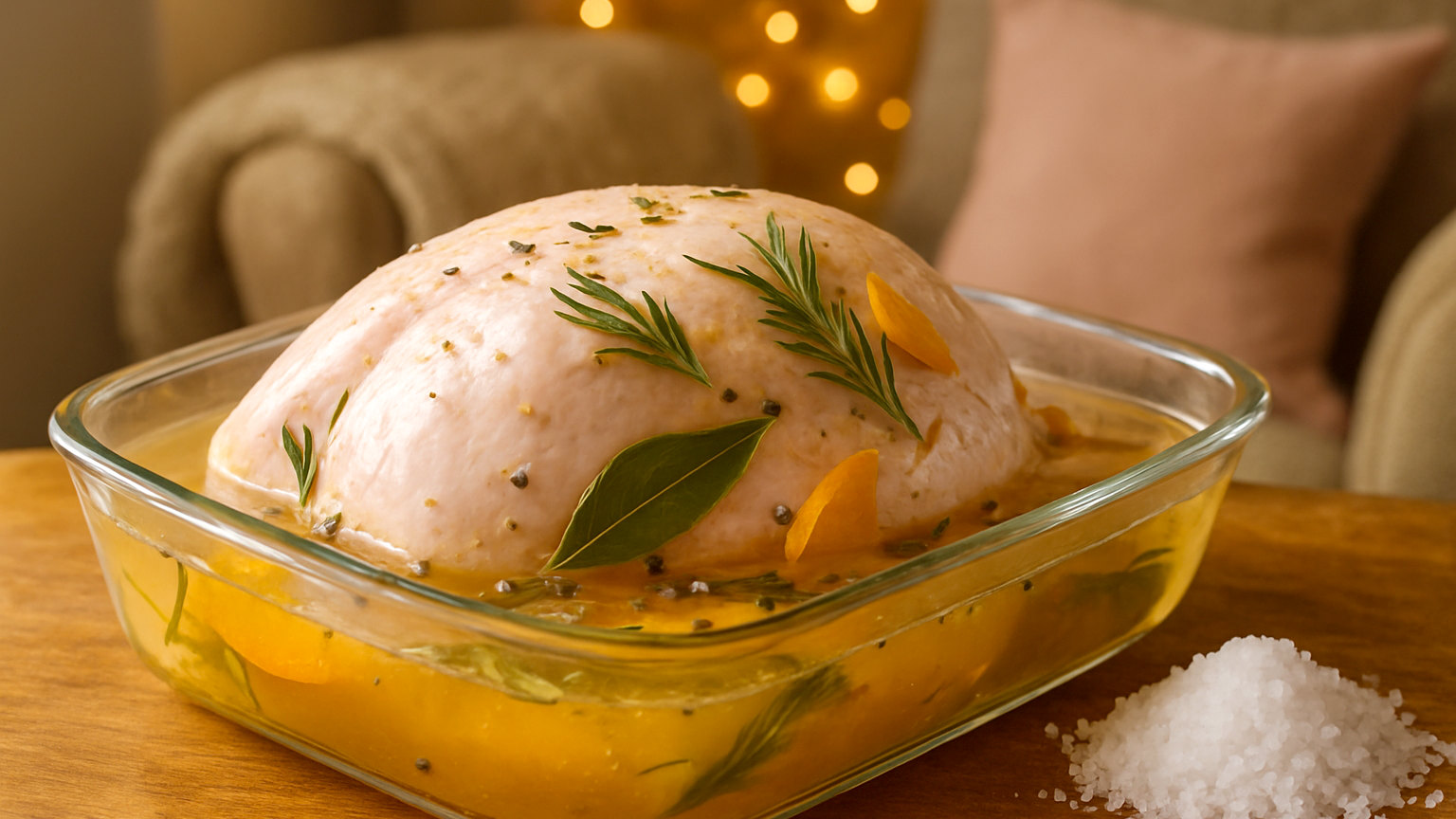
Brining is presented as essential by some cooks and as a fuss by others, and both positions have something behind them. It does genuinely change the result, particularly with turkey, which is lean and unforgiving. Whether it is worth doing in your kitchen usually comes down to a practical question rather than a culinary one, which is whether you have somewhere cold to put a very large bird for two days.
What does brining actually do?
Salt changes the proteins in the meat so that they hold on to more of their own moisture during cooking, and it seasons the flesh all the way through rather than only on the surface. The result is a bird that stays juicier at the edges of the cooking window, which matters because turkey breast goes from done to dry within a few degrees. It is insurance against slight overcooking as much as an improvement in itself.
What is the difference between wet and dry?
A wet brine submerges the bird in salted water, often with sugar and aromatics. A dry brine is salt rubbed over the skin and left, drawing out moisture which then dissolves the salt and is reabsorbed. Wet brining adds water weight and gives a very juicy but slightly diluted result. Dry brining concentrates the flavour and produces noticeably crisper skin, which is why most cooks who do one now do the dry version.
How much salt and how long?
For a dry brine, around 15g of salt per kilogram of bird, rubbed over the skin and inside the cavity, then left uncovered on a tray in the fridge for 24 to 48 hours. For a wet brine, roughly 60g to 70g of salt per litre of water, enough to cover the bird, for 8 to 12 hours and no longer. Over-brining makes the meat spongy and unpleasantly salty, so the upper limits matter.
Do not brine a bird that has already been salted or basted by the producer. Many supermarket turkeys are, and it says so on the label; brining one of those makes it inedibly salty.
Why does fridge space usually decide it?
Because a large turkey in a bucket of water needs a container the size of a laundry basket, kept below 5C, for half a day, at the precise point in December when the fridge is already full. A dry brine needs only a tray and is far more realistic in a domestic kitchen. If neither is possible, an unheated garage or shed is not a substitute unless you can genuinely verify the temperature.
Does it change the cooking time?
Slightly. A brined bird often cooks a little faster, which is another reason to work from a probe rather than a published time. A dry brined bird also browns more readily, so check the skin sooner and cover with foil if it is colouring too fast. The target remains the same: 75C in the thickest part of the thigh, away from the bone.
Do you need to rinse it afterwards?
After a wet brine, pat it thoroughly dry with kitchen paper rather than rinsing under the tap, since washing raw poultry sprays bacteria around the sink and worktops. After a dry brine, simply brush off any undissolved salt. In both cases the skin must be as dry as possible before it goes into the oven, because surface water steams rather than crisps.
What should you do instead if you skip it?
Season generously an hour before cooking, cook to a probe rather than a clock, rest the bird properly, and consider cooking the legs separately from the crown so each is done correctly. Butter or oil under the skin of the breast helps. None of these require any planning, and a well timed unbrined turkey is considerably better than a brined one that was left in the oven twenty minutes too long.
Should you brine a crown or a joint?
A crown benefits more than a whole bird, because it is entirely breast meat and breast is the part that dries out. A dry brine of 15g of salt per kilogram, left uncovered in the fridge overnight, is easy to accommodate and makes a clear difference.
Boneless rolled joints are usually already brined or basted by the producer, so check the label before adding any more salt at all.


