
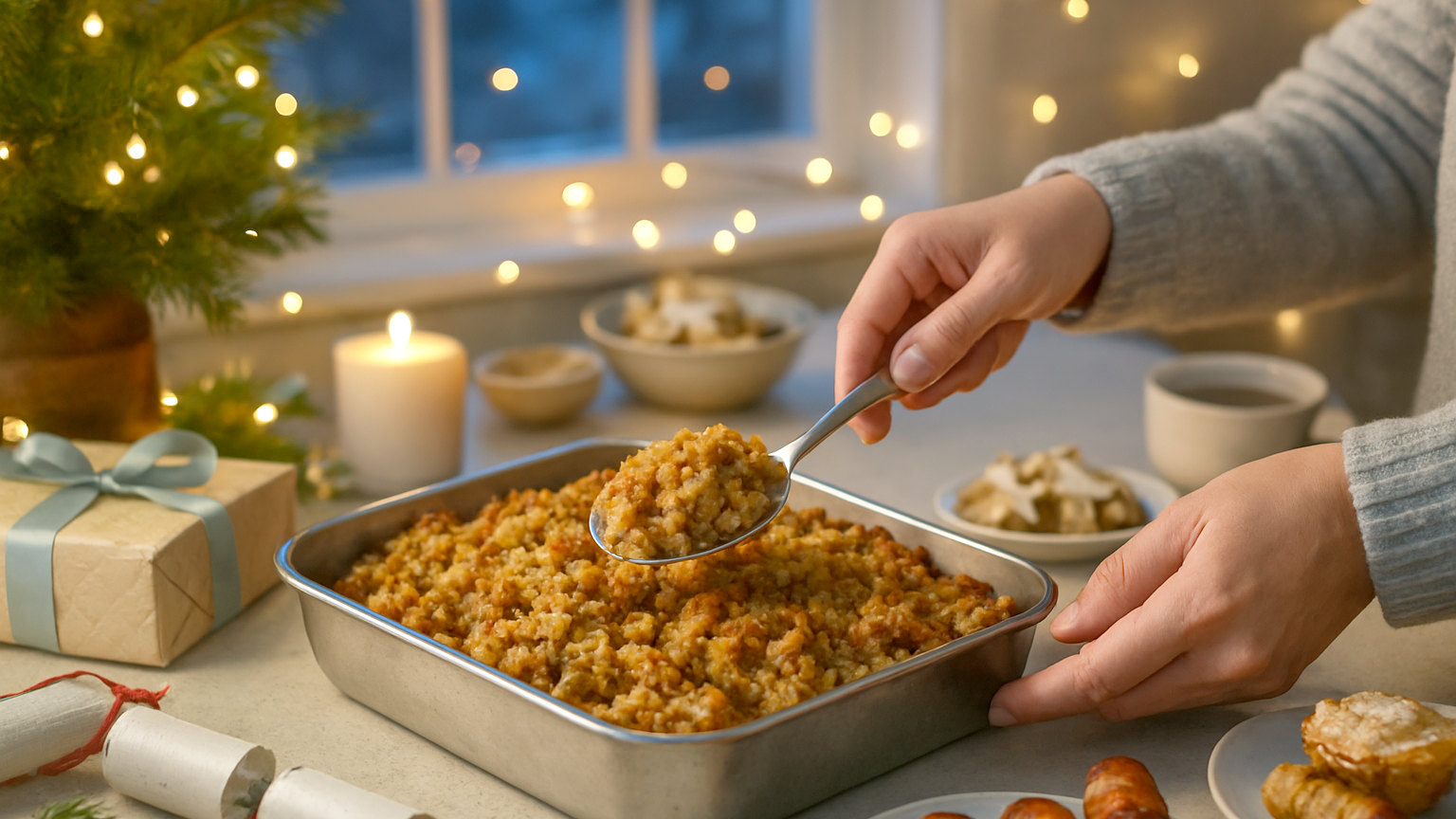
Packet stuffing has set the bar so low that a good homemade one comes as a surprise to people. It is also one of the easiest things on the Christmas table to make well, since it is essentially a savoury mixture baked until the top is crisp, and it can be made entirely in advance. The two decisions that matter are what goes in it and whether it goes inside the bird.
What actually goes into a good stuffing?
Something with fat and flavour, something to give body, aromatics and enough liquid to keep it moist. In practice that usually means sausagemeat or minced pork, breadcrumbs, softened onion, herbs and a little stock or egg to bind. Chestnuts, dried apricots, apple, lemon zest, bacon and chopped nuts are all worth adding. What it must not be is dry, bland and made entirely of bread.
Why cook it outside the bird?
Two reasons, one of which is safety. Stuffing packed into the cavity slows heat reaching the centre of the bird, so the turkey takes longer and the breast is overcooked by the time the stuffing has reached a safe temperature. The second reason is texture: stuffing in a dish develops a crisp brown top, while stuffing in a cavity stays uniformly soft. If you do stuff the bird, the stuffing itself must reach 75C.
How do you get a crisp top without a dry middle?
Use a wide shallow dish rather than a deep one, so there is plenty of surface area. Keep the mixture looser than feels right, since it firms considerably as it cooks. Dot the top with butter or lay bacon over it. Bake at around 190C for 30 to 40 minutes, covering with foil for the first half if it is browning too fast. Stuffing balls give you the maximum crisp surface and cook faster.
If any stuffing does go inside the bird, probe the stuffing separately. It needs to reach 75C in its own right, and it will lag well behind the meat around it.
Can it be made without meat?
Easily, and a good vegetarian stuffing is not a compromise. Build it on softened onion and celery cooked in plenty of butter or oil, with breadcrumbs, chestnuts, mushrooms browned properly, herbs and vegetable stock. Ground nuts add richness. The thing to compensate for is the fat that sausagemeat would have supplied, so be more generous with the butter or oil than you would otherwise be.
How far ahead can it be made?
The mixture keeps for two days in the fridge and freezes for months, either as a block or shaped into balls and open frozen on a tray. Cook it from frozen with an extra ten or fifteen minutes. Fully cooked stuffing reheats reasonably well, though the top loses its crispness, so freezing it raw is the better route. This is one of the easiest November jobs on the whole list.
What are the classic combinations?
Sage and onion, which is the English default and is very good made properly with fresh sage. Chestnut and bacon. Sausagemeat with apricot and pistachio. Pork, apple and thyme. Lemon, parsley and pine nut for a lighter version. Cranberry and orange. None of these are difficult, and choosing one and making it well beats buying two packets and a tub of something from the chilled aisle.
What do you do with the leftovers?
Stuffing is among the best of the Christmas leftovers. It goes into a turkey sandwich, which is the traditional answer and hard to improve on. It crumbles into bubble and squeak. It makes the base of a very good soup thickener. Fried in a pan until crisp it becomes something worth eating on its own, and it keeps for two days in the fridge or freezes in portions.
How much do you need?
Around 75g per person is a sensible working figure, which is considerably less than most people make. Stuffing is rich and it competes with several other things on a full plate.
If you are making it in advance and freezing it, make double anyway. The second batch costs almost nothing in extra effort and is the most useful thing in the freezer for a January roast.


