
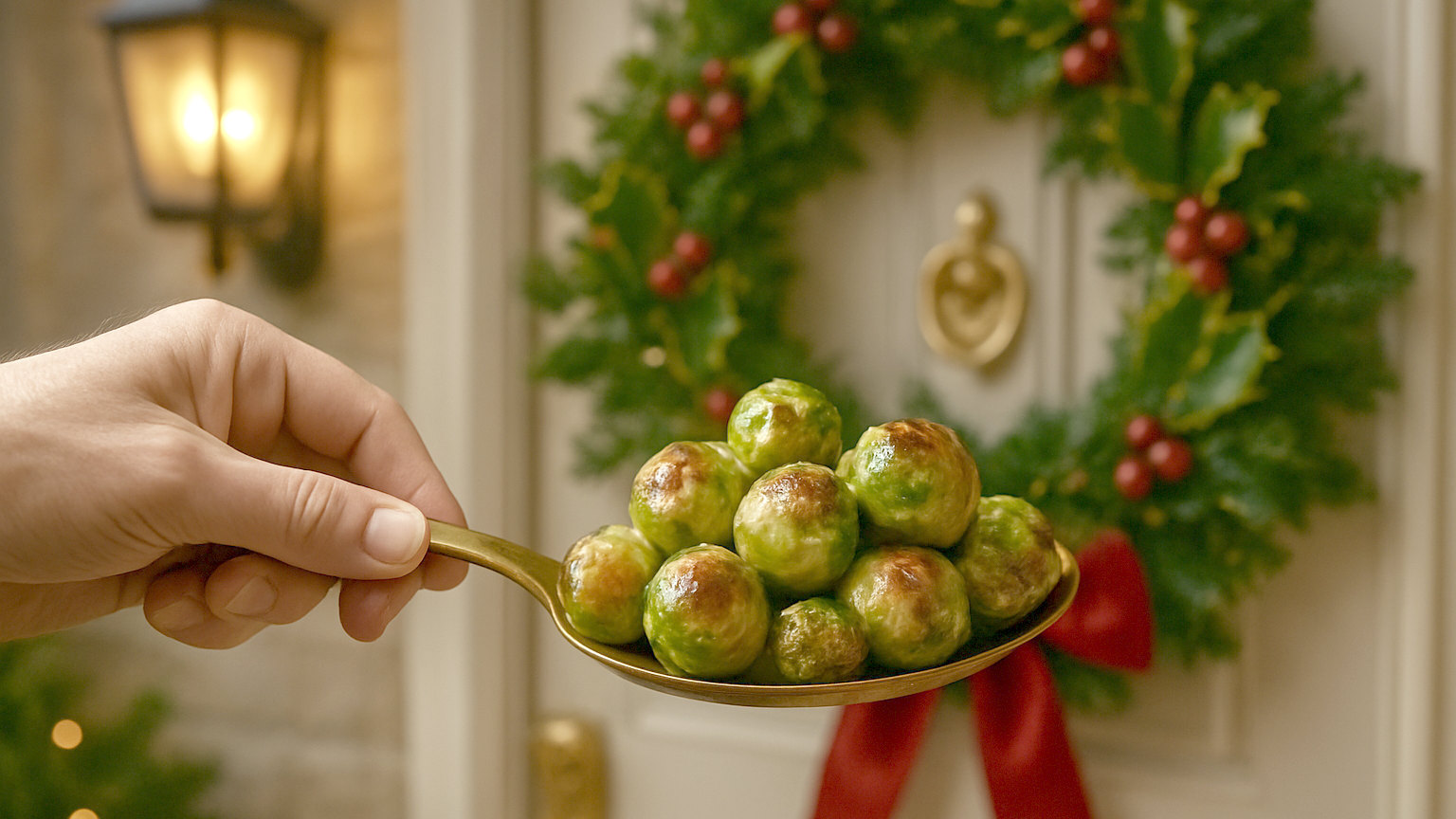
Sprouts have a reputation that was earned honestly, by decades of being boiled for twenty minutes until they were grey, soft and sulphurous. Cooked for a fraction of that time by almost any method, they are a completely different vegetable, and most of the people who say they dislike sprouts have simply never eaten one that was not overcooked. The fix is entirely about timing.
Why does overcooking ruin them?
Sprouts contain sulphur compounds that are released as the cell walls break down with prolonged heat. Cook them briefly and those compounds stay largely locked away, so the flavour is nutty and slightly sweet. Cook them for fifteen or twenty minutes and they are released in quantity, which produces both the smell and the taste people remember from school dinners. The vegetable is not the problem; the clock is.
How long do they actually need?
Around four to six minutes in boiling salted water for a medium sprout cut in half, until a knife meets slight resistance at the centre. Whole sprouts take a couple of minutes longer. They should still have some bite. If they are going into a pan afterwards to be fried, take them out a minute earlier still, since they will continue cooking in the second stage.
Does cutting a cross in the base do anything?
Very little, and it is largely a hangover from the era of long boiling, when the idea was to help heat reach the dense core of a whole sprout. Halving them achieves the same thing far more effectively and gives you a flat surface to brown. Trim the very base if it is dry, pull off any loose outer leaves, and cut them in half. That is the whole preparation.
Halve them and get a cut face against a hot pan. Browning is what converts a sprout from something tolerated into something people ask for.
Which method works best?
Roasting or frying, both of which brown the cut surface and produce a nutty, caramelised flavour that boiling cannot. Roast halved sprouts in oil at around 200C for 20 to 25 minutes until the outsides are crisp and dark at the edges. Or blanch briefly, then fry hard in butter or bacon fat for a few minutes. Steaming is a reasonable middle ground and is gentler on the texture than boiling.
What should you add to them?
Fat, salt and something sharp or sweet. Bacon or pancetta is the standard and works because it supplies both fat and salt. Chestnuts add sweetness and texture. A squeeze of lemon or a splash of vinegar at the end lifts everything. Toasted almonds or hazelnuts, a spoonful of honey, or a little chilli all work. What they do not need is a cream sauce, which buries the flavour you were trying to develop.
Can they be prepared ahead?
The trimming and halving can be done the day before and kept in a bag in the fridge. Blanching can also be done ahead: cook them briefly, plunge them into cold water to stop the cooking, drain thoroughly and refrigerate. On the day they need only a few minutes in a hot pan, which removes them from the critical final stretch entirely. Fully cooked sprouts do not hold, so the final stage stays on the day.
How do you win over somebody who says they hate them?
Serve them shredded and fried rather than whole and boiled, which is a different enough dish that the association does not trigger. Finely sliced sprouts cooked hard in butter with bacon for three or four minutes look like a green side dish rather than like sprouts. It is not a trick so much as a demonstration that the thing they dislike was the cooking rather than the vegetable.
What can you do with the leftovers?
Shredded and fried hard with bacon, they become a side dish in their own right rather than a reheated vegetable. They also go into bubble and squeak, which is the traditional and best answer on Boxing Day.
Raw sprouts keep for well over a week in the fridge, so a bag bought before Christmas will still be good in the new year, and shredded raw with lemon and parmesan they make a very good winter salad.


